A Guide to Understanding Cat Body Language


A Guide to Understanding Cat Body Language

A Guide to Understanding Cat Body Language

Dr. Soheyl Simaei

Published Date

Published Date

Custom Icon
Custom Icon
Custom Icon

Cats have their own way of communicating, and it's quite interesting. They don't speak our language, so they use a rich vocabulary of body language that helps them convey their feelings and emotions. 
A veterinarian is talking to a pet owner about her cat's body language and what it means.

From simple tail flicks to a change in the angle of the ears, they use subtle signs. When they’re ready to tell you, pay attention to their physical cues, which will give you valuable insight into their world. But what does each cat's body language even mean?

In this blog, we’re going to discuss the type of body language cats exhibit, plus the meanings behind every single action. 

What Your Cat’s Body Language Tells You

From happiness to anger, here are the ways to tell how your cat feels through their body language:

Relaxed and Happy

Happy and relaxed cats will have a calm and confident body language. They may appear loose and comfortable, ready for any activity with you whenever you are. Clingy cats will remain clingy. Your cat may also purr, which they do to show comfort, communication, and self-soothing. 

Here are other key signals to look for:

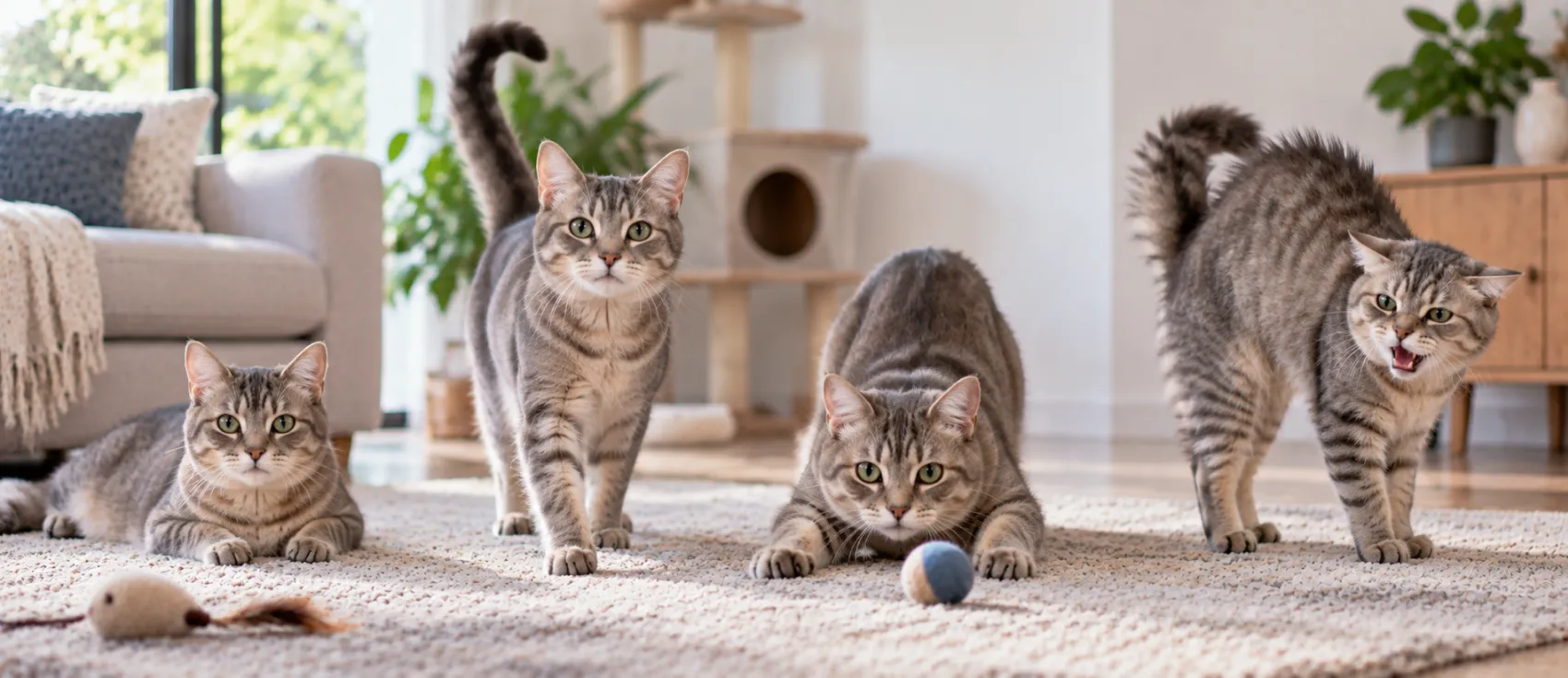
  • Tail: Happy cats have their tails up high, with some having a curling tip. Some may also sway their tails lazily. 

  • Body Posture: If your cat is lying down with its belly exposed, then they feel at ease and secure. They are happy with you and will love curling into a ball when napping. 

  • Ears: Upright ears that are slightly angled forward are also signs of happiness in cats. 

  • Eyes: Slow-blinking or half-closed eyes are a sign of comfort and affection, much like their own version of a kiss. If they show this to you, give one slow blink back. 

  • Movements: Cats may also knead when they feel happy, which can be done on your lap, a blanket, or on furniture. Some cats may also bump their head against you to show happiness.

Sad or Withdrawn

Sad cats may withdraw from their usual routines. So, you’ll notice them having less interest in playing, eating, and interacting. Some may exhibit hiding, loss of appetite, and lack of grooming. Some cats will be quiet, while others will be noisier. 

When it comes to their body language, these are the signs.

  • Tail: Their tails may be low or tucked close to their body. Some cats won’t move their tails as much as usual. 

  • Body Posture: Sad cats may stay curled up or crouched with a tense body and limbs tucked in. Some may do this for long periods of time.

  • Ears: The ears may be rotated or turned outward, showing disinterest in engagement. 

  • Eyes: The eyes might appear dull, partially closed, or unfocused. They might look weary or unfocused.
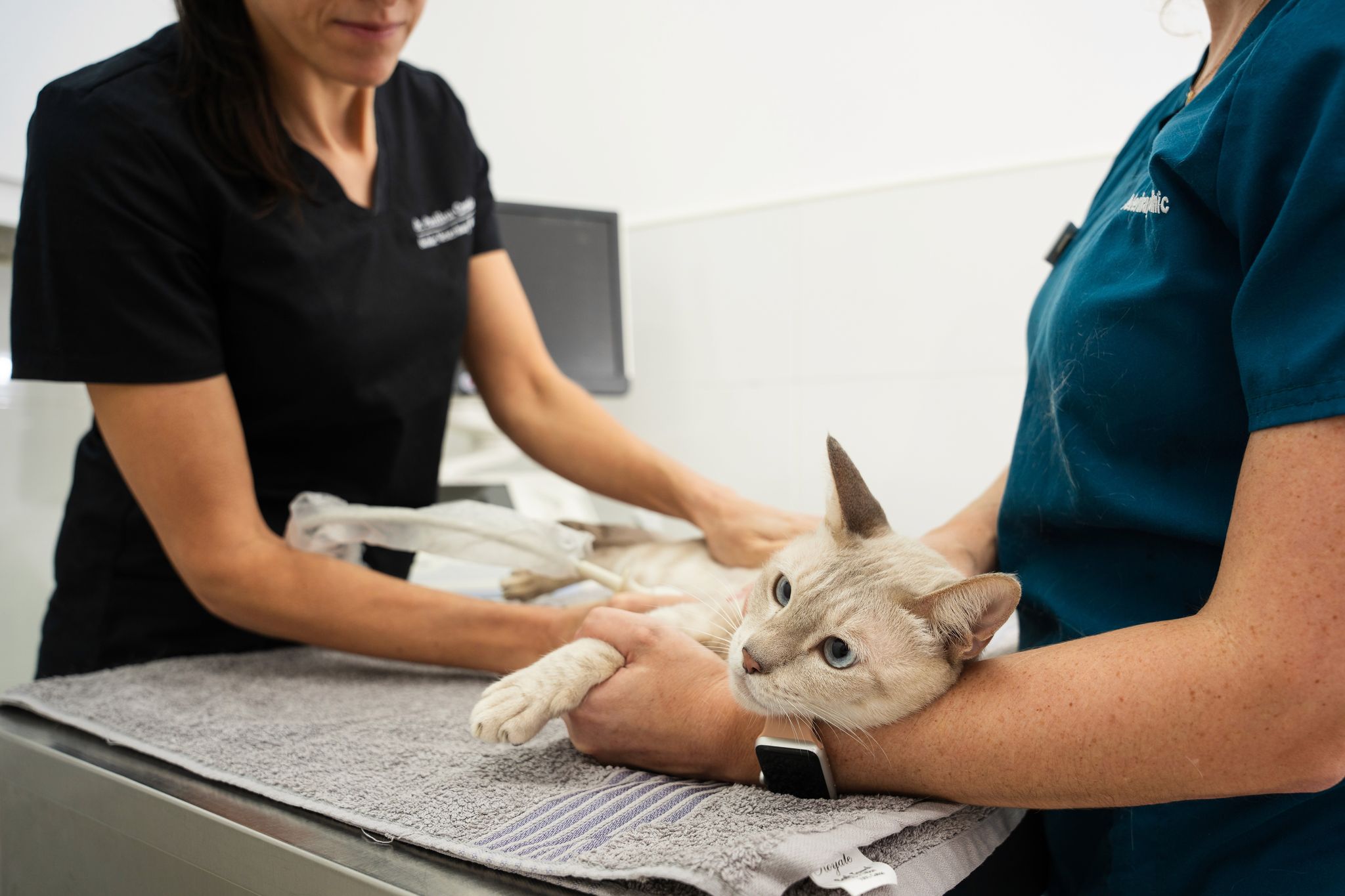
Two vets are keeping a cat calm during a checkup.

Curious or Focused

When something catches a cat’s interest, they shift into focused mode. They may sniff, paw, or gently bat at objects. Here are the common body language cues cats exhibit when they’re exploring. 

  • Tail: The tail will be held high or extended outward with a gentle curve at the tips. This may twitch or vibrate occasionally. 

  • Body Posture: The body language of a curious cat will be alert and focused, with an upright frame. They’ll slightly lean forward to the object in question.

  • Ears: The cat will have ears that are pointed forward and upright, which act like radar dishes that look for the sound. 

  • Eyes: Their eyes will be widely opened and focused on the specific object or person they are staring at. 

Playful and Excited

A cat’s body language becomes lively and exciting when they’re playful. You’ll notice some sudden movements, funny moments, and episodes of zoomies. Some may chirp, trill, or chatter. Here are the body language cues cats exhibit when they feel playful. 

  • Tail: A playful cat’s tail is often upright. During play, their tail might slowly swish side to side, signaling heightened energy and anticipation.

  • Body Posture: Cats often crouch low with their hindquarters raised just before they pounce.  You may have seen this before they spring into action. Cats may also adopt a stalking pose or display sudden bursts of energy.

  • Ears: A playful cat’s ears will be forward and alert, tuned into the “target” they’re playing with. 

  • Eyes: You can also notice that your cat’s eyes will be wide open, with pupils becoming more open. This happens naturally as their excitement level increases.

Curious about your cat's body language?

Curious about your cat's body language?

Get the advice you need from our experts.

Get the advice you need from our experts.

Anxious or Stressed

Anxious cats may be timid, with low-pitched meows or unusual quietness. They may also start to withdraw and hide in tight spaces. When it comes to body language, these include:

  • Tail: Anxious cats have their tails low, close to their bodies, or between their legs. Some may also rapidly flick their tails. 

  • Body Posture: Some cats will place their bodies low on the ground, with a tense posture that's ready to move when something happens. 

  • Ears: The ears may appear pinned backward, rotated sideways, or flattened against the head.

  • Eyes:  Their eyes may be significantly dilated, with a wide-eyed staring expression. This makes them look like they're on the edge. 

Scared and Afraid

When a cat feels afraid, their body language becomes defensive or reactive, signaling that they perceive a threat. Cats can get scared of a lot of things, such as loud noises, new people and pets, or changes in their lives.

Fearful cats are often vocal, emitting hisses, growls, or loud yowls. Additionally, there are body language cues cats show when they get scared.

  • Tail: A fearful cat’s tail is often tucked tightly under their body or wrapped around their side. In some cases, their tails may puff up. 

  • Body Posture: Fearful cats typically crouch low to the ground, with their body tense and ready to bolt if necessary. Some may freeze in place. 

  • Ears: A cat’s ears will flatten completely against their head, a clear sign of fear.

  • Eyes: When cats get scared, their eyes will be wide open, and they will have fully dilated pupils as they remain hyper-alert to their surroundings. This is similar to when they get stressed.

A veterinarian is petting a white cat on a metal table.

Aggressive or Angry

When a cat becomes angry or aggressive, their body language is a clear warning to back off. Aggression in cats can be defensive or offensive. This behavior can include hissing, growling, biting, and charging.

  • Tail: An aggressive cat’s tail is often puffed up and lashing side to side in quick, sharp movements. If the tail is held straight down or stiffly upright, it signals offensive aggression or dominance.

  • Body Posture: Some cats may appear defensive and low to the ground, while aggressive cats will stand tall and lean forward to look larger. 

  • Ears: The ears are flattened back tightly against their head. This means that they’re ready to fight or defend themselves.

  • Eyes: An angry cat’s eyes will be focused on the target, often with narrowed pupils. In low light, the pupils may still be dilated.

“Our cats show every bit of emotion in various, little ways.”

- Dr. Soheyl Simaei

Final Thoughts on a Cat's Body Language

Cats are expressive animals, capable of showing what they are feeling through their body language. From the positioning of their tails to the subtle movement of their ears, each movement shows a part of your cat’s emotions.

Knowing what each of these movements means helps you get a better understanding of your cat. This is important for creating a strong bond with your best friend.

Frequently Asked Questions

What does a cat's body language tell you?

A cat’s body language can indicate their emotional state and their feelings. The main parts to focus on are the tail, ears, eyes, and posture. Knowing even the common ones can help you understand your cat and provide for their needs.

How can you tell if a cat loves you?

The general body language for love is when they slow blink, rub their heads on you, purr, and sometimes even knead. They can also show you their belly as a sign of trust. Some may even follow you around because they want your attention.

Do cats act like their owners?

Yes, cats do mimic how their owners act when they are interested in them. This can be achieved through adapting their sleep schedules, following certain behaviors, and doing similar routines. Cats that act like their owners tend to follow them around all the time.

How do cats behave when they like you?

Some cats are clingy when they like you, while others can be more subtle when they show affection. This can be through physical contact, vocalizations, and specific body language. Common ones include slow blinking, kneading, and following.

What is good body language for a cat?

If a cat signals contentment and relaxation, this can be shown through specific body language such as ears held forward and relaxed, a slightly drooped tail, and a loose posture. Anything that indicates happiness, contentment, and relaxation is good.

Share

Custom Icon
Custom Icon
Custom Icon

Subscribe to Our Newsletter

Sign up for weekly pet health tips and insights from our veterinarians.

Sign up for weekly pet health tips and insights from our veterinarians.

Wellness & Emergency Care

Book Appointment

Worried about your pet?

We’re here for urgent care, wellness checks, or anything in between. 

Get the best Vet care for your pet

© 2006-2026 Noble Veterinary Clinics

Your veterinary practice, always here

© 2006-2026 Noble Veterinary Clinics

© 2006-2026 Noble Veterinary Clinics