




FROM
1,155 AED
Blood test and exam included
PROCEDURE
15 to 45 min
Depending on age and size
POST-OP CHECK
Included
At 10 to 14 days
RECOVERY
Warm and watched
A nurse monitoring until they wake
ANAESTHESIA SAFETY
The part people actually worry about
Almost nobody hesitates over the surgery itself. It's the anaesthetic. Here's exactly how we handle it.
One
We check before we start
A full physical exam and pre-anaesthetic blood tests where age or health history warrant them. If anything looks off, we postpone. Nothing goes ahead on assumption.
Two
Someone watches the whole time
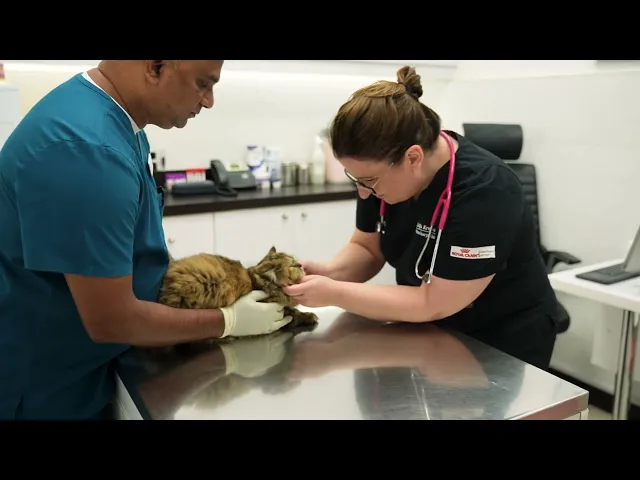
A dedicated nurse monitors heart rate, oxygen, blood pressure, and temperature throughout, so their only job is your cat while the vet operates.
Three
A calm, monitored wake-up
Your cat recovers on a heated bed with a nurse close by until fully alert. As soon as they're awake and stable, we call you.
THE PROCESS
What the day looks like
Drop off in the morning. Neuters go home the same afternoon; spays stay with us overnight.
THE NIGHT BEFORE
Fasting
No food after midnight; water is fine until morning. Kittens under four months follow a different schedule; we'll confirm it at your consultation.
MORNING
Admission
A final health check with the vet who'll be operating, and a chance to ask anything before you sign consent. Please keep your cat strictly indoors the night before, to avoid any last-minute escapes.
MIDDAY
The procedure
Neuters typically take around 15 to 20 minutes. Spays take a little longer, up to about 45 minutes, depending on your cat's age and size. We call you as soon as they're awake.
AFTERNOON
Home
Neutered males go home the same evening. Spayed females stay with us overnight for monitoring and go home the next day. Either way, you'll leave with aftercare instructions and a post-op check already booked.
HEALTH BENEFITS
What we're actually protecting against
Spaying and neutering do more than prevent litters; here's what each one protects your cat from.
Spaying
For female cats
Removes the ovaries and uterus, which rules out uterine infections and ovarian tumours, and significantly lowers the risk of mammary cancer, especially when done before her first heat. It also spares her the restlessness and vocalising that often come with heat cycles.
Neutering
For male cats
Removes the testicles, which rules out testicular cancer and lowers the risk of prostate issues later on. It also tends to reduce spraying, roaming, and territorial aggression toward other cats.
Community
Fewer unwanted litters
Beyond your own cat, spaying and neutering help reduce the number of homeless and community cats across Dubai.
HEALTH BENEFITS
What it costs
The price depends on the procedure and your cat's sex, and covers the initial checkup, the operation itself, and post-operative care. We confirm the exact cost in writing before anything begins.
Feline Castration (Males)
Price starts at 1,155 AED
(Including blood test & examination)
Feline Spay (Females)
Price starts at 1,500 AED
(Including blood test & examination)
If your cat is pregnant, in season, overweight, or has an existing condition, the procedure may take longer or need extra care, and the price can change accordingly. We'll always explain the difference before the day, never on it.
AFTER CARE
Recovery, at home
Proper post-operative care supports a smooth recovery. We provide detailed, personalised instructions upon discharge.
Most cats' appetite is back to normal within 24 hours.
Full recovery generally takes 7 to 10 days; males often a little faster than females.
Keep them indoors in a quiet, clean space, no jumping or strenuous play.
An e-collar keeps them from licking or chewing the incision.
Use dust-free litter for a few days to keep the incision site clean.
Call us any time if something looks wrong.
If your cat is mostly indoors already
Indoor cats tend to have an easier recovery, since confinement is already their normal routine rather than a big change. If your cat does spend time outdoors, we'll talk through how to keep them safely inside during the full recovery period.