Eye Care for Pets

Veterinary Ophthalmology in Dubai

Led by a specialist ophthalmologist, we diagnose and treat a wide range of conditions, from routine eye infections to complex surgical cases, including cataracts, glaucoma, and corneal ulcers.

Dr. Enas Ashry examining a grey cat's eye with an ophthalmoscope during a check-up at Noble Veterinary Clinics.

Dr. Enas - Jumeirah Branch

Eye Care for Pets

Veterinary Ophthalmology in Dubai

Led by a specialist ophthalmologist, we diagnose and treat a wide range of conditions, from routine eye infections to complex surgical cases, including cataracts, glaucoma, and corneal ulcers.

Dr. Enas Ashry examining a grey cat's eye with an ophthalmoscope during a check-up at Noble Veterinary Clinics.

Dr. Enas - Jumeirah Branch

Eye Care for Pets

Veterinary Ophthalmology in Dubai

Led by a specialist ophthalmologist, we diagnose and treat a wide range of conditions, from routine eye infections to complex surgical cases, including cataracts, glaucoma, and corneal ulcers.

Dr. Enas Ashry examining a grey cat's eye with an ophthalmoscope during a check-up at Noble Veterinary Clinics.

Dr. Enas - Jumeirah Branch

Eye Care for Pets

Veterinary Ophthalmology in Dubai

Led by a specialist ophthalmologist, we diagnose and treat a wide range of conditions, from routine eye infections to complex surgical cases, including cataracts, glaucoma, and corneal ulcers.

Dr. Enas Ashry examining a grey cat's eye with an ophthalmoscope during a check-up at Noble Veterinary Clinics.

Dr. Enas - Jumeirah Branch

LED BY

Dr. Enas Ashry

GPCert Ophthalmology, 12+ years

CHECK-UP

Annual

Every 6 months for seniors

TESTING

12 types

Tear tests to ultrasound

SIGNS TO WATCH

10+

Redness, cloudiness, discharge & more

Some eye problems cannot wait

A handful of conditions can cost a pet their sight within hours. If you see any of these, call us now rather than booking.

Sudden loss of vision

Sudden loss of vision

A red, painful, cloudy eye

A red, painful, cloudy eye

Often glaucoma, damages the eye quickly.

The eye is out of its socket

The eye is out of its socket

Common after trauma in flat-faced breeds

Any chemical in the eye

Any chemical in the eye

Rinse with clean water and come straight in

A visible injury or puncture

A visible injury or puncture

Do not let them rub it. Cover if you can

Holding the eye shut in pain

Holding the eye shut in pain

Squinting with discharge, often a deep ulcer

WHY NOBLE

Care built around your pet's eyes

Eye problems aren't always obvious until they're already serious, and by then, treatment options start to narrow. Here's what having the right specialist, tools, and approach all in one place actually means for your pet.

Precise diagnostics

Equipped to pinpoint eye issues and their source accurately.

An experienced ophthalmologist

Our dedicated specialist treats a wide range of eye problems.

Specialised surgeries

Precise surgical treatments and corrections for complex cases.

Personalised treatment

Every plan is designed around your pet's specific eye problem.

Dr. Enas Ashry, Noble Veterinary Clinics' ophthalmology specialist, smiling while holding a grey British Shorthair cat during an exam.

FLAT-FACED BREEDS

If your pet has a flat face, their eyes need watching

Shallow sockets mean the eye sits more exposed, blinking often doesn't close it fully, and the tear film dries at the centre. A Dubai summer of air conditioning dries the surface further.


The result is that ulcers happen more often, heal more slowly, and go deeper. These breeds are also at higher risk of the eye coming forward out of the socket after even minor trauma. Six-monthly checks are worth it for these dogs and cats in a way they aren't for others.

Shallow sockets mean the eye sits more exposed, blinking often doesn't close it fully, and the tear film dries at the centre. A Dubai summer of air conditioning dries the surface further.

The result is that ulcers happen more often, heal more slowly, and go deeper. These breeds are also at higher risk of the eye coming forward out of the socket after even minor trauma. Six-monthly checks are worth it for these dogs and cats in a way they aren't for others.

Persian

Exotic Shorthair

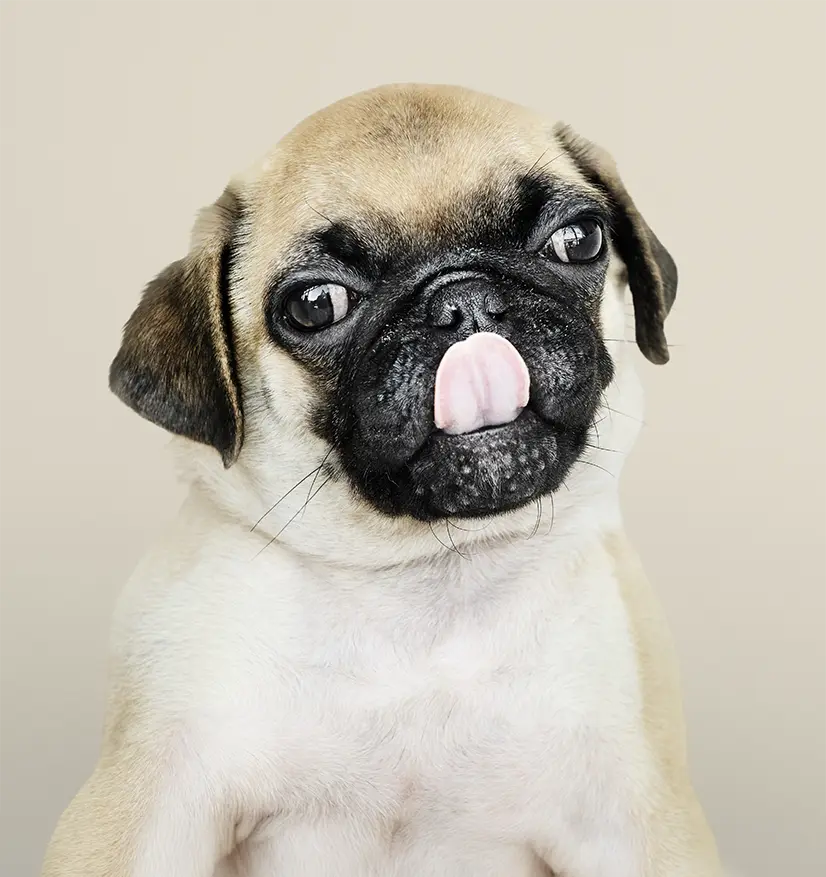
Pug

French Bulldog

Shih Tzu

Pekingese

Boston Terrier

Himalayan

SIGNS TO WATCH OUT FOR

How to know if my pet has an eye problem

Eye issues in pets can develop quickly, so if you notice any of these signs at home, it's best to bring them in.

Redness or inflammation

Squinting or excessive blinking

Cloudy or bluish eyes

Discharge (clear, yellow, or green)

Visible third eyelid

Rubbing or pawing at the eyes

Swelling of the eyelids or around the eye

Bumping into objects

Light sensitivity

Growths on the eyelids

WHAT WE TREAT

From an infection that won't clear to surgery on the lens

Most eye problems are treatable. What changes the outcome is how early they're seen, and whether the person looking has the equipment to find the cause rather than just the symptom.

Corneal ulcers

The most common eye emergency we see. Superficial ulcers heal in days. Deep ones can perforate, and need finding early. Learn More

The most common eye emergency we see. Superficial ulcers heal in days. Deep ones can perforate, and need finding early. Learn More

Cataracts

The lens turns cloudy and light stops reaching the retina, often linked to diabetes. Surgery can restore sight in the right cases. Learn More

The lens turns cloudy and light stops reaching the retina, often linked to diabetes. Surgery can restore sight in the right cases. Learn More

Entropion

The eyelid rolls inward and lashes rub the cornea with every blink. Surgical correction fixes it properly. Learn More

The eyelid rolls inward and lashes rub the cornea with every blink. Surgical correction fixes it properly. Learn More

Conjunctivitis

Inflammation of the eye's surface, from infection, allergy, or irritation. Usually resolves quickly with the right drops. Learn More

Inflammation of the eye's surface, from infection, allergy, or irritation. Usually resolves quickly with the right drops. Learn More

Glaucoma

Pressure builds inside the eye and damages the optic nerve. Painful, and vision loss is permanent once it happens. Learn More

Pressure builds inside the eye and damages the optic nerve. Painful, and vision loss is permanent once it happens. Learn More

Dry eye

Too few tears, so the surface is constantly irritated. Common, easily missed, and manageable for life once diagnosed. Learn More

Too few tears, so the surface is constantly irritated. Common, easily missed, and manageable for life once diagnosed. Learn More

Cherry eye

The tear gland of the third eyelid prolapses. Repositioning it preserves tear production; removing it doesn't. Learn More

The tear gland of the third eyelid prolapses. Repositioning it preserves tear production; removing it doesn't. Learn More

Retinal disease

Gradual or sudden vision loss as the retina deteriorates. Diagnosis matters even where treatment options are limited. Learn More

Gradual or sudden vision loss as the retina deteriorates. Diagnosis matters even where treatment options are limited. Learn More

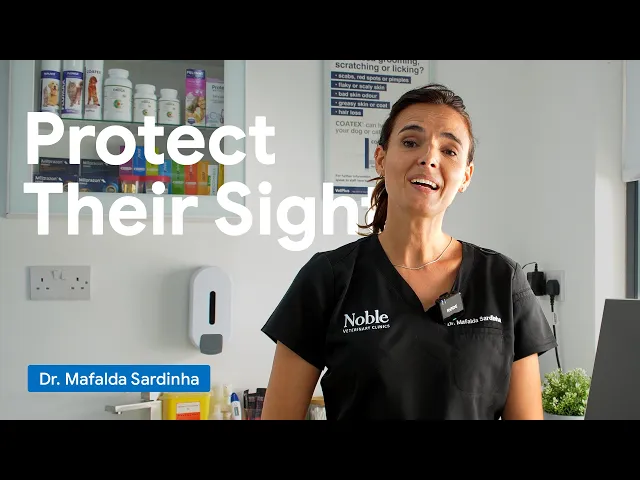
Common signs of eye disease in pets

Common signs of eye disease in pets | Noble's Dr. Mafalda Explains

Noble Veterinary Clinics

Common signs of eye disease in pets

Common signs of eye disease in pets | Noble's Dr. Mafalda Explains

Noble Veterinary Clinics

Common signs of eye disease in pets

Common signs of eye disease in pets | Noble's Dr. Mafalda Explains

Noble Veterinary Clinics

EYE EXAMINATION

How do we examine your pet’s eyes?

01

Eye exams

A complete exam covering vision, eye structure, overall eye health.

02

Schirmer tear test

Measures tear production, helping identify problems like dry eye.

03

Tonometry

Measures eye pressure painlessly, helping diagnose glaucoma.

04

Eye stain test

A dye highlights damage under a special blue light.

05

Fundoscopy

A quick, painless look at the retina, optic nerve, and blood vessels.

06

Slit lamp biomicroscopy

A high-powered microscope view of the front of the eye.

07

Chromatic PLR testing

Red and blue light assess retina and optic nerve function.

08

Cytology

Cells examined under a microscope for infection or inflammation.

09

Biopsy

A small tissue sample to diagnose tumours, cancer, or infections.

10

Ocular ultrasound

Visualises the eye's interior when direct viewing isn't possible.

11

Gonioscopy

Examines the eye's drainage area, important for glaucoma.

12

Electroretinogram

Measures retinal response to light to assess function.

OUR OPHTHALMOLOGY SPECIALIST

Dr. Enas Ashry

Eyes are delicate, and Dr. Enas has spent more than 12 years mastering them. She holds a GPCert in Veterinary Ophthalmology, is currently pursuing her Master's with the Royal College, and continues to build her knowledge in diagnosing and managing complex eye conditions.


She also brings the depth of a skilled soft tissue surgeon to every case, from routine eye checks to complex ophthalmic conditions.

Eyes are delicate, and Dr. Enas has spent more than 12 years mastering them. She holds a GPCert in Veterinary Ophthalmology, is currently pursuing her Master's with the Royal College, and continues to build her knowledge in diagnosing and managing complex eye conditions.

She also brings the depth of a skilled soft tissue surgeon to every case, from routine eye checks to complex ophthalmic conditions.

GPCert in Veterinary Ophthalmology

Currently pursuing a Master's with the Royal College

Also a skilled soft tissue surgeon

Dr. Enas Ashry, Noble Veterinary Clinics' ophthalmology specialist, smiling while holding a grey British Shorthair cat during an exam.

FOR REFERRING VETS

Send us the eye cases you cannot fully work up

Most clinics don't have a slit lamp, a tonometer, gonioscopy, or an ERG, which makes some eye cases impossible to diagnose properly however good the vet is.


We take ophthalmology referrals from practices across Dubai and the wider UAE. Your client stays your client. We see the eye, report back to you in full, and return them to your care.

Most clinics don't have a slit lamp, a tonometer, gonioscopy, or an ERG, which makes some eye cases impossible to diagnose properly however good the vet is.

We take ophthalmology referrals from practices across Dubai and the wider UAE. Your client stays your client. We see the eye, report back to you in full, and return them to your care.

How referral works

Send the case notes and we'll confirm an appointment, usually within 48 hours

Urgent cases, glaucoma and deep ulcers among them, seen the same day

A full written report with images back to you after every consultation

We treat the eye only. Everything else stays with you

Call Dr. Enas directly to discuss a case before referring

Does your pet's eyes need special attention?

Let our eye specialists take a closer look.

Does your pet's eyes need special attention?

Let our eye specialists take a closer look.

Does your pet's eyes need special attention?

Let our eye specialists take a closer look.

Everything You Need to Know

Questions? We're here to help

How often should I get my pet's eyes checked?

We recommend an annual eye exam with our specialist ophthalmologist. Seniors and pets with chronic issues may need more frequent checks, about every 6 months.

Are eye exams painful for pets?

No, our eye exams are non-invasive, quick, and painless. We may use numbing drops to keep your pet comfortable throughout the process.

What happens during a vet eye exam?

Dr. Enas will physically inspect the eyes, run any tests needed, and walk you through her findings. If an issue is present, she'll explain what's going on and what treatment looks like.

Are eye surgeries safe for pets?

Yes, eye surgeries are generally safe and common for pets, and are often necessary to restore vision, relieve pain, and help pets get back to their normal lives.

How long does recovery take after eye treatment?

Eye infections typically resolve within 7 to 10 days with proper care. Surgical cases usually take a bit longer, around 10 to 14 days. Either way, keeping your pet secure and comfortable in a safe space during recovery makes a real difference.

How can I prevent eye problems in my pet?

Regular eye exams are the biggest factor, alongside routine grooming, keeping the fur around their eyes trimmed, and maintaining a safe environment at home.

Everything You Need to Know

Questions? We're here to help

How often should I get my pet's eyes checked?

We recommend an annual eye exam with our specialist ophthalmologist. Seniors and pets with chronic issues may need more frequent checks, about every 6 months.

Are eye exams painful for pets?

No, our eye exams are non-invasive, quick, and painless. We may use numbing drops to keep your pet comfortable throughout the process.

What happens during a vet eye exam?

Dr. Enas will physically inspect the eyes, run any tests needed, and walk you through her findings. If an issue is present, she'll explain what's going on and what treatment looks like.

Are eye surgeries safe for pets?

Yes, eye surgeries are generally safe and common for pets, and are often necessary to restore vision, relieve pain, and help pets get back to their normal lives.

How long does recovery take after eye treatment?

Eye infections typically resolve within 7 to 10 days with proper care. Surgical cases usually take a bit longer, around 10 to 14 days. Either way, keeping your pet secure and comfortable in a safe space during recovery makes a real difference.

How can I prevent eye problems in my pet?

Regular eye exams are the biggest factor, alongside routine grooming, keeping the fur around their eyes trimmed, and maintaining a safe environment at home.

Everything You Need to Know

Questions? We're here to help

How often should I get my pet's eyes checked?

We recommend an annual eye exam with our specialist ophthalmologist. Seniors and pets with chronic issues may need more frequent checks, about every 6 months.

Are eye exams painful for pets?

No, our eye exams are non-invasive, quick, and painless. We may use numbing drops to keep your pet comfortable throughout the process.

What happens during a vet eye exam?

Dr. Enas will physically inspect the eyes, run any tests needed, and walk you through her findings. If an issue is present, she'll explain what's going on and what treatment looks like.

Are eye surgeries safe for pets?

Yes, eye surgeries are generally safe and common for pets, and are often necessary to restore vision, relieve pain, and help pets get back to their normal lives.

How long does recovery take after eye treatment?

Eye infections typically resolve within 7 to 10 days with proper care. Surgical cases usually take a bit longer, around 10 to 14 days. Either way, keeping your pet secure and comfortable in a safe space during recovery makes a real difference.

How can I prevent eye problems in my pet?

Regular eye exams are the biggest factor, alongside routine grooming, keeping the fur around their eyes trimmed, and maintaining a safe environment at home.

Everything You Need to Know

Questions? We're here to help

How often should I get my pet's eyes checked?

We recommend an annual eye exam with our specialist ophthalmologist. Seniors and pets with chronic issues may need more frequent checks, about every 6 months.

Are eye exams painful for pets?

No, our eye exams are non-invasive, quick, and painless. We may use numbing drops to keep your pet comfortable throughout the process.

What happens during a vet eye exam?

Dr. Enas will physically inspect the eyes, run any tests needed, and walk you through her findings. If an issue is present, she'll explain what's going on and what treatment looks like.

Are eye surgeries safe for pets?

Yes, eye surgeries are generally safe and common for pets, and are often necessary to restore vision, relieve pain, and help pets get back to their normal lives.

How long does recovery take after eye treatment?

Eye infections typically resolve within 7 to 10 days with proper care. Surgical cases usually take a bit longer, around 10 to 14 days. Either way, keeping your pet secure and comfortable in a safe space during recovery makes a real difference.

How can I prevent eye problems in my pet?

Regular eye exams are the biggest factor, alongside routine grooming, keeping the fur around their eyes trimmed, and maintaining a safe environment at home.

Noble Vet Clinics logo
Guided by Passion,
Backed by Veterinary Excellence
Instagram icon
Facebook icon
LinkedIn icon
TikTok icon

© 2006-2026 Noble Veterinary Clinics

Why work at Noble! Let’s transform the future of veterinary care together.

Why work at Noble! Let’s transform the future of veterinary care together.

Why work at Noble! Let’s transform the future of veterinary care together.