

Key Takeaways
Cats contract ringworm through direct contact with infected animals and people, as well as contaminated objects and surfaces.
Diagnosis involves Wood's lamp examination, microscopic examination, fungal cultures, and a PCR test.
Treatment takes about 6 weeks for recovery, with months for severe cases.
Summary
Ringworm in cats is a highly contagious fungal infection of the skin, hair, and nails. It's caused by a group of fungi called dermatophytes, and not worms.
Roughly 94-98% of cases in cats are caused by the fungus Microsporum canis. Other specific species include Microsporum gypseum and Trichophyton mentagrophytes.
Ringworm is also a zoonotic infectious disease, meaning cats can affect humans and vice versa.
Clinical Signs
This fungal disease causes significant skin infection. Here are the common symptoms observed by our veterinarians:
Ringworm Lesions. Bright red circular patches on the cat’s skin are common on the head, face, tail, and feet.
Bald Spots. Patches of hair loss may appear as irregular or circular spots.
Broken Fur. Broken fur may cause the coat to look dull, dry, or brittle with visible hair breakage.
Excessive Grooming. Cats with ringworm can be seen constantly scratching, licking, or biting the infected area of their body due to irritation.
Nail Issues. The claws and nail beds can experience brittleness, discoloration, rough bases, or deformities.

How do cats get a ringworm infection?
Ringworm in cats spreads easily through direct contact with an infected animal or person and contaminated environments and items such as bedding, grooming tools, or carpets.
This can happen when an infected cat plays or grooms with other healthy cats, or when healthy cats interact with contaminated water bowls.
Places such as unhygienic boarding facilities, daycares, and grooming salons are high-risk areas due to environmental contamination.
The fungal spores easily spread and enter the skin through tiny scratches or hair follicles. Ringworm spores are even capable of surviving on objects and surfaces for about 12-18 months.
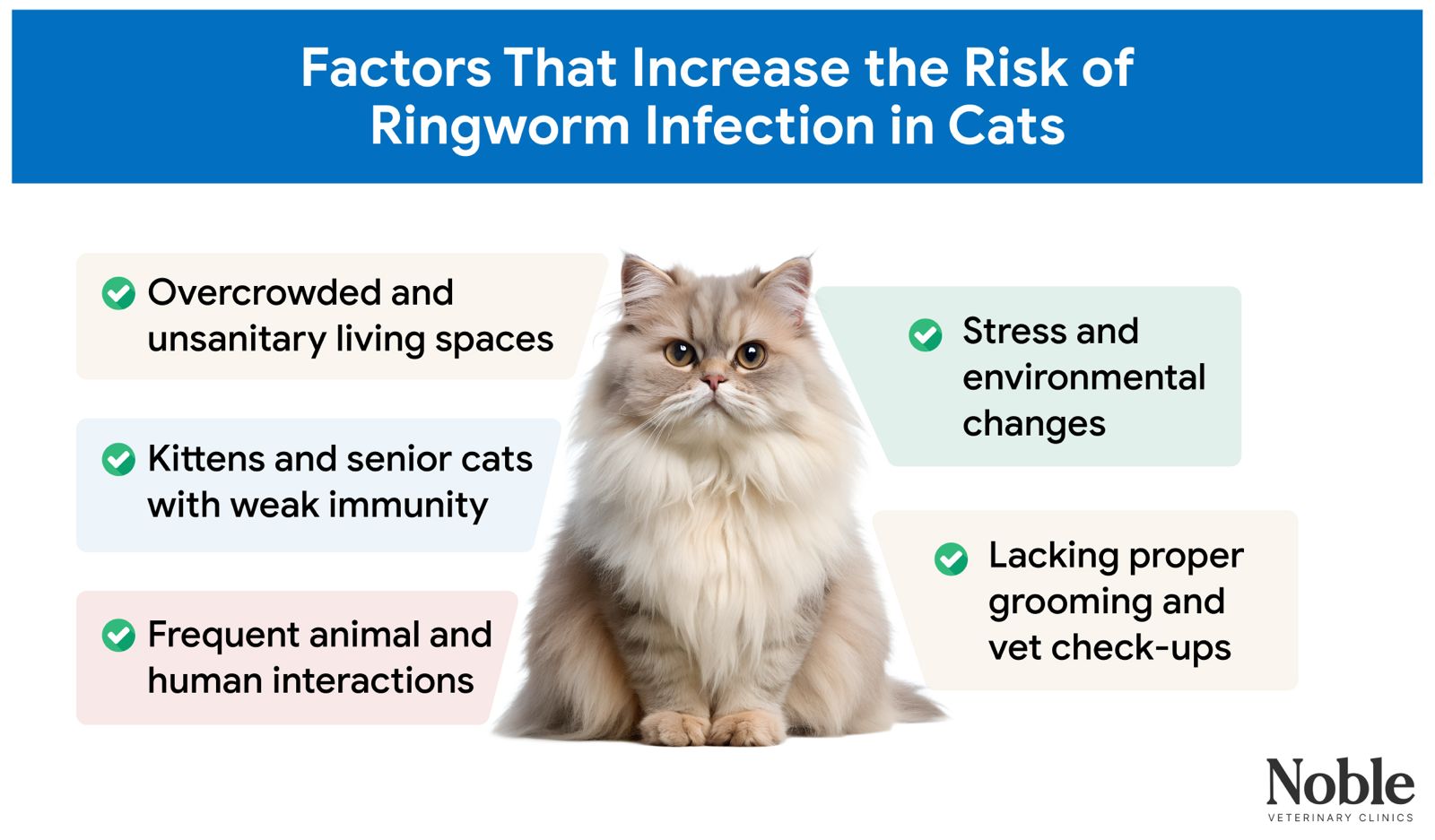
Poor hygiene is a significant risk factor for ringworm transmission.
Cats at Risk
While all cats can get ringworm, young kittens, seniors, and immunocompromised cats are among the most at risk. Cats with diseases such as feline immunodeficiency virus or feline leukemia virus have suppressed immune systems, making them vulnerable to an infection.
Another risk factor is a cat's living conditions and lifestyle. Indoor cats are much safer, while outdoor cats have a higher chance of exposure to ringworm spores.
Lastly, cats without sufficient basic care options will be at risk of feline ringworm. This includes the lack of nutrition, grooming, and preventive care.
How is ringworm diagnosed?
Our dermatology experts may perform a Wood's lamp examination, microscopic examination, fungal culture, or a PCR test.
"A Wood's lamp examination involves using an ultraviolet light to examine your cat’s fur. By doing so, some infected hair shafts may fluoresce a yellow-green or apple-green color, although not all cases will glow under the lamp," says Dr. Soheyl.
Our vets may also obtain samples of hair and skin scrapings from your cat for direct microscopic examination. From here, we can check for fungal spores or hyphae, the branching structures of fungi, but this rapid test has limited sensitivity of roughly 59%.
"The most definitive way to diagnose ringworm in cats is through a culture. This will be done in our in-house laboratory," says Dr. Soheyl.
Our vets will culture samples of hair and skin scrapings on dermatophyte test medium. The culture is incubated in the dark for 10-21 days to allow the fungus to grow. This will allow us to accurately identify the species.
A PCR test is also an option, as it's highly accurate and offers over 95% sensitivity. It typically delivers results in 1-3 days. A skin biopsy may also be considered for unusual or atypical lesions if another condition is suspected.
Ringworm Treatment
A combination of oral medications, topical therapy, and strict environmental decontamination is required for ringworm treatment. The process takes 6 weeks or more, depending on each cat's case.
Oral Treatment
Common oral medications include itraconazole and terbinafine. These are efficient at treating moderate or widespread infections and preventing the ringworm fungus from reproducing.
Topical Therapy
For topical treatment, our vets may prescribe lime sulfur dips or shampoos containing miconazole and chlorhexidine. Whole-body rinses and shampoos are effective at killing spores from the entire cat, keeping them treated topically.
We may also provide creams and ointments to apply to affected areas. Topical antifungal medications are highly effective, especially for localized lesions.
Home Decontamination
Your cat's environment should also be sanitized and decontaminated to prevent recurrence. Environmental contamination is a major roadblock for full recovery.

Recovery Timeline
Treating ringworm in cats takes patience and consistency. Here’s a general recovery timeline to help guide your expectations:
Weeks 2 to 4. Your cat will gradually show signs of recovery during this time, especially when proper treatment is given, though visible lesions often still take several weeks to fully clear.
Weeks 5 to 6. Some cats may have almost fully recovered by this point, while others need more time for healing. Do note that it’s important to follow the full course of treatment.
Weeks 6+. The next weeks will be for confirming healing. In many cases, treatment is stopped only after two consecutive negative fungal cultures, as directed by our vets.
Even after the visible symptoms disappear, some cats may still carry spores, which is why repeated fungal testing is recommended before reintroducing your cat to other pets.
How to prevent ringworm in cats
Since ringworm spores can remain in the cat’s environment for extended periods of time, good cleaning and maintenance practices are essential.
Similar to treatment, home cleaning is crucial. Wash your pet's bedding, blankets, and pillows at least once a week with hot water and a strong detergent. Vacuum carpets and surfaces regularly. We also recommend disinfecting hard surfaces with a diluted bleach solution or products with chlorine bleach.
Infected hairs from cats can shed spores into the home, so keep your cat isolated in a room that's easy to clean. Keep your cat indoors at all times.
For their personal hygiene, bathe your cat once every 4-6 weeks using a vet-approved shampoo. However, remember to avoid overbathing them. You should also feed your cat a high-quality diet to keep their skin and coat healthy.
“Ringworm is a stressful experience for our cats. The health of their skin is a big part of their overall health and happiness.”
- Dr. Paulina Czerska
Ringworm in cats is a stressful condition that can be easily avoided by keeping your cat's skin protected and cleaning their home. When you have a consistent cleaning routine in place, you'll keep your feline companion safe and protected.
Frequently Asked Questions



Subscribe to Our Newsletter
Worried about your pet?
We’re here for urgent care, wellness checks, or anything in between.