Can Dogs Eat Grapes? Explaining This Toxic Treat


If you’ve ever wondered if your dog can eat grapes, the answer is simple: No. Grapes are incredibly toxic to dogs, even in small amounts. Unlike chocolate or onions, where toxicity depends on the size of the dog and the amount eaten, grapes are dangerous no matter the breed, size, or age of your pup.

What makes grapes so harmful? The truth is, experts and vets still don’t know why grapes are toxic for dogs, but what they do know is that even a single grape can lead to severe health issues. In some cases, this can be fatal. That’s why it’s important to keep grapes out of reach at all times.
In this blog, we’ll discover everything there is to know about grapes for dogs, including the symptoms, what to do, and how grape poisoning is treated.
Why Are Grapes Toxic to Dogs?
You might be wondering why grapes are so dangerous for dogs. The frustrating answer is that no one knows for sure. Unlike chocolate, where the toxic component is well understood, the exact substance in grapes that harms dogs remains a mystery.
What we do know is that grapes can cause acute kidney failure in dogs. This means the kidneys suddenly stop working, making it impossible for your dog’s body to filter toxins out of their blood. Once this happens, waste products build up, leading to some serious consequences and, in some cases, death.
Another strange thing about grape toxicity is that it doesn’t affect all dogs the same way. Some dogs may eat a grape and be fine, while others can suffer kidney failure from just one or two.
Since there’s no way to predict which dogs will have a severe reaction, the safest approach is to avoid giving grapes altogether.
Even tiny amounts of grapes, whether fresh, dried, cooked, or blended into other foods, can be dangerous. That means foods like raisin bread, trail mix, and certain baked goods should also be kept far away from your pup.
The bottom line? There’s no "safe" amount of grapes for dogs. Even one grape could be enough to cause serious harm, so it’s best to keep them completely off the menu.
What Happens When Dogs Eat Grapes?
If your dog eats a grape, the symptoms won’t always appear immediately. The signs of grape poisoning in dogs can develop within a few hours or take up to 24 hours to show up. That’s why even if your dog seems fine at first, you shouldn’t wait for symptoms before taking action.
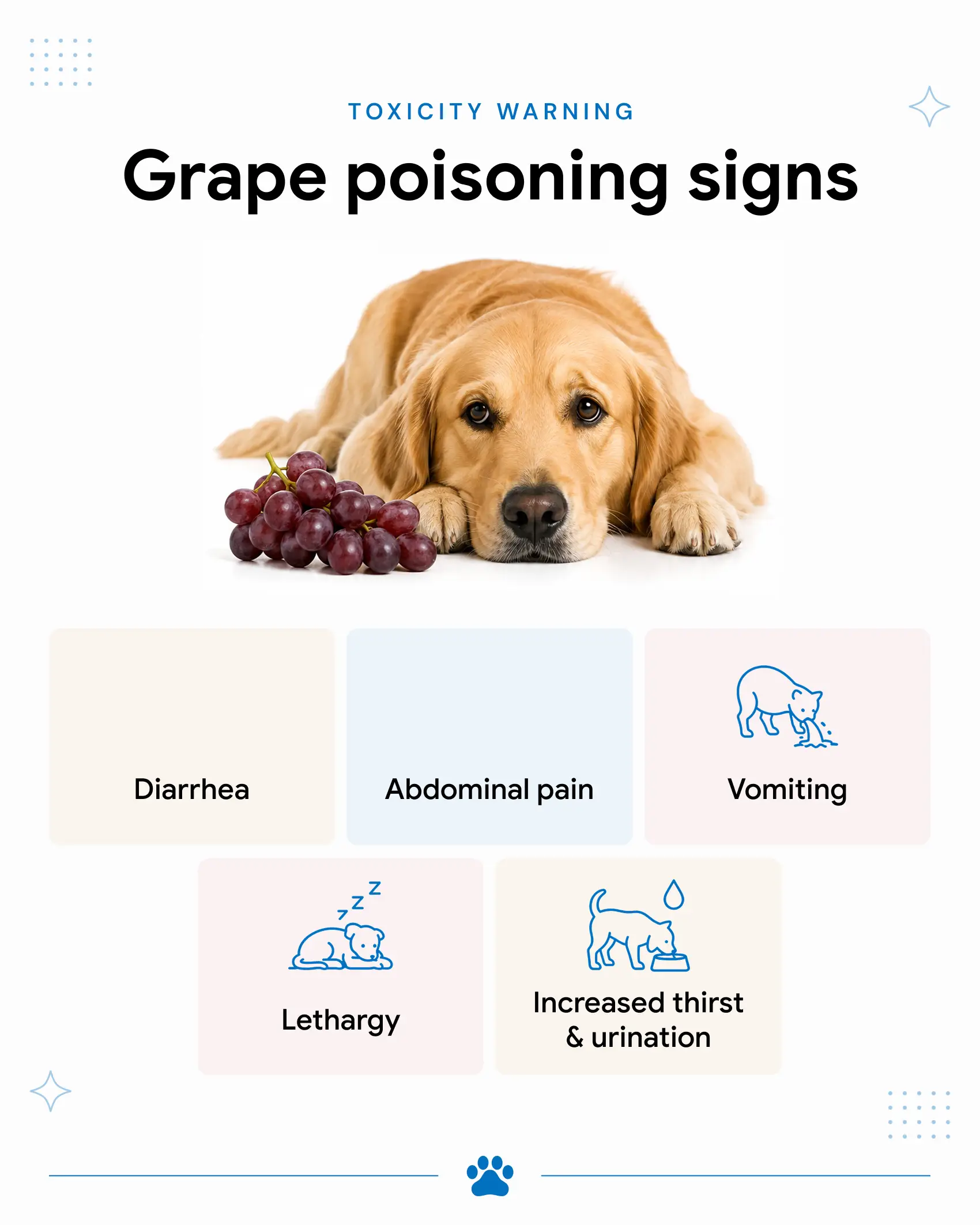
Once you’ve seen your dog eat a grape or noticed a few symptoms, bring them to the vet immediately.
Early-Stage Symptoms
One of the first warning signs is intense vomiting, which often happens within a few hours after ingestion. Your dog’s body may be trying to expel the toxic substance before it gets absorbed. This is usually followed by chronic diarrhoea, which may contain pieces of undigested grapes.
These early signs usually happen before the 24-hour mark.
Another early sign is lethargy or unusual tiredness. If your normally playful dog suddenly seems weak, uninterested in activities, or is hiding, this could be an early red flag. Some dogs may also drool excessively or act confused. As the toxins start affecting the kidneys, more severe symptoms appear.
Your dog may lose its appetite, refusing to eat even its favourite treats. Abdominal pain is also common as they might whimper, hunch over, or react when their belly is touched.
A major warning sign is increased thirst and urination since the kidneys will start to struggle to filter waste. However, as kidney function declines, the opposite can happen, as your dog may stop urinating altogether. This is a critical emergency, as it means the kidneys are failing.
Late-Stage Symptoms
If the kidneys completely shut down, the situation becomes dire. Dogs may become severely weak or collapse, rendering them unable to move. Seizures and tremors can develop as toxins build up in the bloodstream and negatively impact the nervous system. In extreme cases, your dog may slip into a coma.

Frequently Asked Questions



Get 150 AED Off Your Pet's First Visit




MORE THAN A VET VISIT