
Cat Sneezing: What You Should Know for Cats in Dubai


Key Takeaways
Sneezing can be caused by allergens, URIs, foreign objects, tumors, and dental disease.
It can be accompanied by other symptoms, including nasal discharge and coughing.
Prevention involves vaccinations, home cleaning, eliminating irritants, and grooming.
Summary
Sneezing is a reflex that releases air meant to clear irritants or blockages in the nasal passages. It's normal when it's occasional, but concerning when it becomes too frequent.
Persistent or severe fits often indicate an underlying issue, one that can worsen and cause complications. In Dubai, cats are exposed to a significant number of factors that may contribute to this symptom, particularly due to the hot climate and dusty/sandy environment.
Why Do Cats Sneeze?
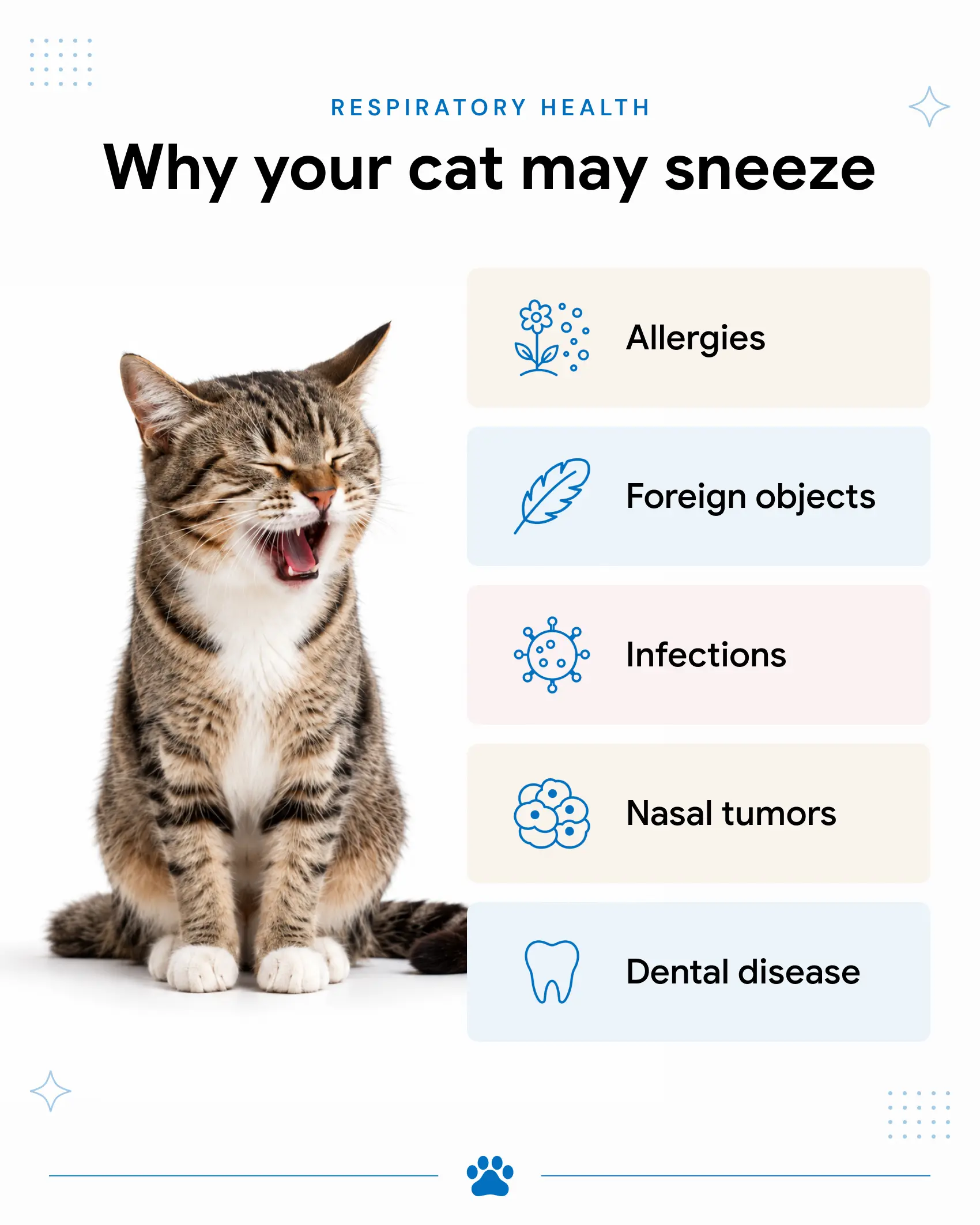
Allergies and Irritants
Many cats sneeze due to environmental allergies that irritate the nasal passages. This happens when they inhale dust mites, pollen, and sand.
Even indoor substances such as cleaning products, cigarette smoke, perfumes, air fresheners, and other inhaled irritants can trigger sneezing in cats.
Aside from the dusty environment, a main issue in Dubai is the heavy reliance on air conditioning because of the extremely hot climate. When these become dirty and are poorly maintained, they can harbour mould spores, dust, and bacteria, and spread them into the air.
Cats, with their delicate respiratory systems, can easily inhale these particles over time and develop sneezing.
Respiratory Infections
Upper respiratory infections are common causes of sneezing in cats, with pathogens including:
Feline Herpesvirus. FHV-1, or feline herpes, is a prevalent cause of sneezing in cats. This viral infection causes intense inflammation and excess mucus, irritating the nasal passages and triggering a sneeze.
Feline Calicivirus. Similar to feline herpesvirus, FCV can cause cat flu and present with sneezing as a symptom. Additionally, it can also result in painful oral ulcers on the tongue and gums.
Chlamydia felis. A common bacterium that is considered a major cause of conjunctivitis. It can also cause respiratory issues, with kittens being the ones most affected.
Bordetella bronchiseptica. While rare in cats compared to dogs, Bordetella bronchiseptica is a highly contagious bacterium. It spreads through direct contact with an infected animal's oral and nasal secretions.
Cryptococcus neoformans. An airborne fungus that causes the most common fungal infection in cats. It spreads when cats inhale the spores from contaminated soil or bird droppings.
These infections can lead to sneezing, nasal discharge, and loss of appetite, usually last 7-21 days, and are riskier in young and older cats. In severe cases, prompt veterinary care is important.
Foreign Material
Foreign objects that get stuck or lodged in the nasal passages can also cause sneezing in cats by triggering a defensive reflex. It happens when a foreign object, such as a blade of grass or speck of cat litter, gets lodged in the nasal passages, irritating the nerve endings inside.
This sends a message to the cat's brain, which leads to a powerful sneeze to expel the debris.
Nasal Tumors
While growths within the nasal tissue are rare, both benign and cancerous masses can cause frequent sneezing in cats. This is due to the chronic irritation from the physical obstruction that blocks airflow. In some cases, the tumors can result in noisy breathing and even bleeding.
Dental Disease
Surprisingly, dental disease can also be a cause. Because a cat's teeth sit close to the nasal sinuses, a deep tooth root infection can easily spread to the nasal passageways and cause chronic irritation and severe inflammation, triggering a sneeze.
Common examples of these include abscesses and gingivitis in cats.
Other Symptoms
In most cases, you shouldn't be too worried if your cat has an occasional sneeze or other mild symptoms.
You can simply monitor mild, self-limiting cases briefly. However, persistent sneezing may come with other signs that help point to a specific disease. Here are indicators that warrant a vet visit:
Nasal and Eye Discharge. Nasal mucus can indicate an infection or an allergic reaction, depending on its color, and watery eyes can accompany it. Clear signals allergies, yellow or green discharge indicates a viral or bacterial infection, while red discharge signals trauma or foreign bodies.
Coughing or Wheezing. Excessive or chronic coughing and wheezing are indicators of a respiratory issue.
Loss of Appetite and Weight Loss. Cats with congested nostrils may not eat as much as they normally do, even when given their favorite treats. Weight loss can be expected as a result.
Lethargy or Fatigue. A sick, sneezing cat may feel tired all the time and lose interest in playtime or cuddles.
Fever. Elevated body temperature can often indicate an infection as part of the immune system's response.
Breathing Problems. Difficulty breathing or unusual sounds can be signs of nasal congestion or something more serious affecting the lungs.
Frequently Asked Questions

Get 150 AED Off Your Pet's First Visit



MORE THAN A VET VISIT