7 Dog Sleeping Positions: Meanings and Why They Matter

If you live with a dog, you’ve probably caught them sleeping in a pose that makes you pause. Some may look comfortable, while others may appear questionable. From having a curled-up position to an open one, dogs have a lot of different sleeping positions. But what do they mean?
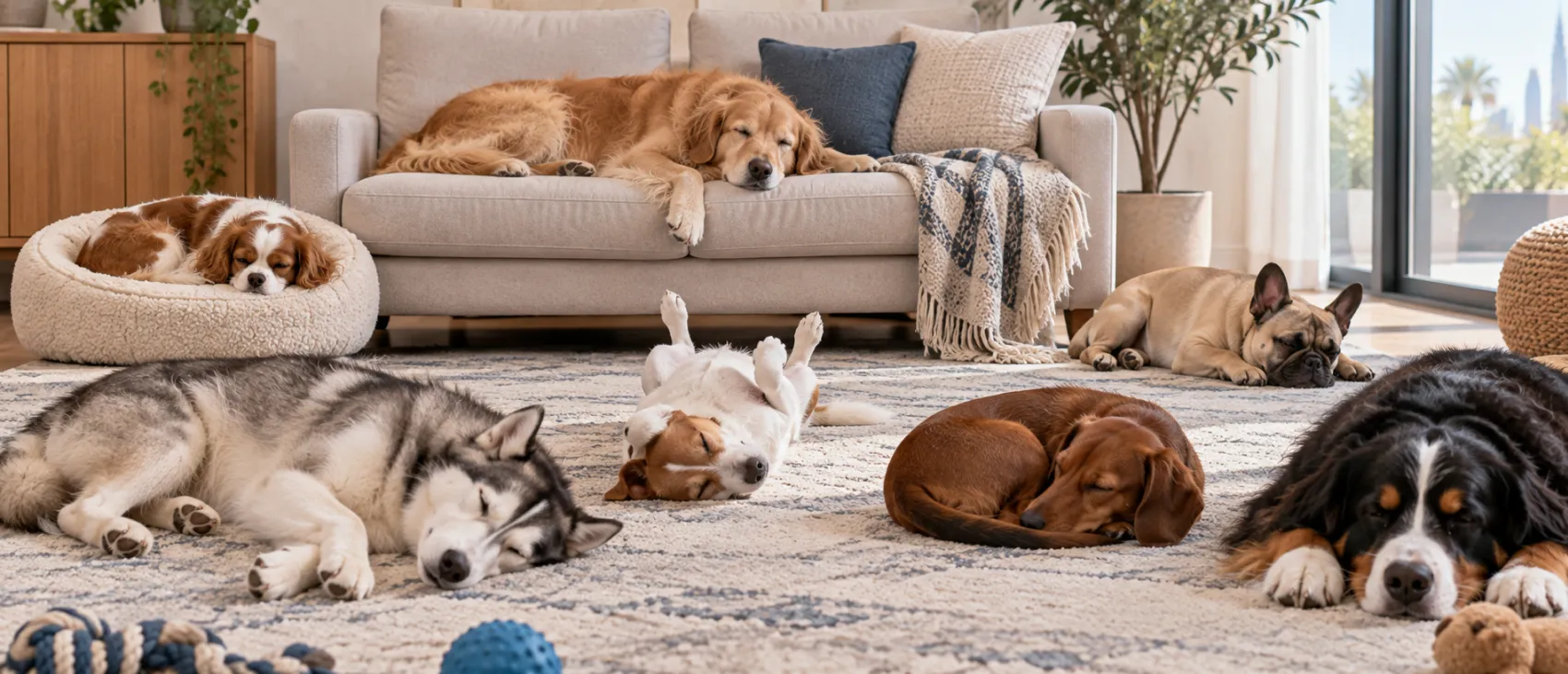
Here’s the fun part: a dog’s sleeping position can give you clues on how safe, cozy, and comfortable they feel. It can also hint at what your dog might need. In this blog, we’ll talk about the different dog sleeping positions and their meanings.
Why Does a Dog’s Sleeping Position Matter?
The way your dog sleeps is basically their comfort strategy in real time. Most of the time, it comes down to:
Comfort. Dogs tend to pick positions that feel good on their joints and muscles in that moment. This is especially the case after walks, playtime, or a big day of activities. Over time, you may notice that they switch positions depending on their comfort level.
Safety. Some positions expose vulnerable areas, like the belly, while others are meant to protect them. In general, dogs that feel safe and secure in their environment are more likely to sleep in more open poses. Dogs that don’t will have more guarded positions.
Temperature. A dog’s sleeping position also varies due to temperature. When dogs feel warm, they are more likely to stretch out. When they feel cold, they often curl up to conserve body heat.
Health Clues. The way your dog sleeps can also give out subtle clues about their health. This can be due to arthritis, joint pain, and many other health issues. If your dog suddenly has a hard time getting comfortable, it’s a good idea to check for other signs.
Common Dog Sleeping Positions
Now that we know how important a dog’s sleeping positions are, let’s talk about the most common ones pet owners see.
Side Sleeper
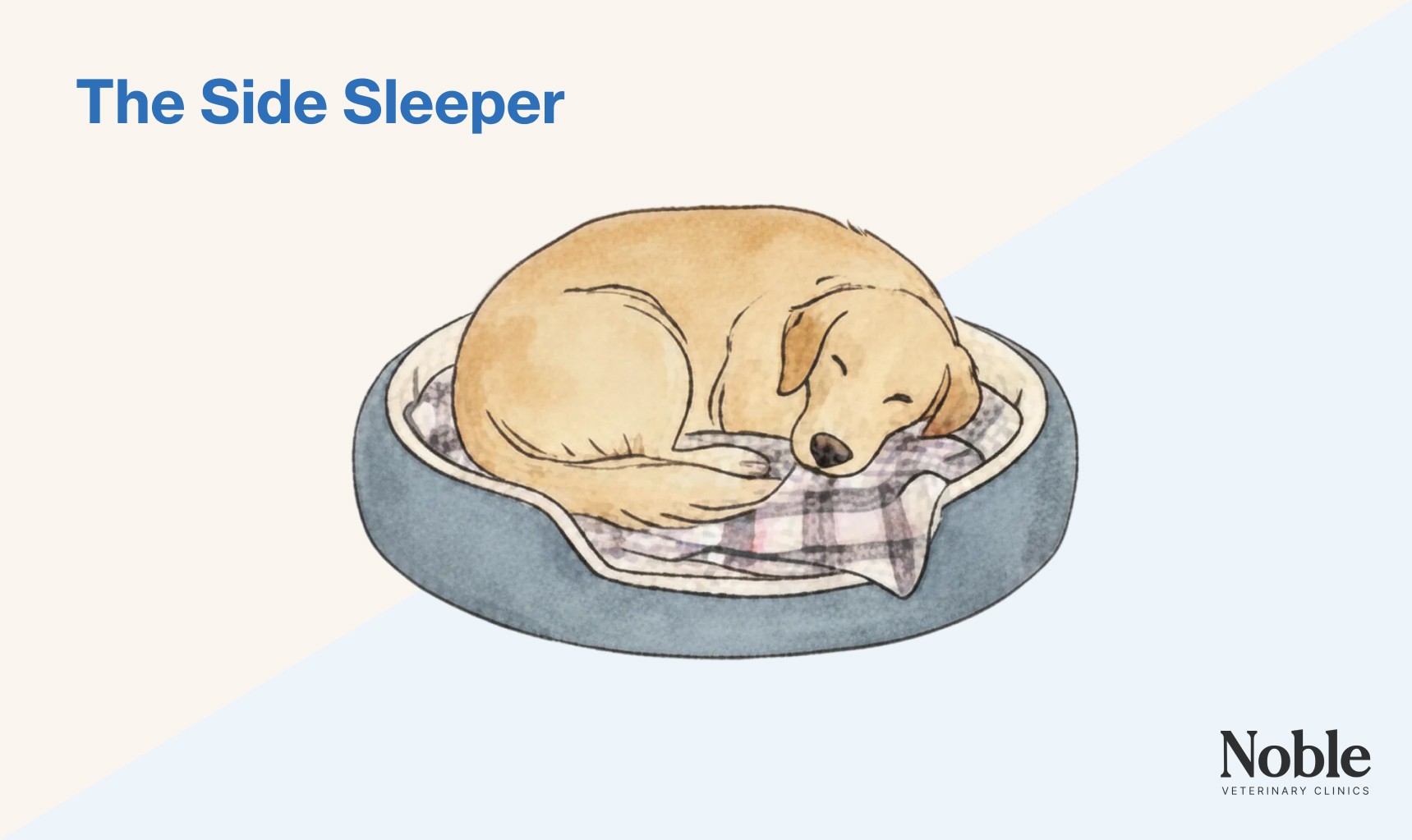
Dogs with this sleeping position lie on one side with their legs relaxed and their body looking loose rather than tense. This usually points to comfort and a sense of safety, because it’s a sleeping position that lets the muscles fully relax.
This sleeping position is also more likely to be the one where dogs are in deep sleep. It’s also one that they use when they feel stiff and want to relax.
The Lion’s Pose
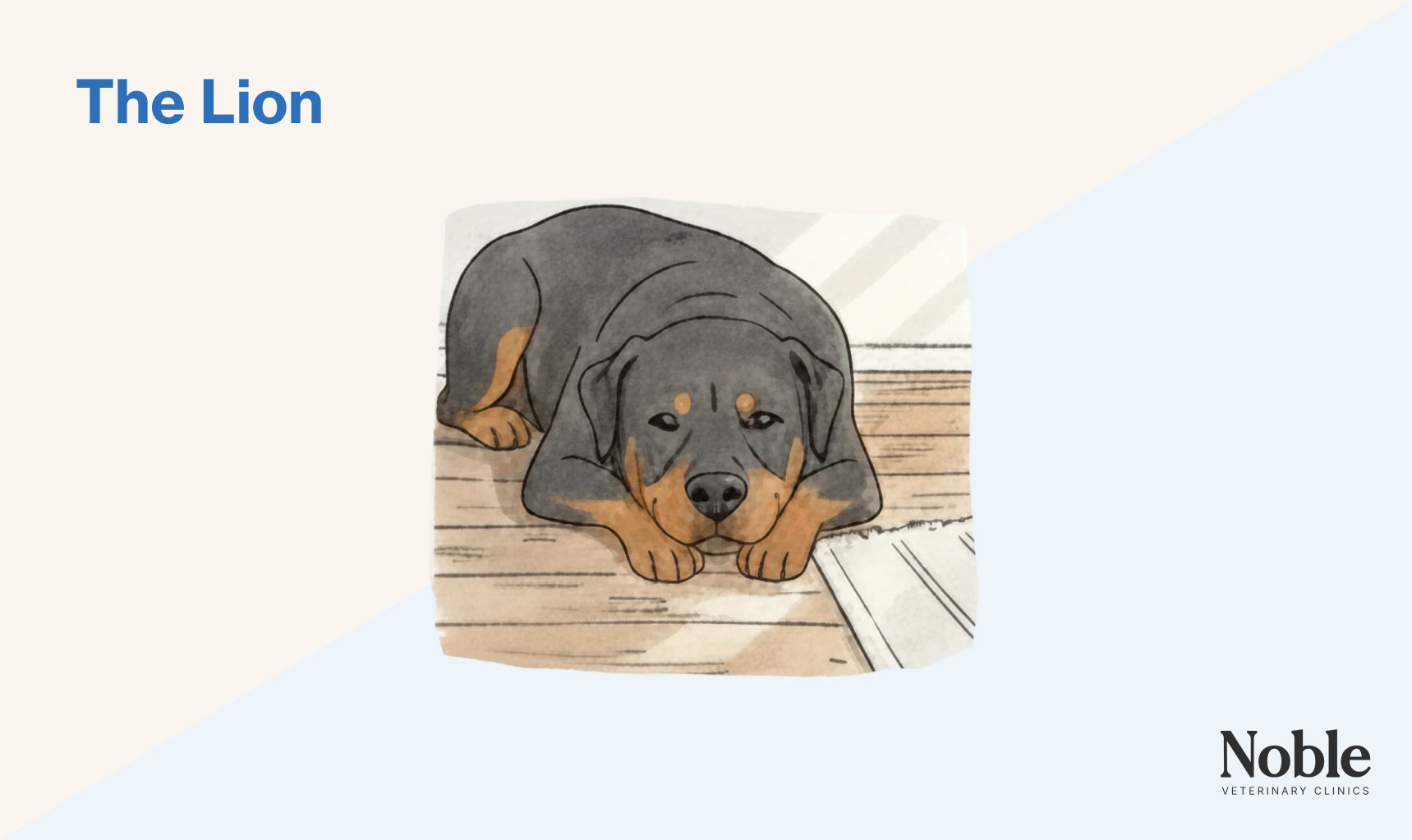
This is where your dog rests on their belly with the head up or resting on their paws. The Lion’s Pose is usually a sleeping position that dogs assume when they are on alert. This is common in busy homes, new places, or when they’re listening for sounds.
Essentially, dogs will sleep in this way if they feel like they have to react to something quickly.
The Superman
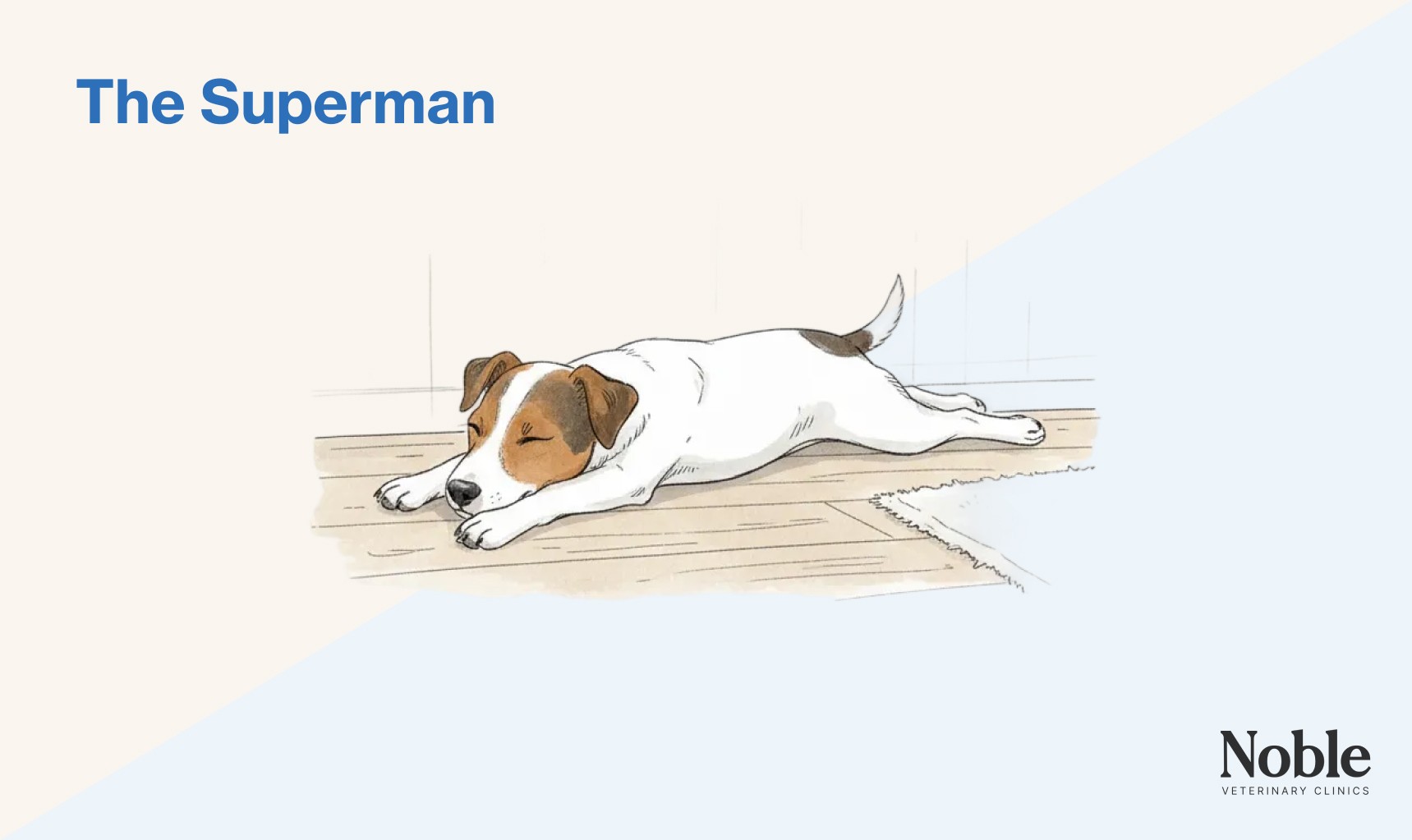
The Superman is a dog sleeping position in which they place their belly on the floor with their legs stretched out, sometimes with the back legs kicked straight behind. This often means they’re resting while staying ready to pop up quickly, and it can help them cool off against the floor.
You might see these in high-energy dogs that are always ready to play.
Cuddling
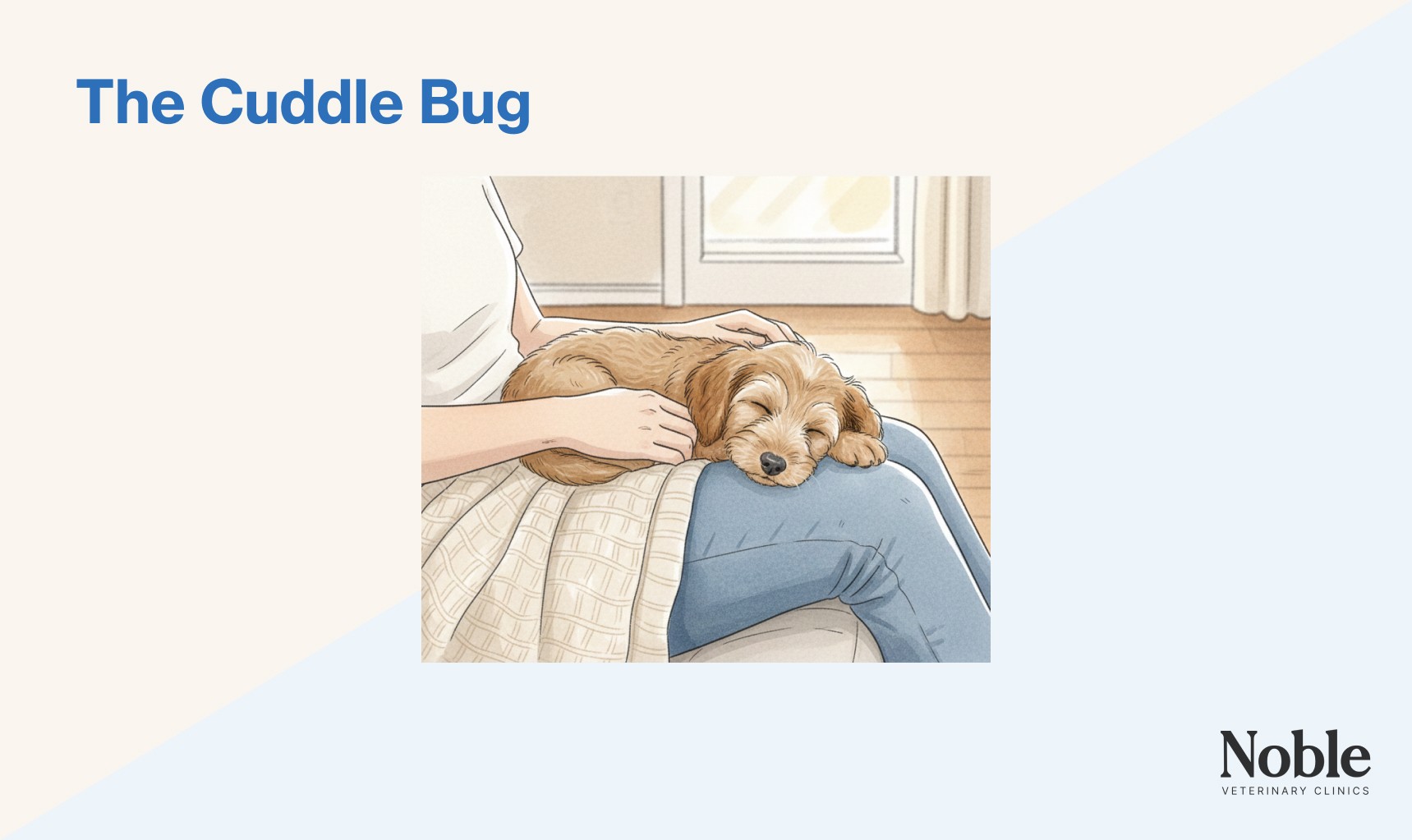
Your dog will sleep pressed against you, back-to-back, or tangled up with another pet. This dog sleeping position means bonding, comfort, and warmth. Many dogs simply prefer sleeping close to their families.
Take note of extra clinginess, as dogs may sometimes climb up on your bed and sofa with you for some extra bonding time.
The Donut
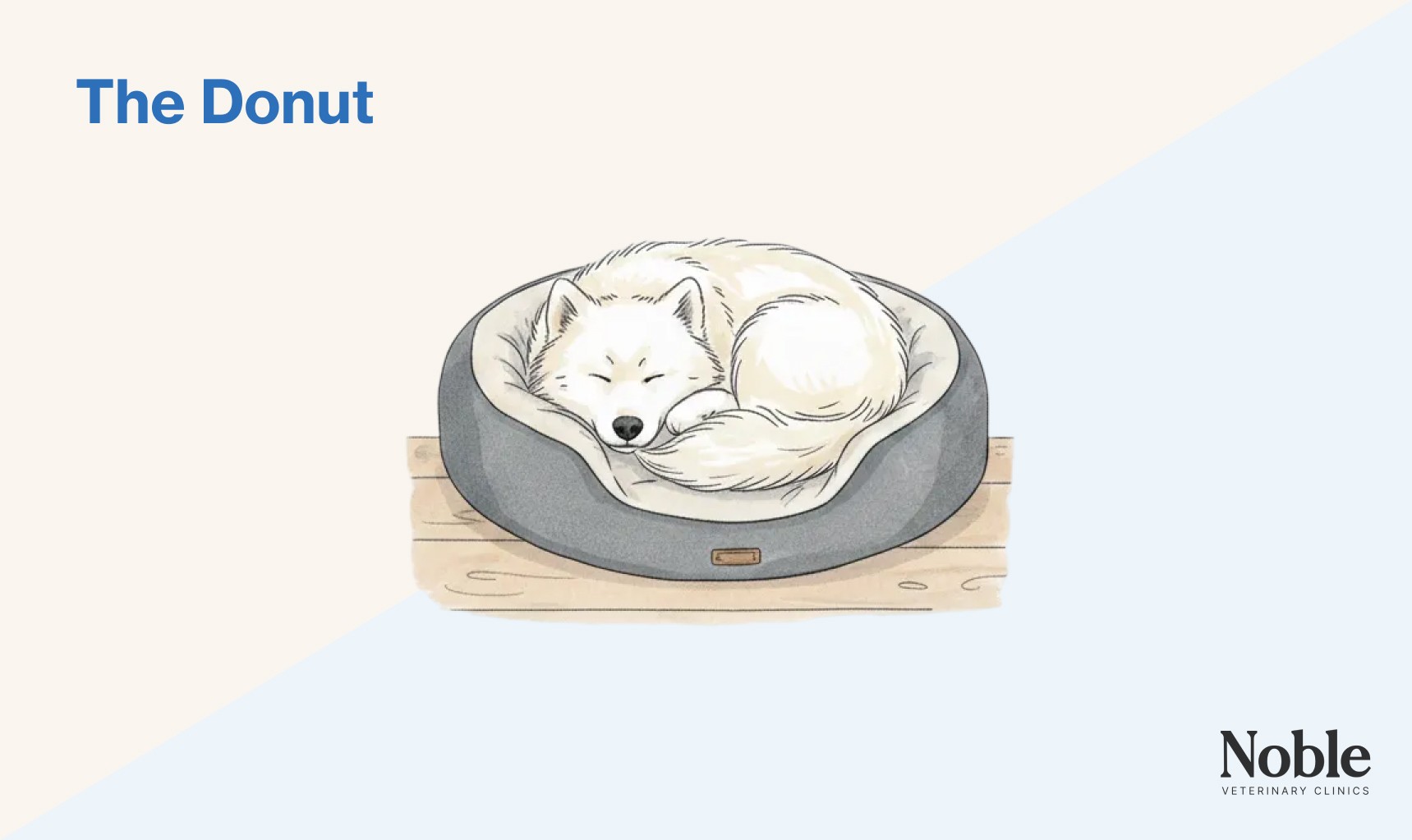
The donut is when they curl into a ball with their nose tucked toward their belly. The tail is also wrapped close, taking in as little space as possible. This dog sleeping position means that they are keeping warm and instinctively trying to protect their body.
You might see this when they sleep in colder rooms, in rainy weather, or in new places.
The Belly Up
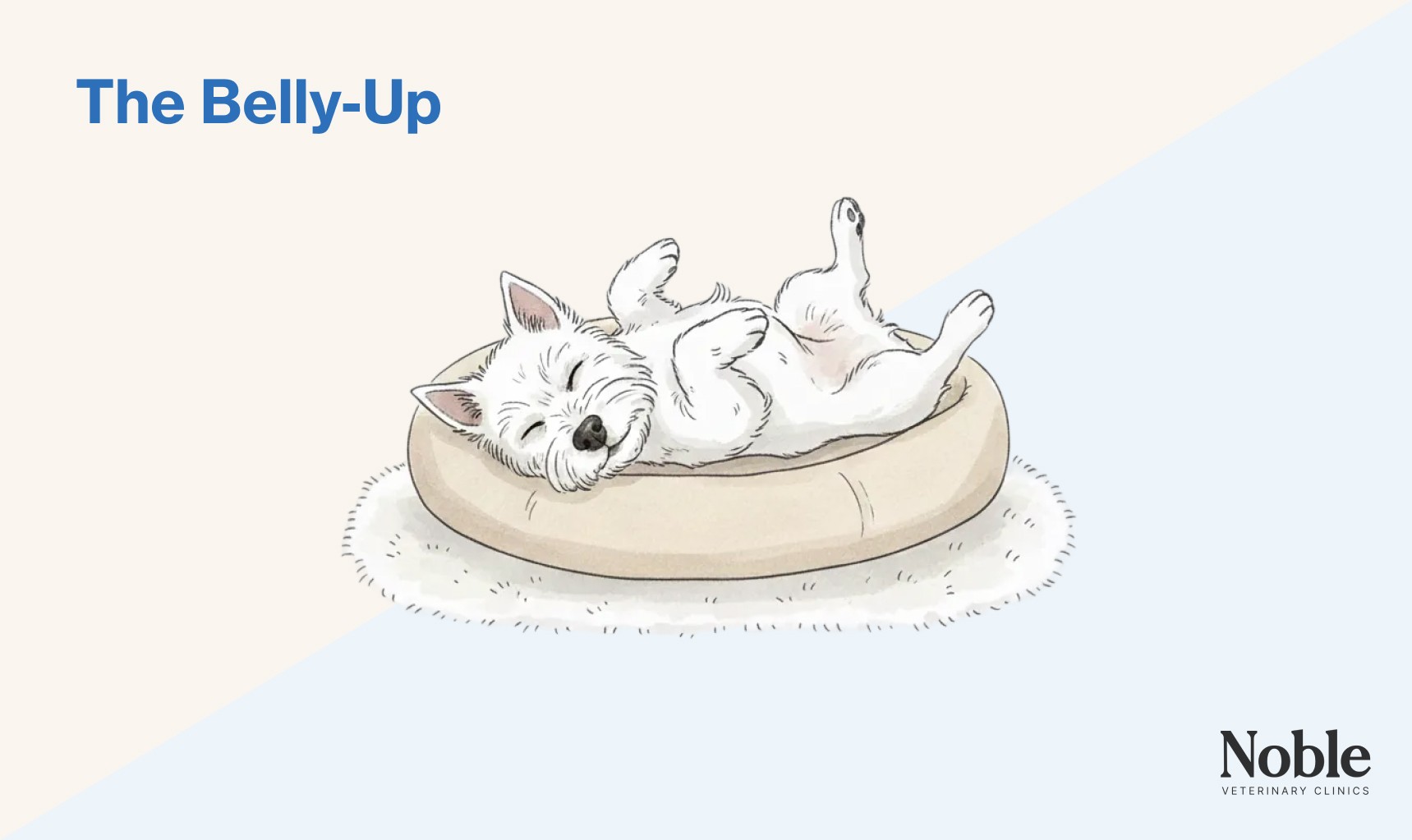
This sleeping position is when dogs lie on their back with their belly exposed and paws in the air. This typically suggests they feel very secure in their home, and they trust you.
Sleeping on their belly can also be a practical way to cool down because the belly has less fur and releases heat more quickly.
The Burrower
The burrower is a sleeping position that dogs use when they want to feel warm and secure. It’s done when they burrow themselves under pillows, blankets, and bedding to seek comfort.
This sleeping position can also be a way for dogs to hide and take a break from the many distractions around them. It’s a way to help them ease their anxiety and emotions.



Subscribe to Our Newsletter
Worried about your pet?
We’re here for urgent care, wellness checks, or anything in between.