
Ear Mites in Cats: Signs, How Cats Get Them, and Treatment


Our cats' ears are precious little things that need to be protected. These special hearing instruments are vulnerable to plenty of issues, including bacterial and fungal overgrowth. However, there’s also another major problem that should be carefully monitored: ear mites.
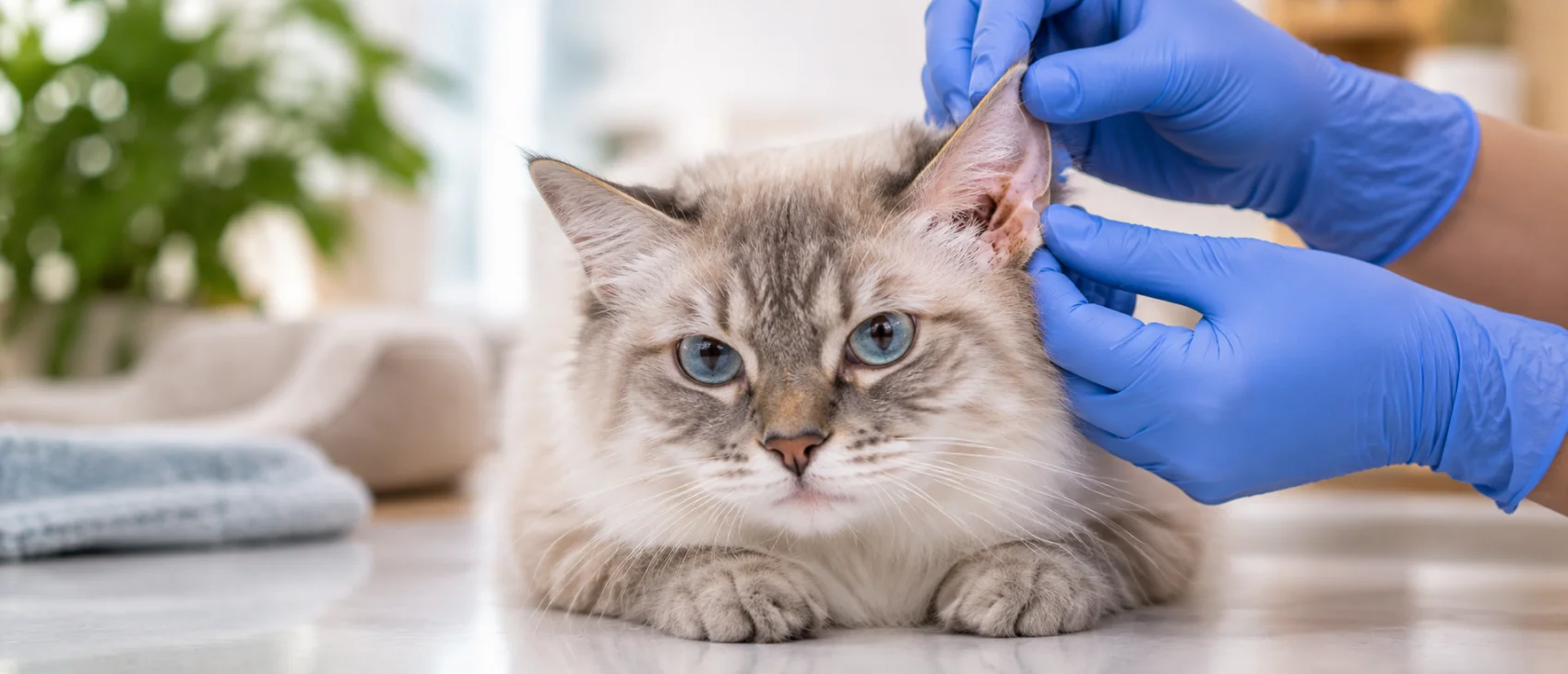
To get started, we’ll cover everything you need to know about ear mites in cats, from how they’re caused to how they are prevented. But first, let’s discover what ear mites are.
What Are Ear Mites in Cats?
Ear mites are tiny parasites that live in a cat’s ear canal and skin, causing intense irritation, itching, and inflammation. These microscopic parasites survive in a cat’s ear canal by feeding on the oils and wax present. The scientific name for ear mites in cats is Otodectes cynotis.
While these are not life-threatening parasites, they can cause extreme discomfort and pave the way for severe secondary infections. When left untreated, the condition can lead to some serious problems.
What Are the Symptoms of Ear Mites in Cats?
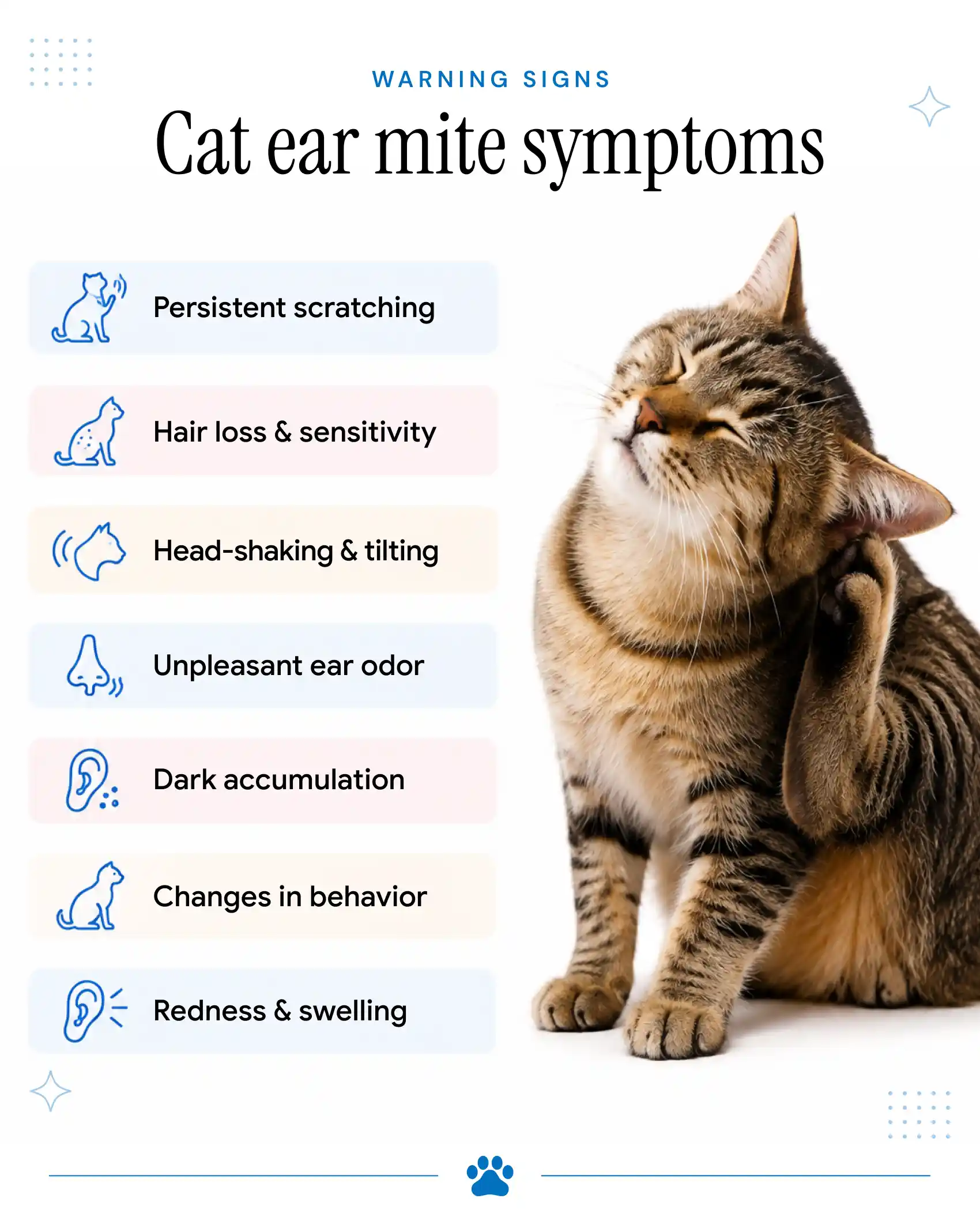
The signs are generally hard to miss, as you’ll notice your cat paying more attention to their ears. Below are the common symptoms of ear mites in cats.
Persistent Scratching. You might see your cat excessively scratching its ears with its paws or furniture. Too much scratching can only lead to wounds, scabs, and secondary infections.
Hair Loss Around the Ears. If your cat scratches too much, this might lead to hair loss in these areas. This might look like patches of thinning fur or bald patches.
Frequent Head Shaking. A clear sign of ear mites is frequent head shaking, which may look like the cat is trying to relieve irritation.
Dark, Crumbly Discharge. Dark, crumbly discharge in a cat’s ears that looks like coffee grounds is another sign. This is a mixture of earwax, blood, and debris left by the mites.
Redness and Swelling. The more damage the ear mites cause, the more the ears will become red, inflamed, and swollen. In severe cases, they can appear puffy.
Sensitivity and Pain. Cats with ear mites often feel pain when their ears are touched. They may react strongly and avoid your touch.
Behavioural Changes. If your cat's behaviour changes, it can mean that something is causing it stress and anxiety. Since they're cats, the changes won't be too drastic, so it's important to notice the smallest signs.
Severe Symptoms. Severe ear infections, hearing loss, and ruptured eardrums are possible if the condition is left untreated.
How Do Cats Get Ear Mites?
Ear mites can spread to cats through direct contact, contaminated environments, and maternal transmission.
Direct Contact. Ear mites are contagious, and cats can easily pick them up by making direct contact with other infected animals. This often happens in places where many animals are kept together, such as shelters and boarding facilities.
Contaminated Spaces. Cats can also contract ear mites through their surroundings, including bedding, toys, and grooming tools. They can survive for a limited time without a host. Kittens are at a much higher risk.
Maternal Transmission. Infected mothers that are close to their kittens during nursing and grooming may transfer the mites to them.
Which Cats Are Prone to Ear Mites?
Kittens and senior cats
Outdoor and free-roaming cats
Cats in shelters and multipet households
Cats with allergies and compromised immune systems.
Can Humans Get Ear Mites From Cats?
While humans can get ear mites from cats, it’s not that common. Ear mites mostly prefer to live on animals such as dogs and cats. So, at the very worst, the most these parasites can do is cause a little rash in humans.

Frequently Asked Questions







Subscribe to Our Newsletter
Worried about your pet?
We’re here for urgent care, wellness checks, or anything in between.