Dogs and ringworm are two things that shouldn’t go together, but often pair up. Essentially, ringworm is a fungal infection that affects a dog’s skin and coat.
Despite the name, ringworm is actually caused by a group of fungi called the dermatophytes. These microorganisms love warm and humid environments, both indoor and outdoor. What’s worse, the spores can survive in the environment for up to 18 months, making them difficult to remove.
In this guide, we’ll look at what causes ringworm, the signs to watch for, and how it’s diagnosed and treated. We’ll also go over a few ways to help keep it from spreading to other pets or you.
How Can Dogs Get Ringworm?
The fungus Microsporum canis is the one most commonly linked to ringworm in dogs. But it’s not the only culprit. Trichophyton mentagrophytes and Microsporum gypseum can also cause infections.
Dermatophyte Species | Prevalence in Dogs |
|---|---|
Microsporum canis | ~70% |
Trichophyton mentagrophytes | ~20% |
Microsporum gypseum | ~10% |
The fungi are usually transmitted through:
Contaminated Soil
Dogs can get ringworm through contact with soil. We all know that dogs love digging. They can also get it accidentally during their walks. Spores in soil can remain active for over a year.
Direct Contact
Dogs can also contract ringworm through contact with other pets, like cats. Other forms of transmission can be with no contact at all. They can also get it from humans.
Contaminated Surfaces or Objects
Grooming tools, furniture, carpets, bedding, and toys can harbor spores for a long time after exposure. Shared environments, such as unhygienic dog parks and kennels, increase risk.
Can Humans Get Ringworm From Dogs?
Yes, ringworm is zoonotic, meaning dogs can give it to humans. This happens when you touch your dog or something they used, like a blanket or brush. Kids and elderly people are especially vulnerable due to their developing or weaker immune systems.
Which Dogs Are Most at Risk for Ringworm?
Dogs at Risk | Why |
|---|---|
Puppies and Seniors | Puppies have developing immune systems, while seniors have weaker ones. |
Dogs With a Genetic Predisposition | Dogs such as Yorkshire Terriers, Boston Terriers, and Jack Russell Terriers have skin that is easily damaged. |
Dogs With Skin Folds | Skin folds create a humid environment that promotes fungal growth. |
Dogs with Weak Immune Systems | Compromised immune systems mean that the dog will have a harder time fighting off infections. |
Hot and Dry Climates | A hot and humid climate is an ideal environment for fungal growth. |
Dogs in Shared Spaces | If hygiene isn’t emphasized, dogs can easily spread the ringworm spores. |
What Are the Symptoms of Ringworm in Dogs?

You’ll notice most of these signs on your dog’s skin and coat, usually on the face, ears, paws, or tail. These include:
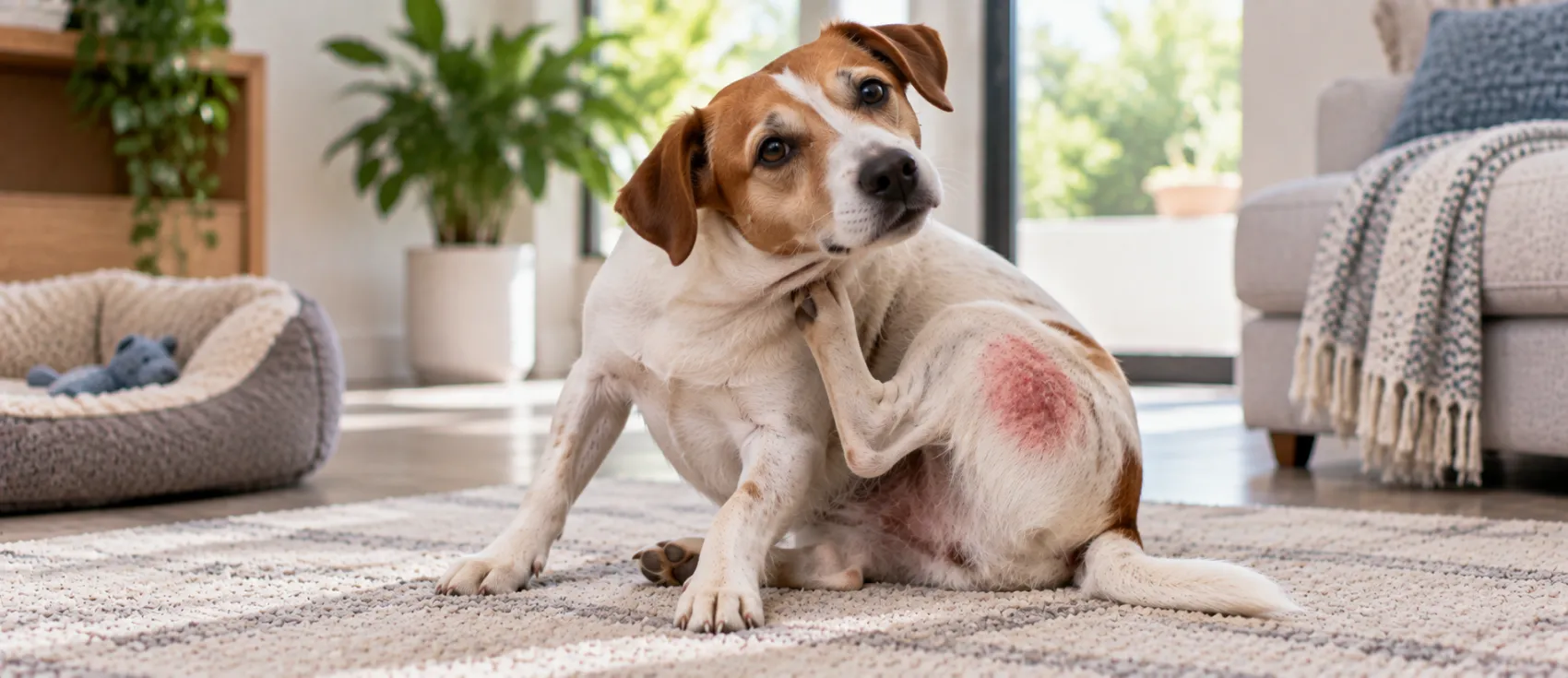
Circular Hairless Patches. These are the usual symptoms, characterized by round patches of hair loss.
Itching or Scratching. Dogs may excessively chew or scratch these localized areas.
Scaly or Crusty Skin. The skin can look flaky, rough, or scaly.
Dull or Brittle Coat. Hair might look uneven or patchy. The coat loses its shine and starts to feel dry.
Skin Inflammation. In more advanced cases, the skin gets inflamed. You might see redness around the edges of a lesion.
How Do Vets Diagnose Ringworm in Dogs?
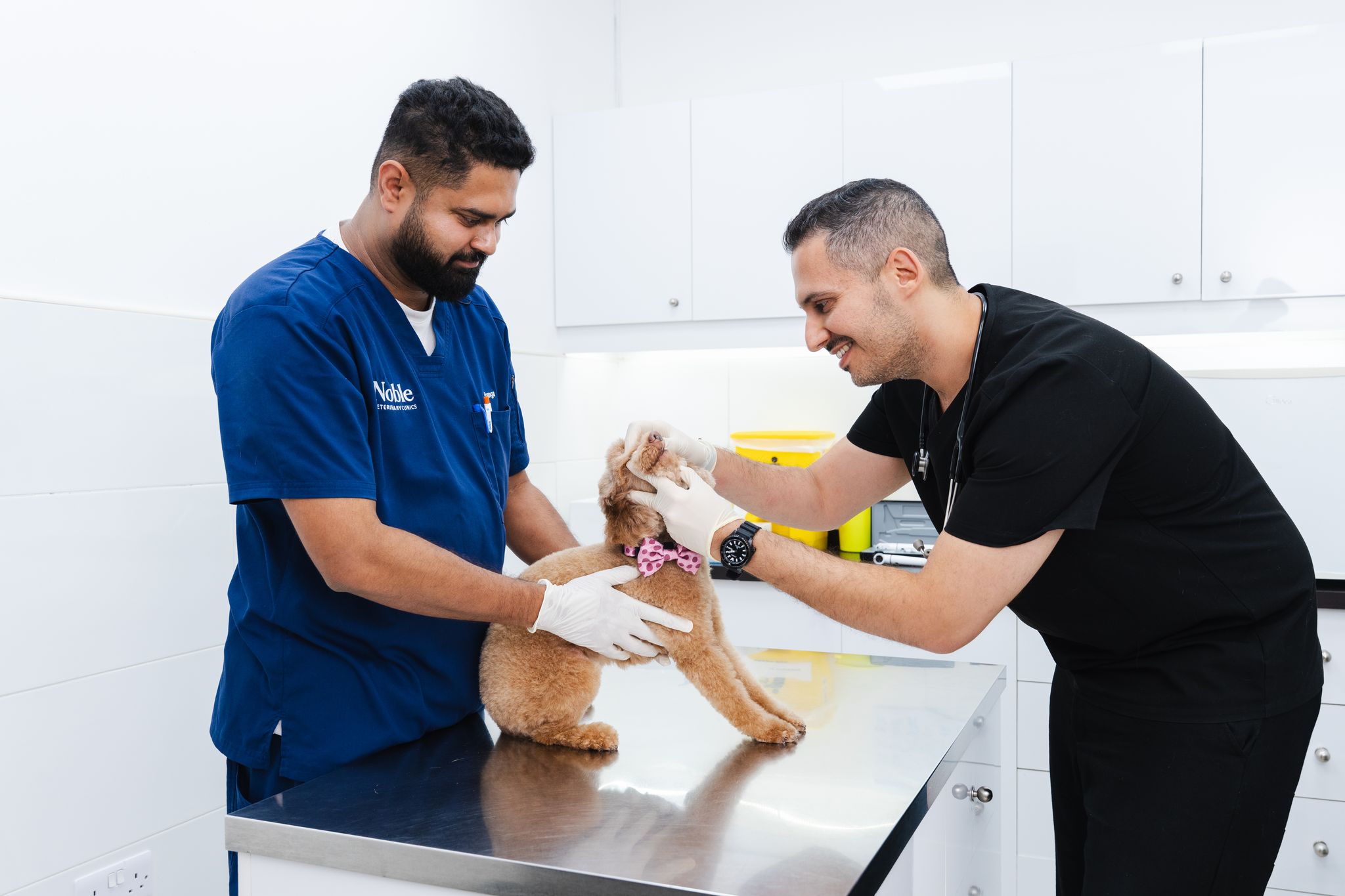
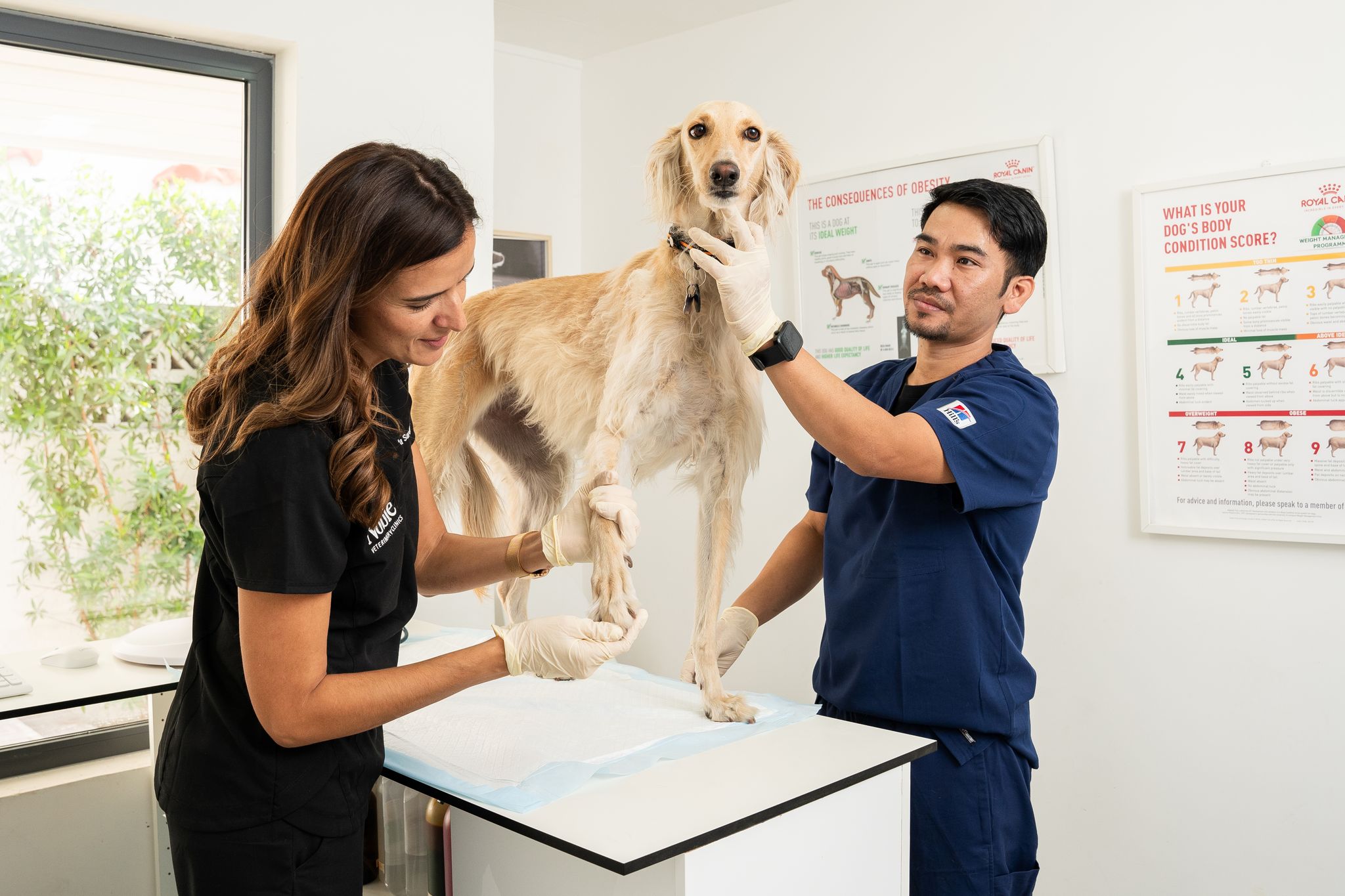
Before we begin treatment, we must first accurately diagnose your dog’s skin condition to see if it is ringworm or not. Next, we can proceed to do some laboratory tests. Here’s how our team does it:
Visual Inspection
We check for the usual signs, such as circular patches of hair loss, crusty skin, and more. This gives us the starting point for what to do next.
Wood’s Lamp Examination
A Wood’s lamp emits a special ultraviolet light that causes around 50% of M. canis infections to fluoresce a bright apple-green color.
Microscopic Examination
We collect hair samples and examine them under a microscope to look for the fungal spores.
Fungal Culture
A fungal culture is the most accurate method for diagnosing ringworm in dogs. It works by taking hair or skin scrapings and placing them in a special container to grow a culture.
PCR Testing
A faster technique that rapidly detects the DNA of fungi in hair and skin samples. It’s highly sensitive, but very expensive.
Here’s a diagnostic comparison:
Diagnostic Method | Accuracy | Time to Results | Pros | Cons |
|---|---|---|---|---|
Visual Inspection | Moderate | Immediate | Quick and non-invasive | Can be misleading |
Wood's Lamp | Moderate (for M. canis) | Immediate | Detects fluorescence | Not all fungi fluoresce |
Microscopic Exam | Moderate-High | Same Day | Faster than culture | May miss early infections |
Fungal Culture | High | 1-4 weeks | Gold standard | Time consuming |
PCR Test | High | 1-3 days | Rapid and specific | Limited availability and cost |
How to Treat Ringworm in Dogs?

To treat ringworm in dogs, patience and consistency are key. The process usually involves medication and home cleaning.
Topical Antifungals. Medicated shampoos, ointments, and dips are essential. Ingredients like miconazole or chlorhexidine help clear surface infections.
Oral Antifungals. In more severe cases, we may prescribe itraconazole, terbinafine, or griseofulvin. These work from the inside out.
Environmental Decontamination. Perhaps the most overlooked step. Without treating your home, reinfection is almost guaranteed.
Complete recovery may take several weeks to months. Even if your infected dog looks better, don’t stop treatment prematurely. That’s a surefire way to trigger relapse.
Can Dogs Get Ringworm Again?
Recurring ringworm can be frustrating, but it is often preventable. This happens when:
Treatment is incomplete
The home isn’t properly sanitized
Asymptomatic pets spread spores
Not confirming with follow-up diagnostics
How Long Can Ringworm Last on Dogs?
Ringworm in dogs can last for about 6 weeks to 18 months. When given appropriate veterinary care, the infection will resolve within 4-6 weeks.
Vet Tips: How to Prevent Ringworm in Dogs?

Preventing a ringworm infection in your dog is more helpful than treating one. It saves your dog the trouble of the pain and saves you from the hassle. Here’s what you can do:
Keep Your Dog Clean
Bathe your dog regularly using vet-approved shampoo. Grooming helps you spot any early skin problems, too.
Stick to Routine Vet Visits
Wellness checks are important to detect issues such as ringworm and many other conditions. It also includes other essentials such as vaccines and deworming.
Disinfect Often
If your dog had ringworm before, deep-clean everything. Wash bedding, vacuum floors, and wipe down surfaces. Use a 1:10 dilution of chlorine bleach to kill spores on hard surfaces.
Avoid Risky Contact
Don’t let your dog roam where strays hang out. It’s important to limit their access to outdoor areas and always remember to supervise them when they go out.
“When you protect your dog’s skin, you protect their comfort, their happiness, and their smile.”
- Dr. Leticia Maia
Final Thoughts
Ringworm in dogs isn’t usually life-threatening, but it can spread fast and be tough to get rid of. Catching it early makes all the difference. So does sticking with treatment and keeping your home clean.
Frequently Asked Questions
Share