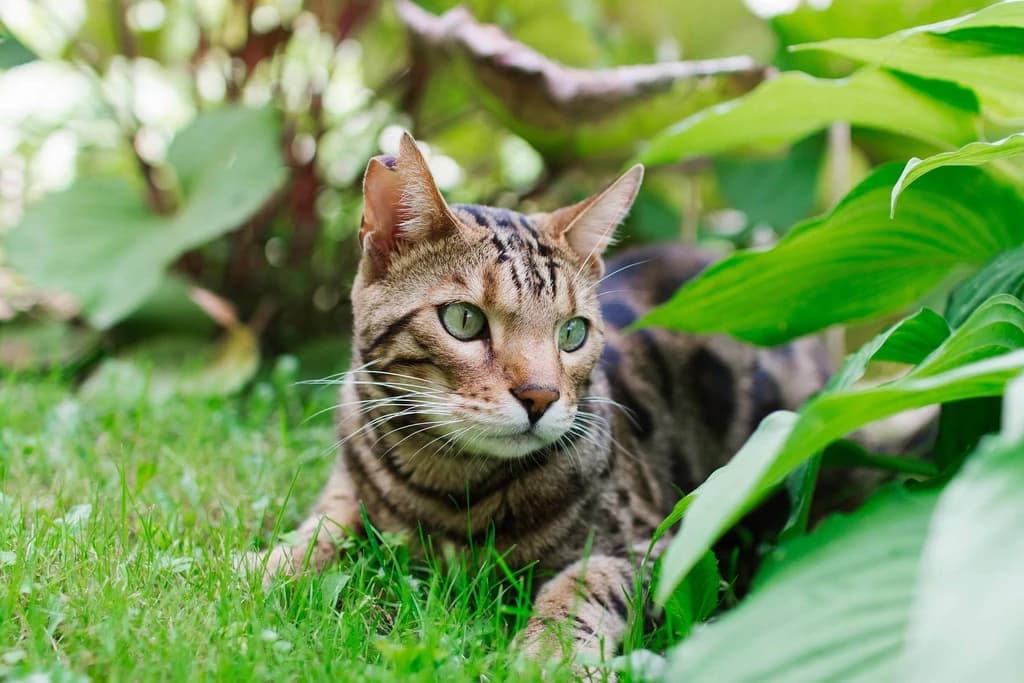
Breed Overview
Personality: Affectionate, playful, intelligent, energetic, vocal
4-7 kg (8.8-15.4 lbs)
Coat Colors: Brown, silver, snow
Short hair
Coat Patterns: Spotted, marble
Eye Color: Gold, green
12 to 16 years
Yes
History of the Bengal Cat
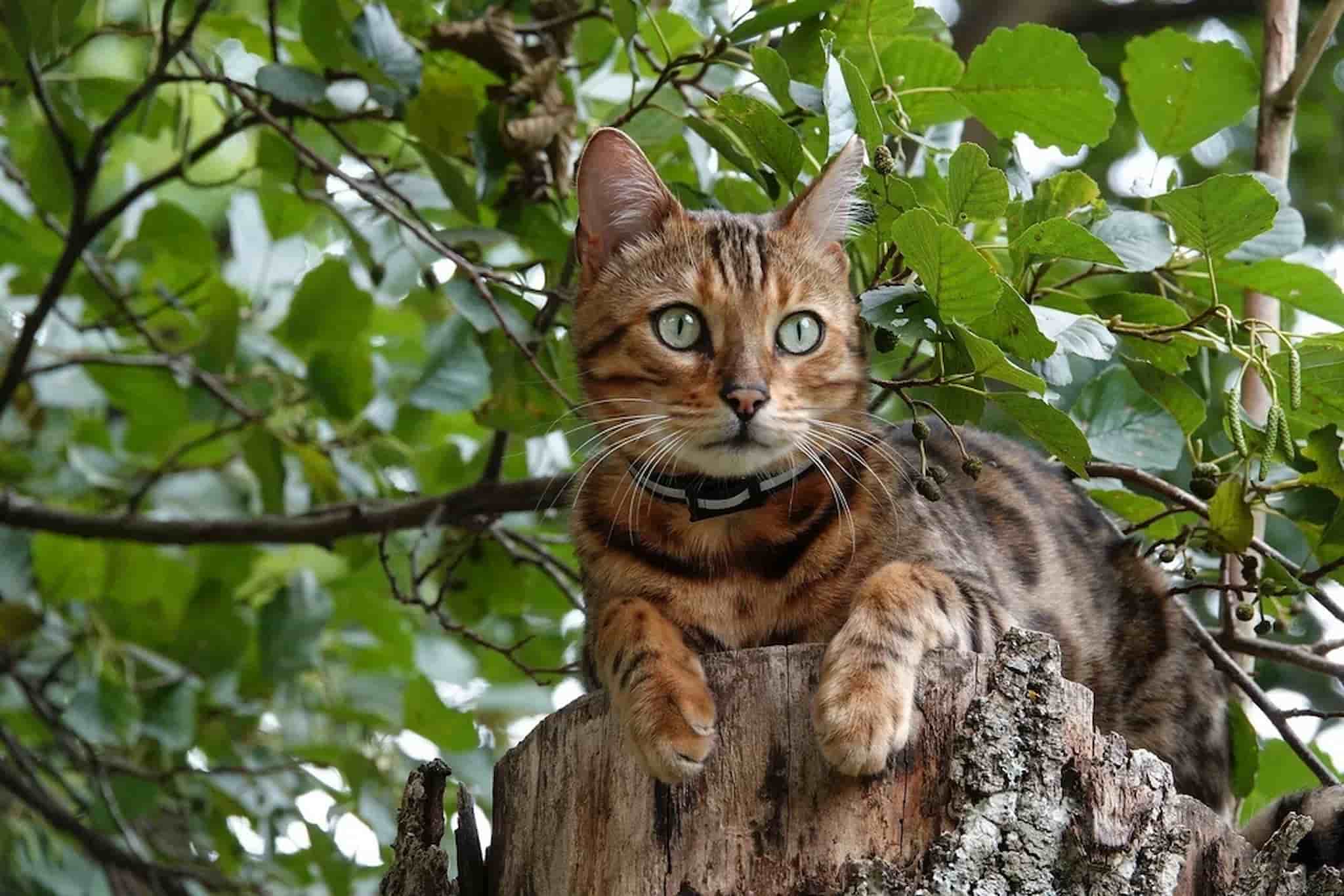
Bengals were first introduced by crossing domestic cats with the Asian Leopard Cat. The modern version came from a cross between the California Tomcat and the Asian Leopard Cat. Through the dedication of Jean Mill and a few other experts within the field, the Bengal Cat became popular in the 1980s.
While its history is rather short, the dedication of these breeders is not to be underestimated. Today, the Bengal is one of the most famous cat breeds in the world, with its leopard-like appearance but dog-like personality.
Physical Characteristics of Bengal Cat
Head
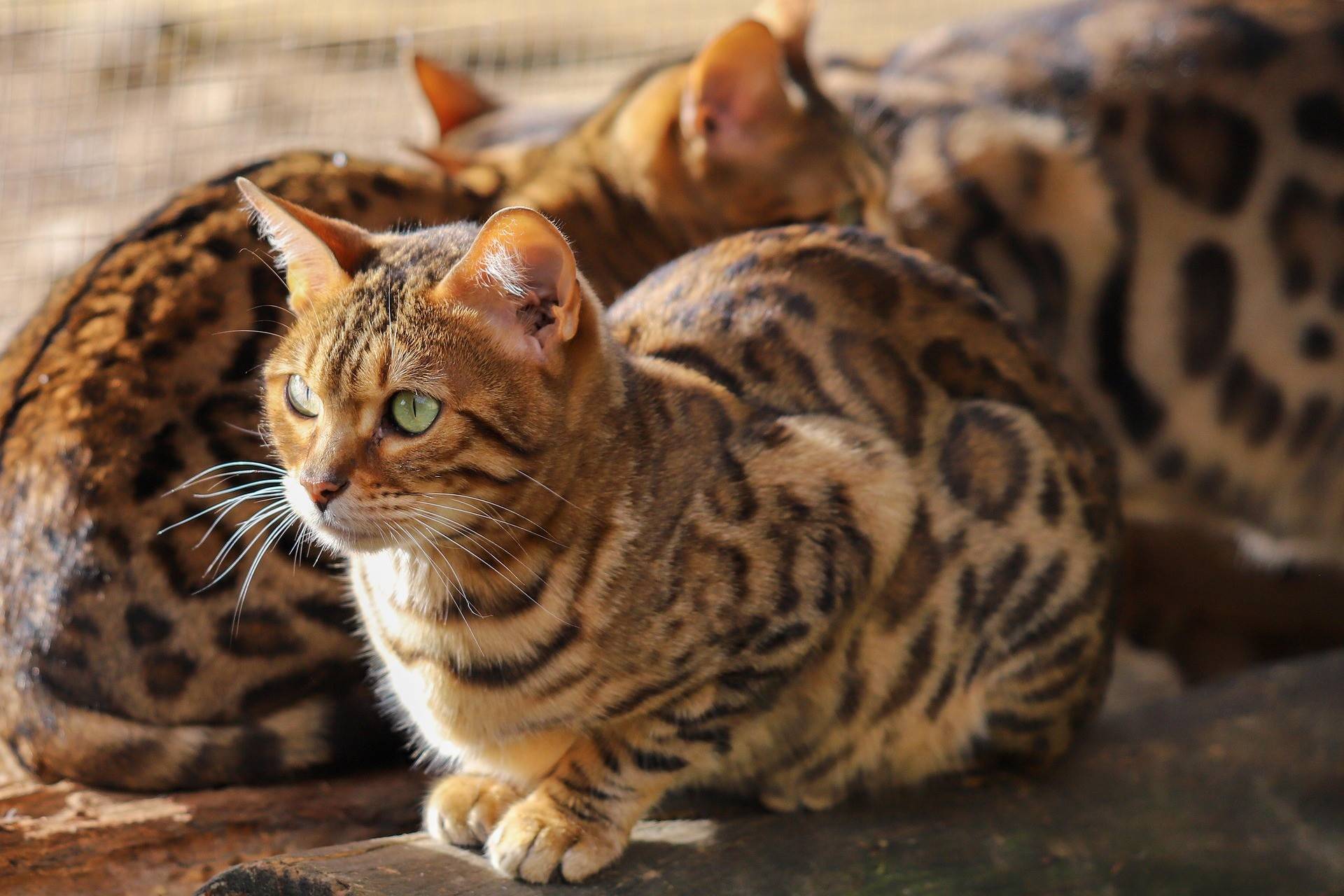
The head is broad with a slightly rounded wedge shape, prominent cheekbones, and a strong chin. The muzzle is full, and the nose is large and slightly puffed.
Eyes
Their eyes are generally green or gold and are almond-shaped.
Ears
The Bengal cat’s ears are medium-sized and rounded at the tips. These are set to the side.
Body
The body is strong, muscular, and athletic, with a powerful frame.
Limbs
Their limbs are of medium length, and their paws are large and round.
Tail
The tail is thick, muscular, and is usually carried low.
Coat
The coat is short and soft, with a distinct leopard appearance, generally brown spotted.
Size
Male: 25.4-30.5 cm (10-12 inches); Female: 23-28 cm (9-11 inches).
Weight
Male: 4.5-6.8 kg (10-15 lbs); Female: 3.6-5.4 kg (8-12 lbs).
Just welcomed a Bengal Cat
What to Expect With a Bengal Cat
Vocalization Level
Bengal cats are a very vocal breed that likes to seek attention or express emotions. They often express themselves through chirps, meows, and purrs.
Energy Level
Bengals have a high energy level, often requiring lots of playtime and physical activity. They also need mental stimulation to avoid getting bored.
Independence Level
They are moderately independent, as they would like human attention but can also survive long periods of time without it.
Affection Level
Bengals are moderately affectionate, but depending on their own wants. They would rather engage in playtime than lap sitting and cuddling.
Compatibility with Children
These cats are good with children, especially when engaging in playtime. However, they do not prefer rough handling.
Compatibility with Other Pets
Bengals can be good friends with other pets if socialized early. In most cases, their territorial nature will take over, making it hard to pair them with other pets.
Adaptability Level
Bengals are highly adaptable cats that adjust well to new environments, people, and routines. However, like any other cat, they will need time.
Trainability Level
These cats are generally easy to train. They can easily learn new tricks and games when done effectively.
Exercise Requirements
Bengal cats require regular physical activity. If they don’t receive enough physical and mental stimulation, they can react badly.
Mental Stimulation Needs
Like their exercise needs, they also require regular mental stimulation to keep them occupied and entertained. Toys, puzzle feeders, and new places can help.
Grooming Frequency
Bengal cats require only minimal grooming maintenance, thanks to their sleek and short coat. A brush once a week is enough to keep its coat clean.
Health Concerns of Bengal Cat
How to Groom a Bengal Cat
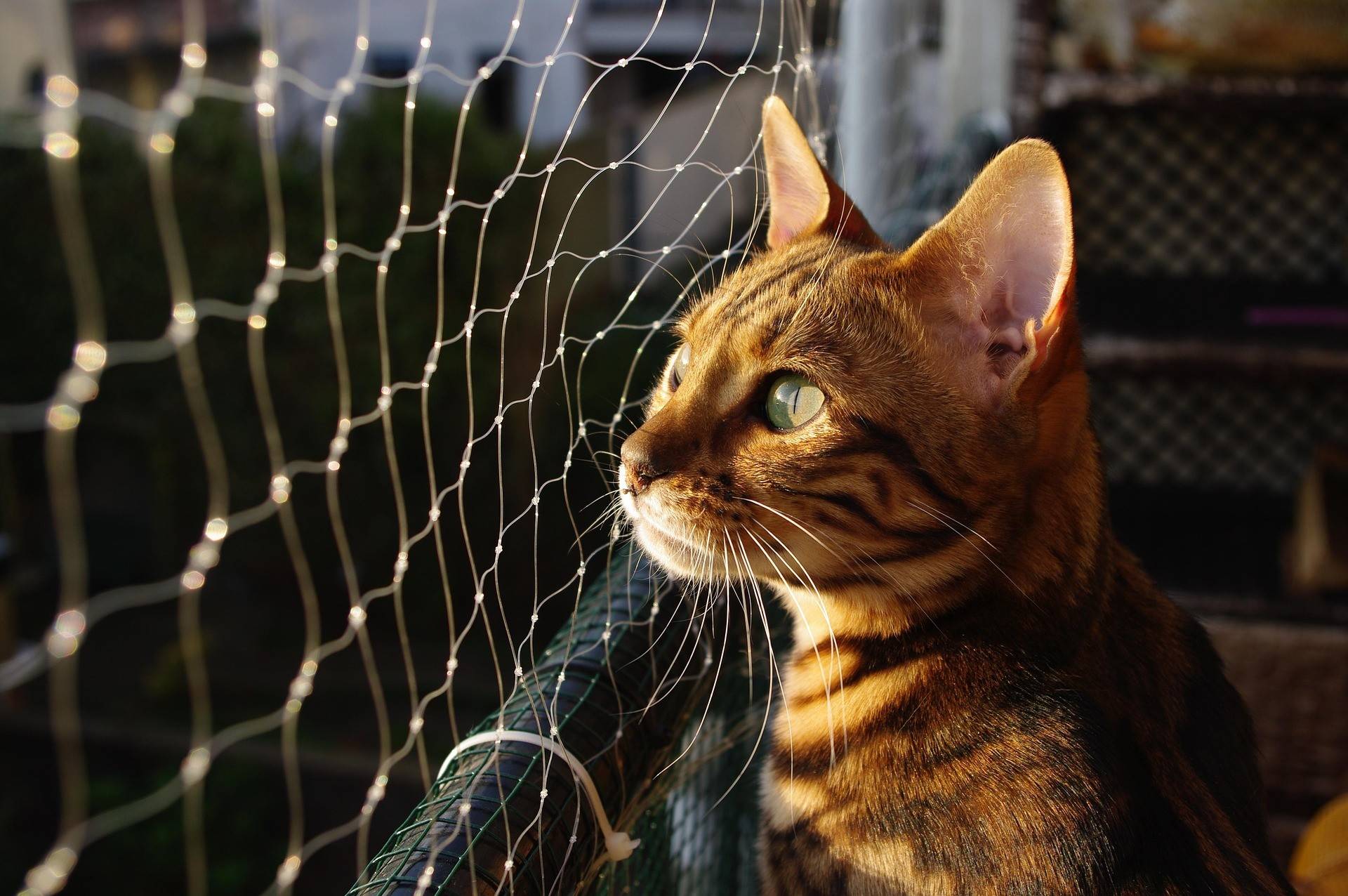
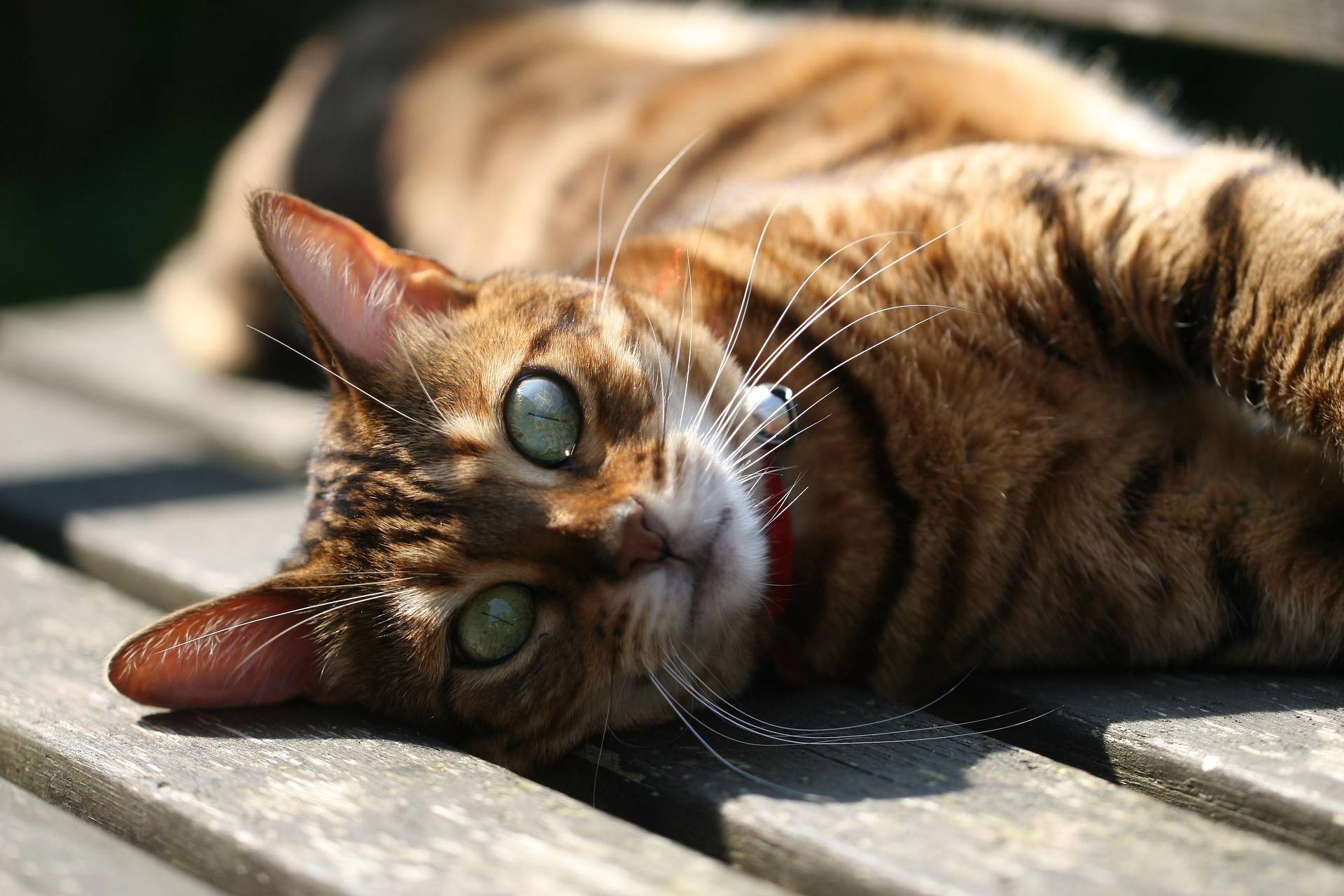
Bengals have a short coat that only requires weekly brushing. Use a soft-bristle brush and slowly brush the coat to remove loose hairs. No special grooming tools beyond a basic brush are necessary.
These cats generally have healthy skin, but some may potentially have allergies. In most cases, a gentle brush is enough to keep their skin healthy.
Bengals do not require regular baths unless they get very dirty. If a bath is needed, a pet-safe shampoo should do the trick.
They generally need nail trimming every 2 to 3 weeks or if their nails get too long. Be sure to use cat-specific nail clippers. Wrap your cat in a towel to prevent any sudden movement.
Like any other cat, Bengals need regular ear cleaning. Use a pet-safe solution and a cotton ball. Avoid using cotton swabs,
They need regular eye cleaning as well, especially if they frequent the outdoors. Use a soft, damp cotton ball and gently wipe the eye outwards.
Teeth care is an important part of a cat’s health, which means regular dental cleaning is important. Use a soft toothbrush and pet-safe toothpaste. Daily brushing is recommended.


MORE THAN A VET VISIT