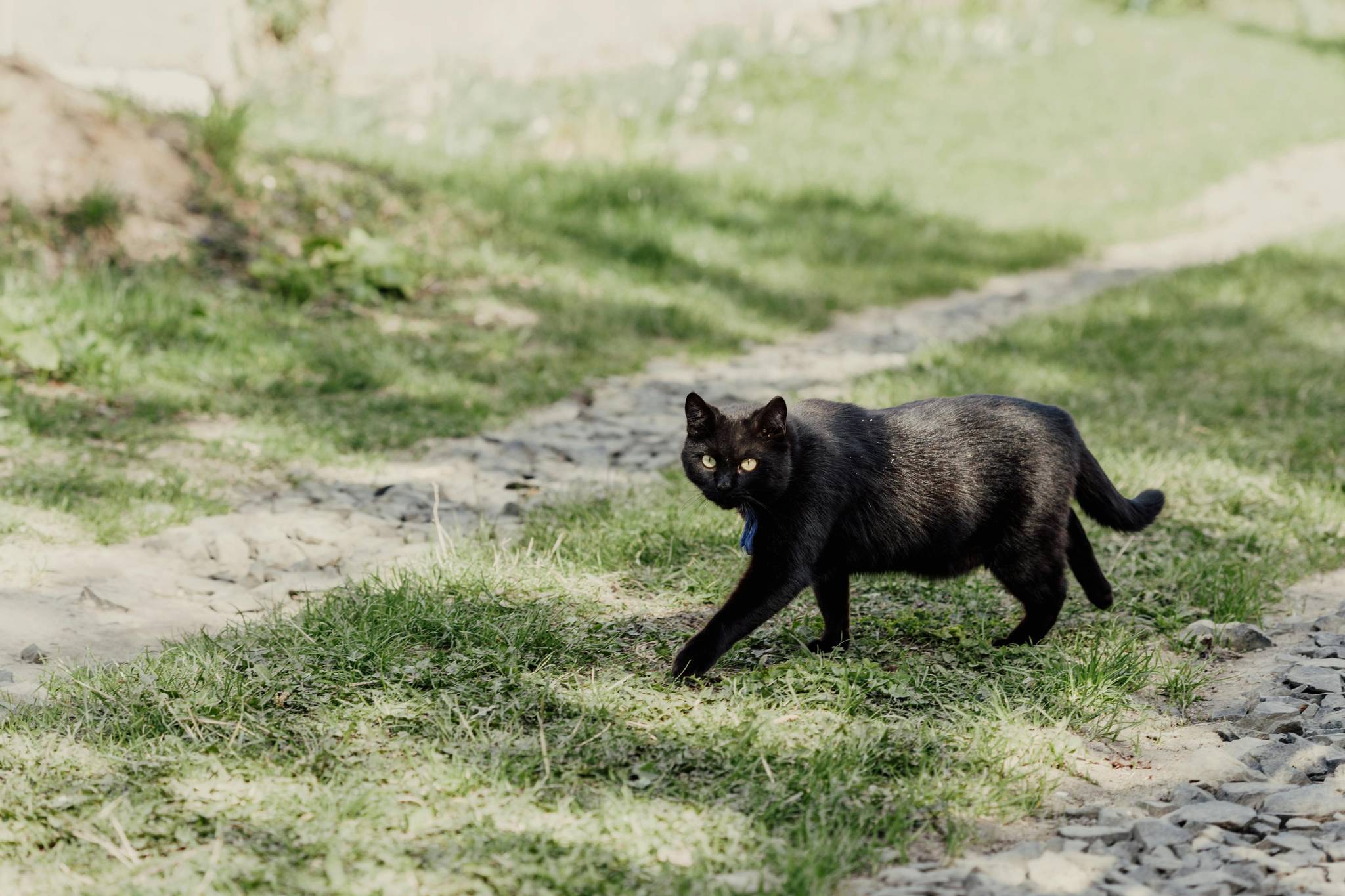
Breed Overview
Personality: Affectionate, friendly, playful, social, intelligent
2.7-5 kg (6-11 lbs)
Coat Colors: Black
Short hair
Coat Patterns: Solid
Eye Color: Gold to copper
9 to 15 years
No
History of the Bombay Cat
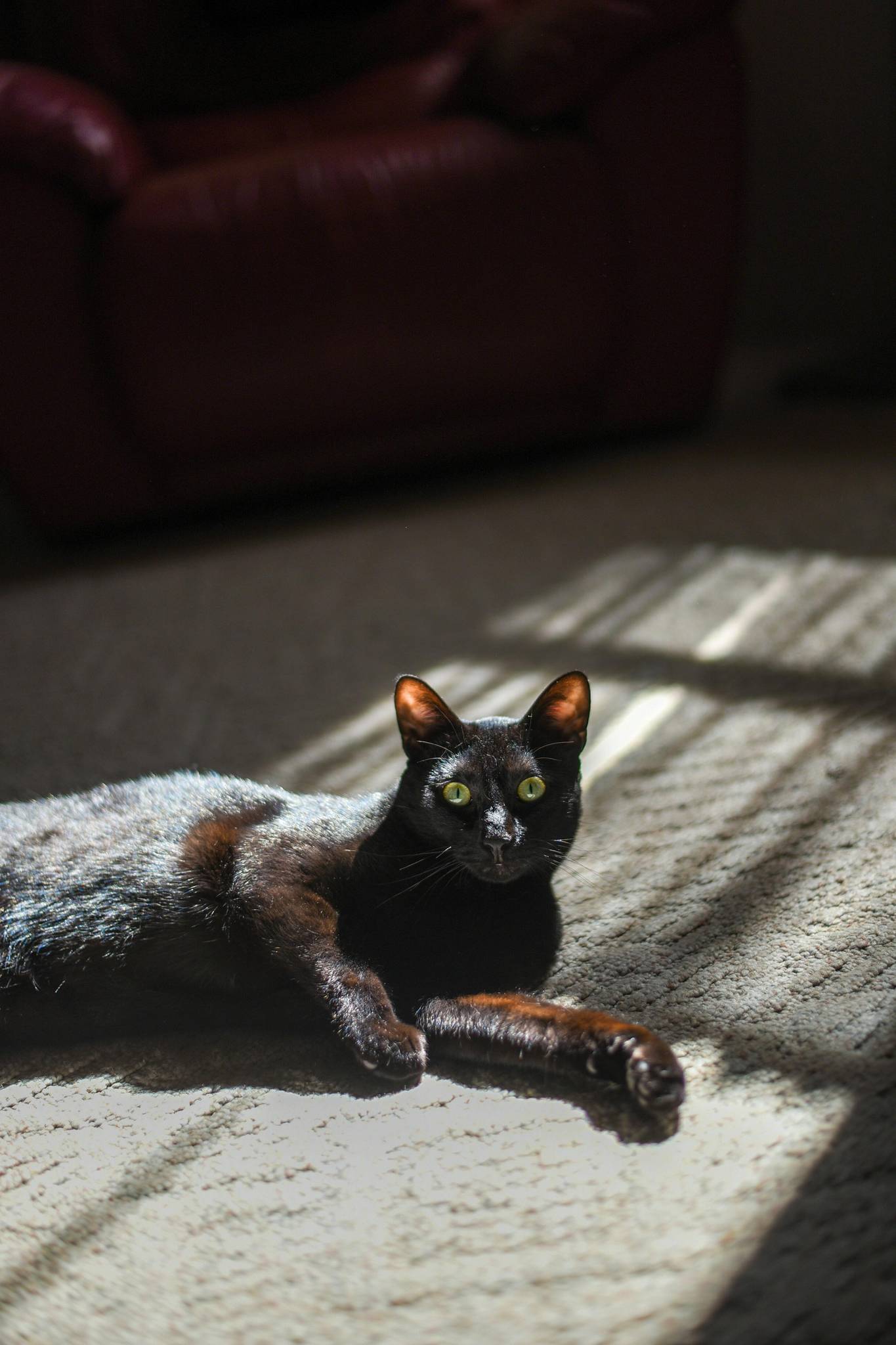
The Bombay cat came to be when Nikki Horner, a breeder from Kentucky, decided to cross the American Shorthair and the Burmese in the 1950s. The goal was to create a cat breed that resembled a panther.
While the process was long and tedious, she was able to develop the Bombay. The name paid homage to India’s black leopards, a city which is now known as Mumbai.
Today, the breed has been getting the recognition it deserves from organizations and families alike.
Physical Characteristics of Bombay Cat
Head
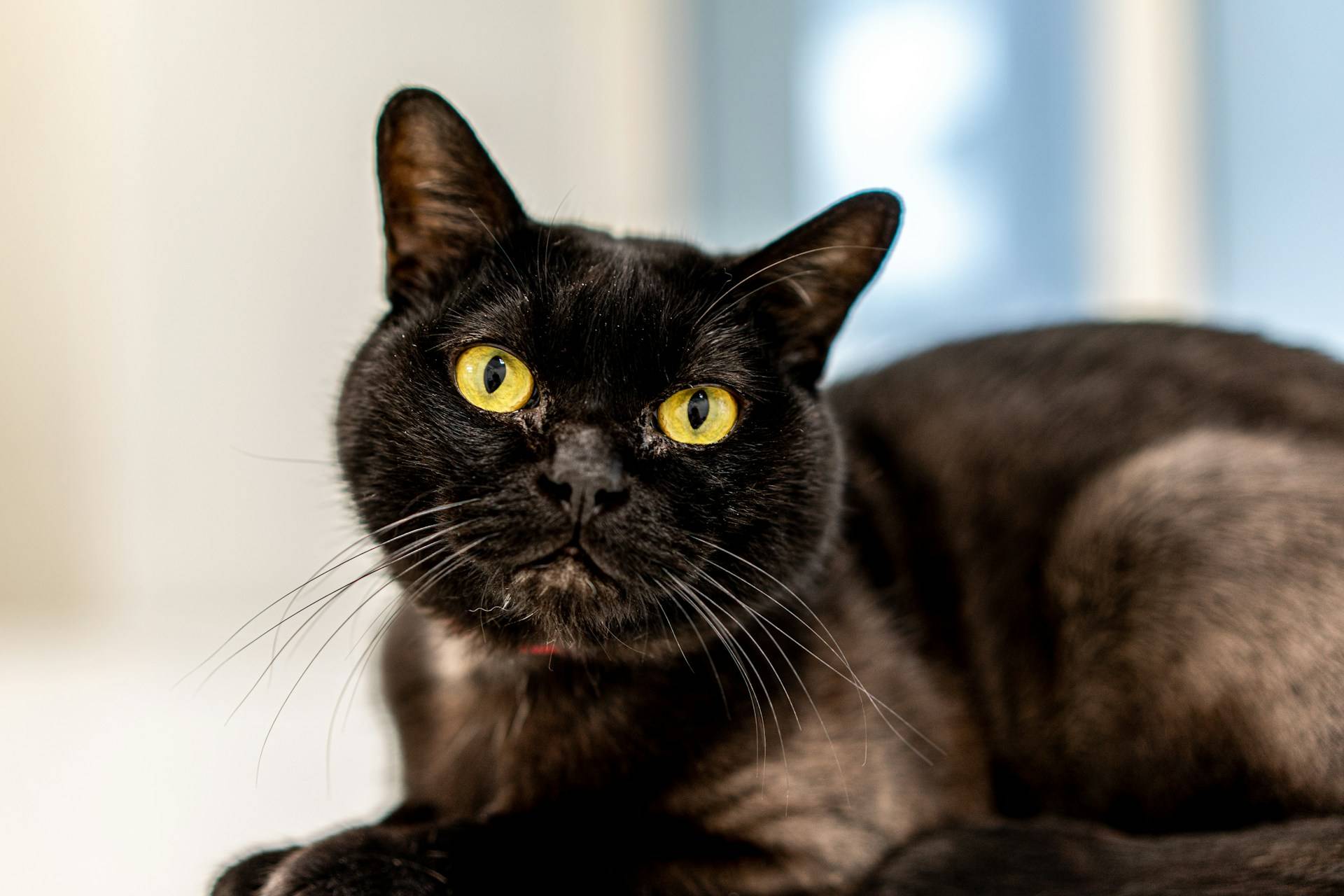
A Bombay cat’s head is round and short without any sharp edges. It has a blunt muzzle and a well-developed chin.
Eyes
The eyes are large, round, and set well apart. These often resemble the panther’s eyes due to their gold-to-copper color.
Ears
Their ears are medium-sized, wide-set, and slightly rounded at the tips. These are upright and tilt slightly forward.
Body
A Bombay cat has a medium-sized body and is quite solid. It has a cobby build that is muscular and athletic. The chest is even, and the back is level.
Limbs
The legs are well-proportioned, with the hind legs being slightly longer and bent compared to the front legs. Their paws are round and compact.
Tail
The tail is medium in length, straight, and tapers slightly at the tip. It is proportionate to the rest of the body.
Coat
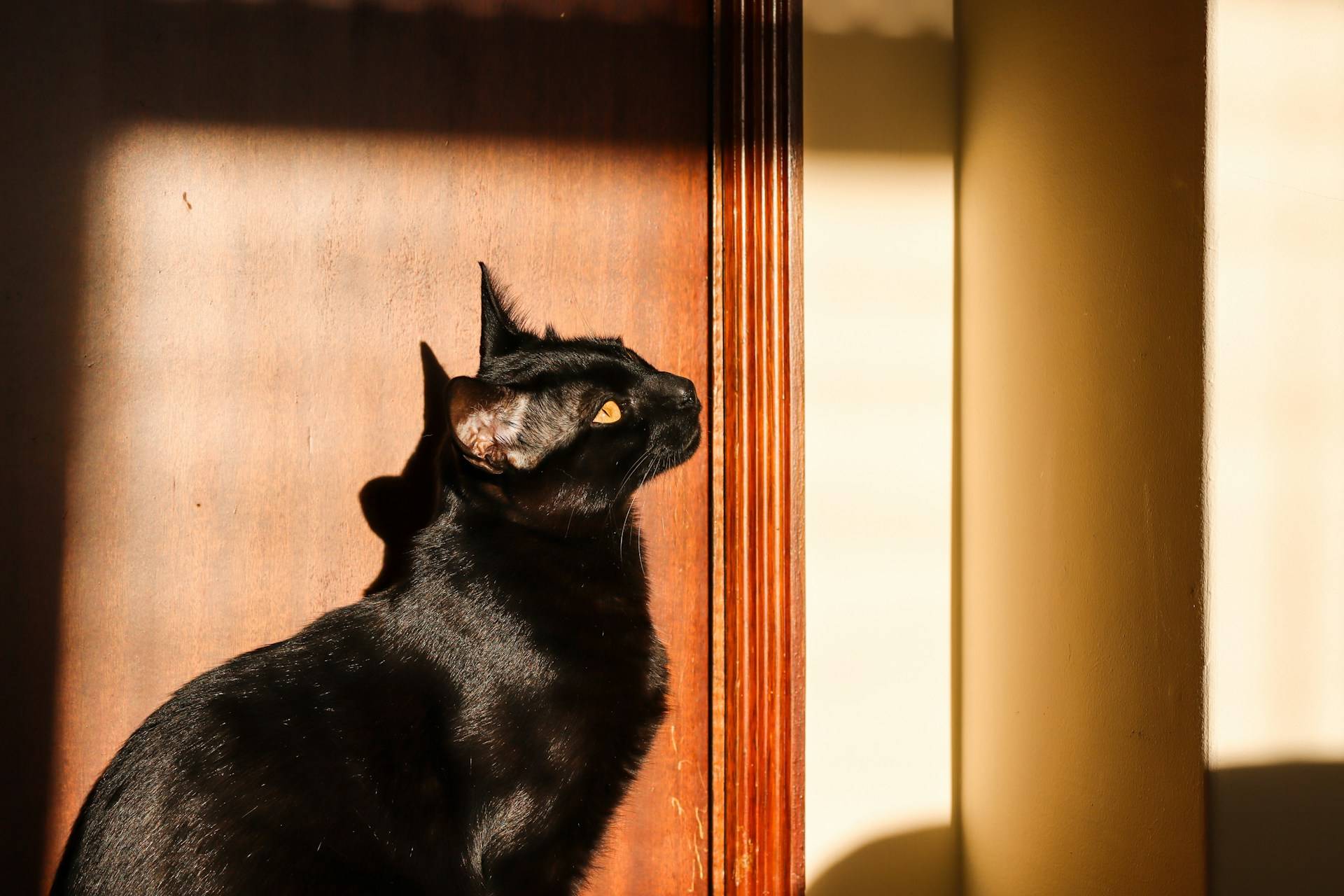
A Bombay cat is known for its sleek, glossy, black coat that is smooth and short. The pattern is a uniform solid from the roots to the tips.
Size
Male and female: 22.9-33 cm (9-13 inches).
Weight
Male: 3.6-5 kg(8-11 lbs); Female: 2.7-4.5 kg (6-10 lbs).
Just welcomed a Bombay Cat
What to Expect With a Bombay Cat
Vocalization Level
Bombay cats are known for their soft, but persistent voices when “chatting” with their owners. They often use gentle meows and chirps to communicate.
Energy Level
Bombays have bursts of playful energy balanced with long stretches of cuddling and affection. They enjoy playing and resting whenever they feel like.
Independence Level
These cats are not that independent, as they prefer to be close to their owners. If left alone for far too long, they can become anxious.
Affection Level
Bombay cats are highly affectionate creatures. They are often called velcro cats because they long to stick with their owners and follow them around.
Compatibility with Children
Bombays are gentle and patient, making them suitable for homes with children. Even so, rough play should be avoided when handling these cats.
Compatibility with Other Pets
They tend to get along well with other pets, especially when introduced early on. Their social nature makes them adaptable in multi-pet homes.
Adaptability Level
These cats can adjust well to new surroundings, pets, homes, and routines. They can handle change in their lives, especially when they have their owners by their side.
Trainability Level
Because of their high intelligence, curiosity, and eagerness to spend time with humans, Bombay cats are trainable and can easily be taught new tricks.
Exercise Requirements
While not hyperactive, they do require about 20 to 60 minutes of exercise. This helps prevent obesity and keeps them at a healthy weight.
Mental Stimulation Needs
Bombay cats can benefit from interactive toys, regular playtime, and training sessions to boost mental activity. This prevents boredom.
Grooming Frequency
These cats don’t require frequent grooming. Weekly brushing and baths are not recommended unless they get too dirty.
Health Concerns of Bombay Cat
How to Groom a Bombay Cat
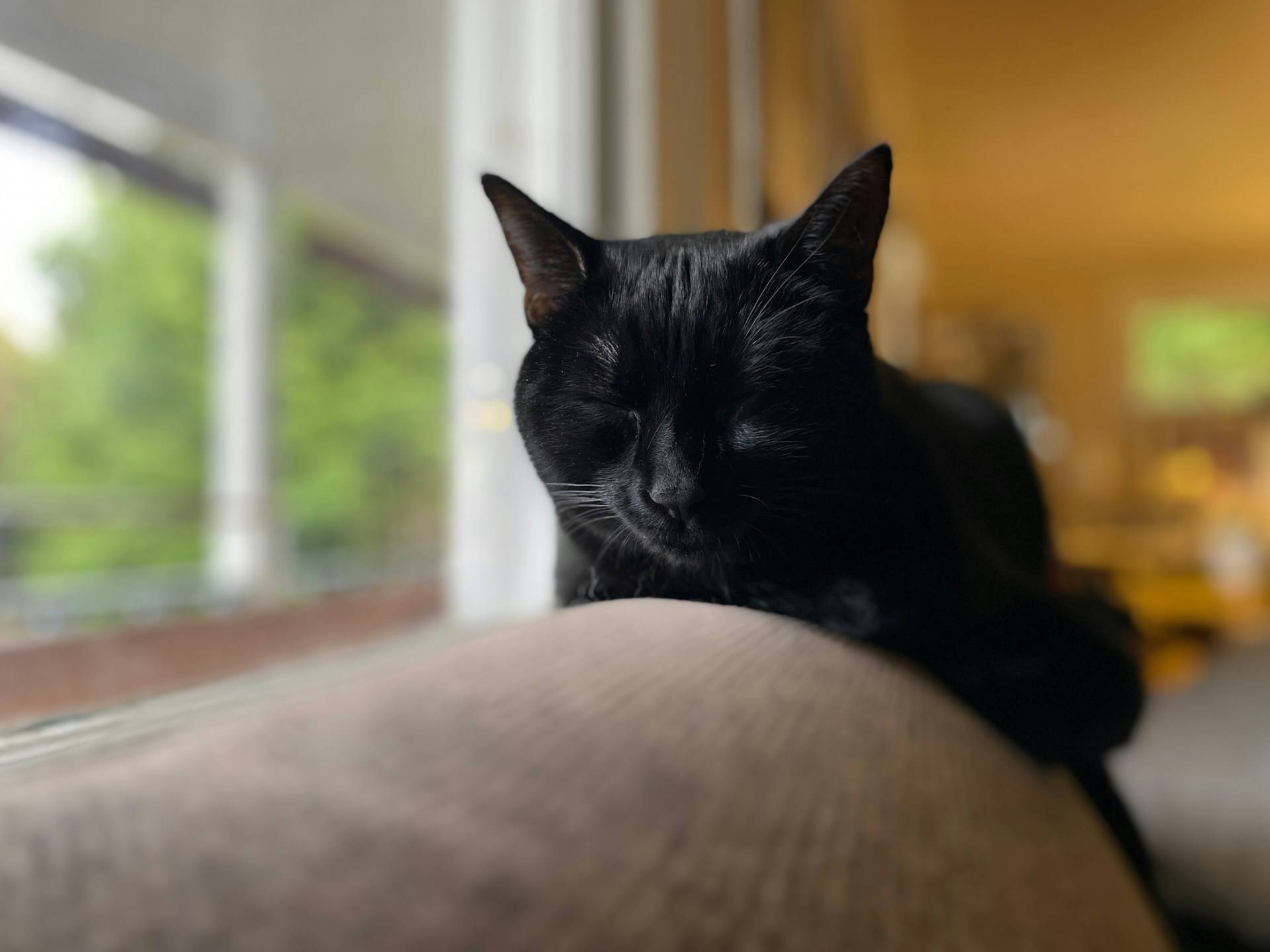
A soft brush and a rubber cat brush are good tools to use when brushing Bombay cats. They only need brushing once a week, which helps remove loose hair and debris.
Regular brushing is already a good way to maintain their skin and coat health. For added protection, only use gentle products, creams, and moisturizers.
Only bathe them whenever they get dirty. When bathing, be sure to use vet-approved shampoos that are gentle on the skin. Next, dry them thoroughly.
Their nails should be trimmed every 2 to 3 weeks. If they get too long before that, you can clip them with specific nail clippers made for cats.
For ear cleaning, this can be done weekly. Regularly check their ears for signs of dirt and debris. Use a vet-approved cleaning solution and wipe away the debris with a cotton ball.
Their eyes will need to be wiped every 1 to 2 days because of their tendency to get watery. Use a soft, damp cloth and wipe away from the eyes.
Dental brushing twice a week is recommended to keep their oral health in good shape. Regular professional dental cleanings are also a must.


MORE THAN A VET VISIT