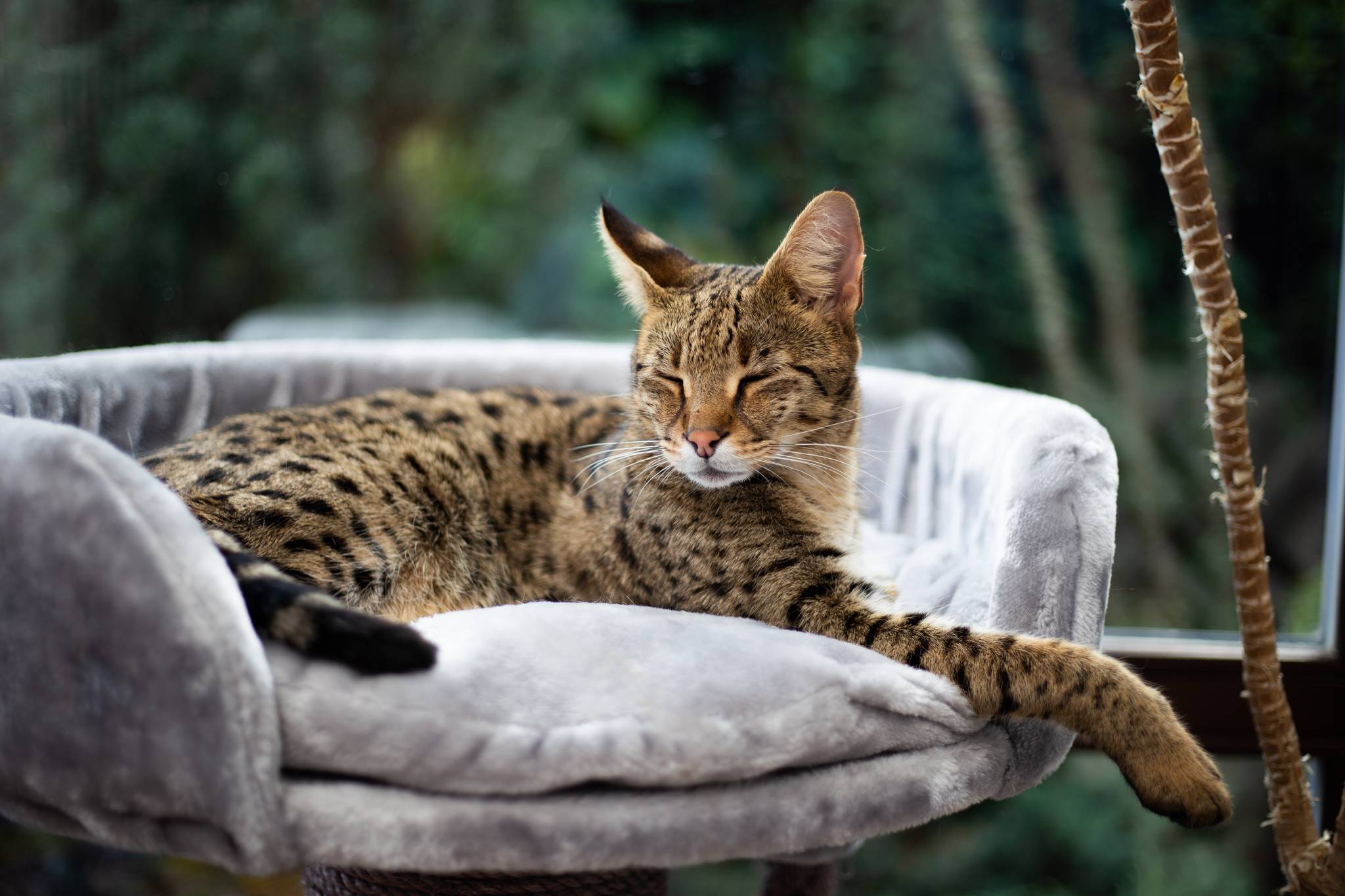
Breed Overview
Personality: Playful, adventurous, loyal, energetic, intelligent, and curious
3.5-11.3 kg (8-25 lbs) (F1-F2 Savannahs are larger)
Coat Colors: Brown, silver, black, snow, cinnamon, chocolate, blue, lilac, charcoal
Short
Coat Patterns: Spotted tabby, solid, smoke, ocelli, marble, rosette, torbie
Eye Color: Gold, green, hazel, copper, blue, blended
12 to 20 years
No
History of the Savannah Cat
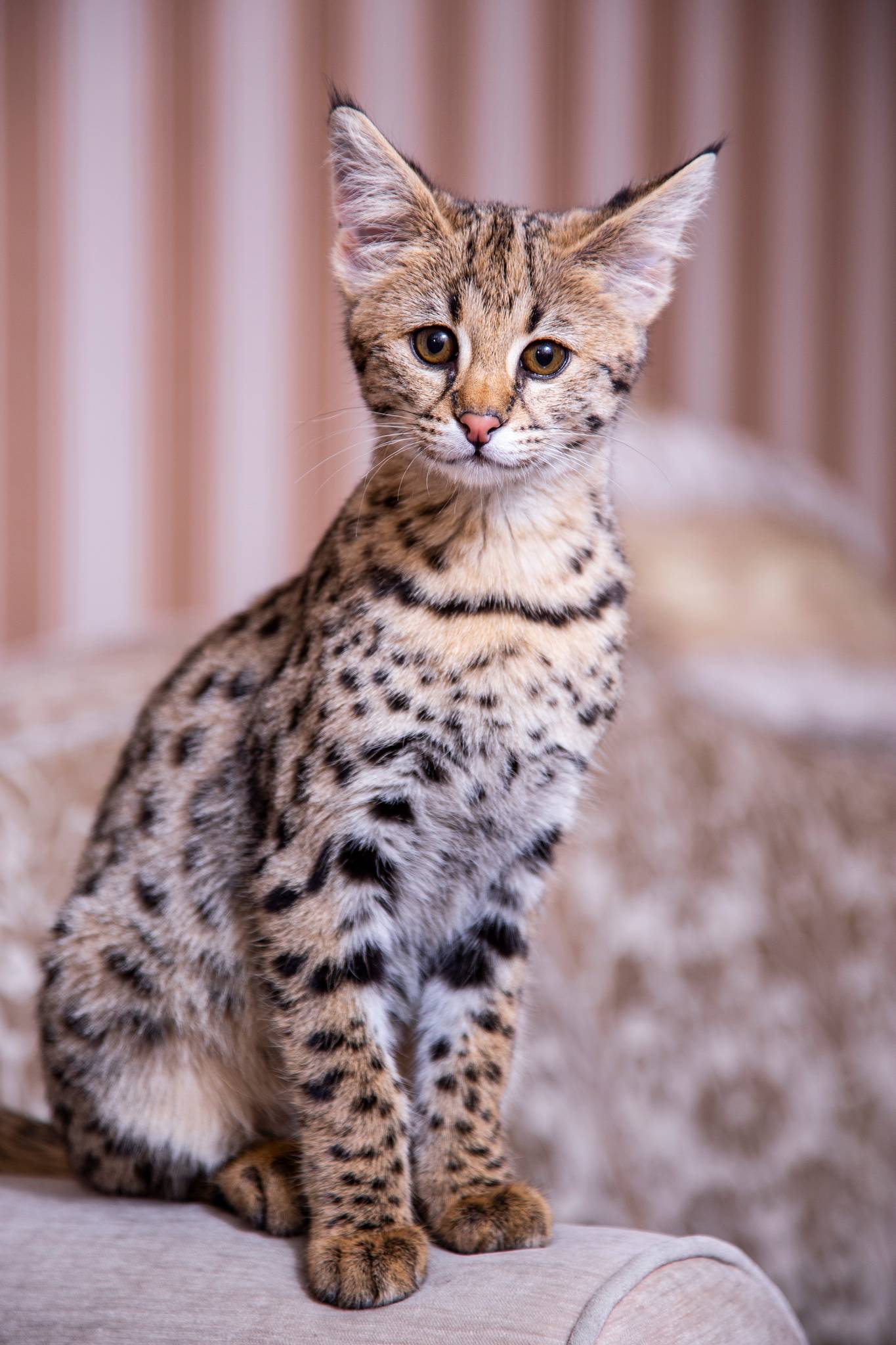
The Savannah cat’s origins date back to 1986, with a woman named Judee Frank. She crossed a male serval and a domestic Siamese to create the very first Savannah cat. When the kitten was born, she was named Miracle, then changed to Savannah after she was sold to Suzi Mutascio.
From here, more and more people, such as Lori Buchko and Patrick Kelly, became involved in the history of this cat breed. These people saw the opportunity to breed the Savannah cat and make it a popular choice for cat lovers everywhere.
It was also Patrick Kelly, with the help of Karen Sausman and Joyce Sroufe, who created the first Savannah Standard.
While there were a few bumps in the road, the Savannah cat was eventually allowed to show in TICA. With contributions from The Eighteen, the breed was recognized for its beauty and personality.
Physical Characteristics of Savannah Cat
Head
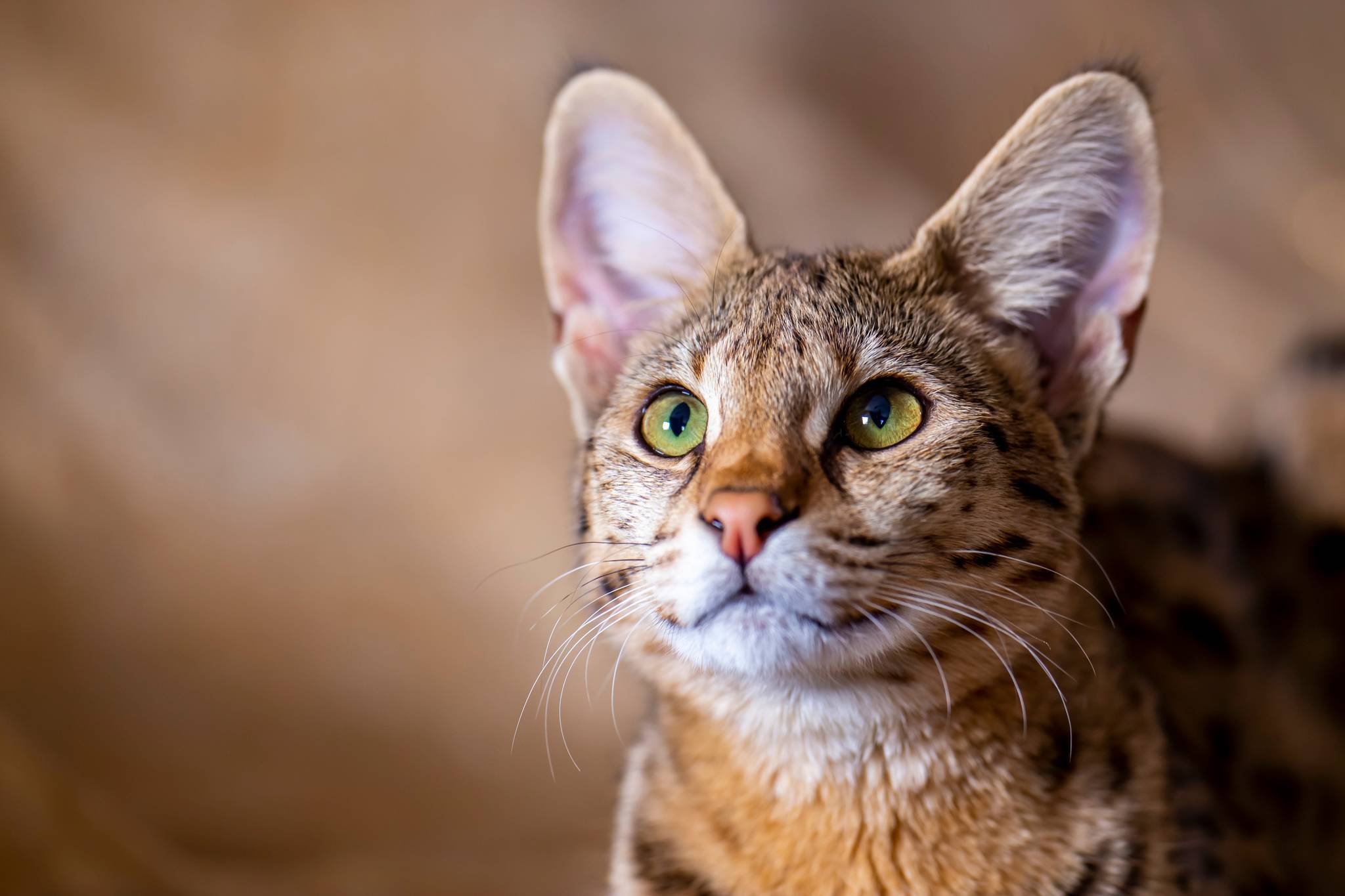
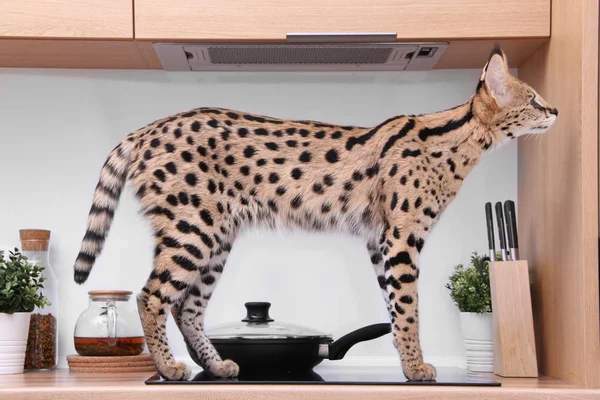
Savannah cats have a small, triangular-shaped head with a long and narrow muzzle.
Eyes
They have slightly large eyes with a “boomerang” shape. The colors vary from gold, green, hazel, copper, blue, and blended colors.
Ears
The ears are extremely large, upright, and slightly rounded at the tips. They are set high and are often close together.
Body
Savannahs have long and lean bodies built for athleticism. Their necks are elongated, and their backs are slightly arched.
Limbs
The legs are slender, and the muscle tone is good. Their paws are oval-shaped and compact.
Tail
They have a thick tail that curves a bit upward. It is of medium length and has a blunt end.
Coat
Their coat is short and sleek with a smooth texture. The colors come in brown, silver, black, snow, cinnamon, chocolate, blue, lilac, and charcoal. Common patterns include spotted tabby, solid, smoke, ocelli, marble, rosette, and torbie.
Size
Both male and female cats can range in height from 27.9-41.4 cm (11-16.3 inches), depending on generation.
Weight
Both genders can have weights around 3.5-11.3 kg (8-25 lbs). F1 and F2 Savannahs are larger than other generations.
Just welcomed a Savannah Cat
What to Expect With a Savannah Cat
Are Savannah Cats Vocal?
These cats are known to be very vocal and communicative, expressing their feelings through a range of sounds. This includes meows, chirps, trills, and even some loud noises. Savannahs love communicating and telling their owners what they need.
How Energetic Are Savannahs?
They are extremely energetic and athletic. These cats have intense energy levels that require more attention and stimulation than the average domestic cat. Savannahs are often described as “dog-like” because of their high energy.
Are Savannah Cats Independent?
Savannahs are quite independent, capable of staying long hours without their owners with them. While they love human interaction, they often choose to spend time alone rather than constantly cuddling all the time.
Do Savannahs Show Affection?
These cats are highly affectionate and loyal pets. They easily form strong bonds with their owners. However, Savannahs aren’t lap cats, as they show their affection through active engagement, following, and playing.
Are Savannah Cats Good First Pets
They’re not a good option for first-time pet owners because of their highly energetic natures that require a lot of attention. Savannahs are high-maintenance cats that require pet owners who have prepared outlets for stimulation and exercise.
Do Savannahs Do Well With Kids?
Savannahs must be supervised when they’re around children. They are relatively larger than other cats and have significantly higher energy levels, which means they might be too much for younger kids.
Can Savannah Cats Live With Other Pets?
Savannahs can live with other pets, like cats and dogs, without issues if owners start socializing early. It may not be best for them to be around smaller animals, such as birds and hamsters, because of their hunting instincts.
What’s It Like Owning a Savannah?
Owning a Savannah cat is like having a cat with dog-like energy levels. These cats require a lot of attention when it comes to their exercise and activities. Without sufficient forms of stimulation, they may become destructive.
Are Savannah Cats Trainable?
Savannah cats are highly trainable because of their intelligence. They can quickly learn tricks, like walking on a leash or fetching items. Keep in mind that positive reinforcement is needed to effectively train them.
How Much Exercise Do Savannahs Need?
These cats require daily playtime and other physical activity due to their high energy levels. They need about 30-60 minutes of exercise a day, with some even needing more than that. Savannahs are exceptionally athletic, so they can handle hunting, jumping, and climbing games.
What to Feed a Savannah Cat?
To support their high energy levels and activities, Savannahs need premium wet food or dry food. A raw diet can also be provided, but only when correctly prepared. Avoid giving food that has artificial fillers, as they may impact their physical health.
How Often to Groom a Savannah?
Savannah cats need to be brushed at least once a week to remove loose hair, manage shedding, and maintain the coat. Bathing can be done every 2 to 3 months, or as needed when they get too dirty.
Health Concerns of Savannah Cat
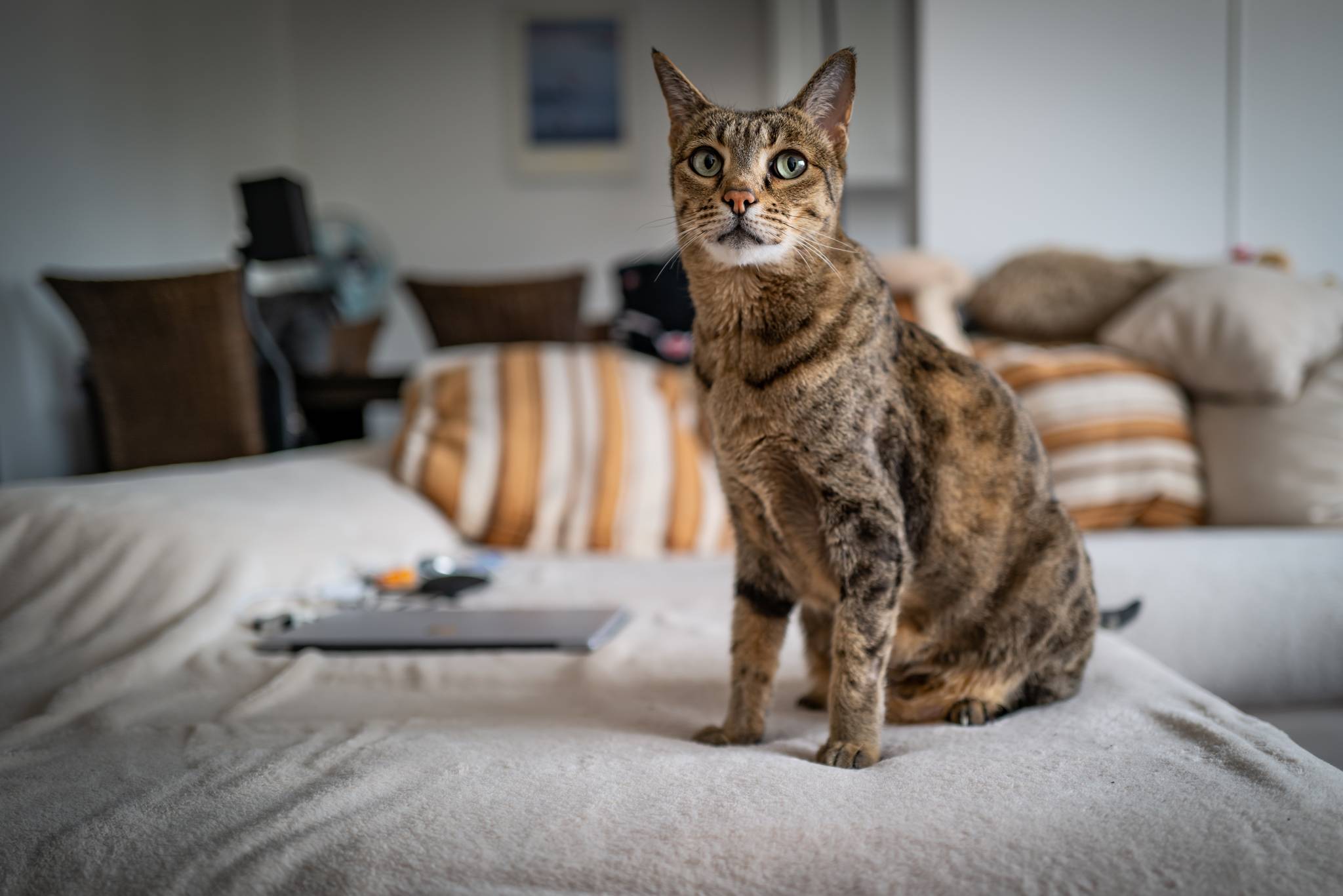
If you’re thinking of owning a Savannah cat, here are the health concerns you must take note of.
How to Groom a Savannah Cat
Savannah cats have a short coat that needs minimal grooming. Brushing them once a week is enough to prevent matting and remove loose hairs. We advise using a soft brush or fine-toothed comb for a smooth and shiny coat.
Savannahs usually don’t experience any skin issues, but they can still have dry or oily skin occasionally when the weather conditions aren’t ideal for them. Brushing and using gentle pet products help protect their skin.
Savannah cats can be bathed every 2-3 months, or as needed. They love water and playing in it, so bathing can be easy. Be sure to dry them completely after the bath.
Like other cats, a Savannah’s nails should be trimmed every 2-4 weeks, or if they get too long. Always use a cat-specific nail clipper and avoid trimming too close to the quick.
Their ears need to be checked regularly, at least weekly, especially when they’re active and outdoors. Cleaning can be done as needed. Use a pet-safe ear cleaning solution and cotton balls.
These cats don’t usually require special eye cleaning, but checking them weekly is recommended. If there’s any discharge, use a soft, damp cloth and wipe from the corner of the eye.
Teeth brushing should be done 2-3 times per week, although daily brushing is ideal. Use a pet-safe toothbrush and toothpaste. Be sure to schedule dental checks with their annual exams.
FAQs About Savannah Cat

Worried about your pet?
We’re here for urgent care, wellness checks, or anything in between.