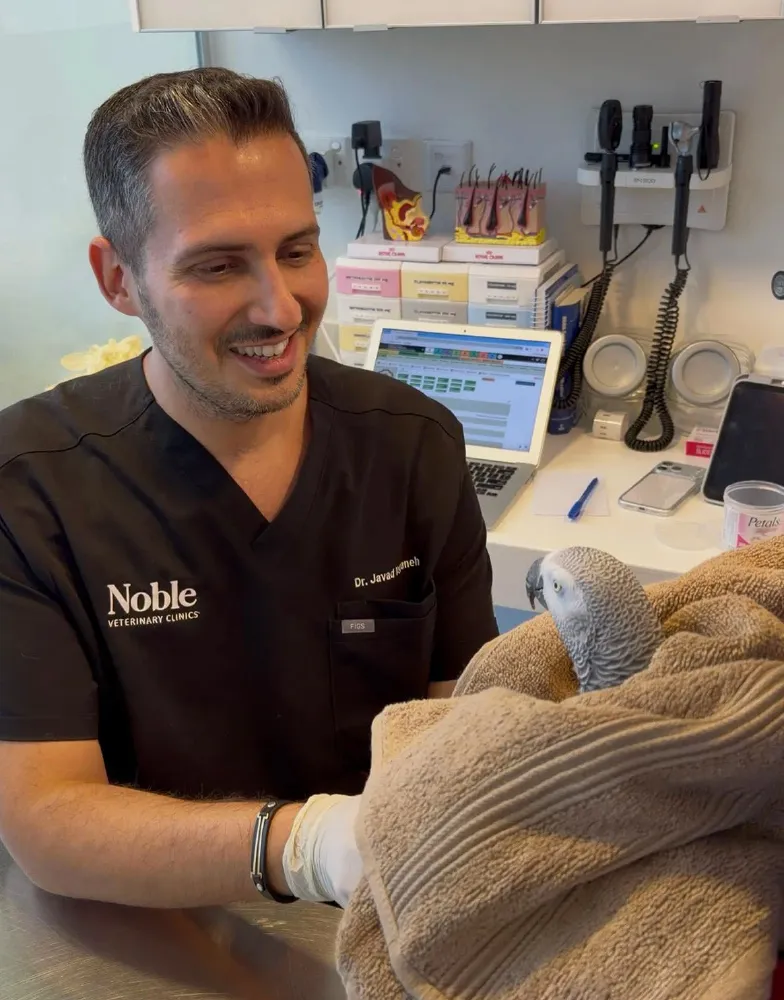
AVIAN CARE

Parrot vet in Dubai

Your parrot gets gentle, personalised care from vets experienced in avian health, from the first check-up to treatment.

AVIAN CARE

Parrot vet in Dubai

Your parrot gets gentle, personalised care from vets experienced in avian health, from the first check-up to treatment.

AVIAN CARE

Parrot vet in Dubai

Your parrot gets gentle, personalised care from vets experienced in avian health, from the first check-up to treatment.

AVIAN VET

Dr. Javad Yeganeh

13+ years, avian & exotic focus

ENVIRONMENT

Low-stimulation

Calm and quiet for nervous birds

CONSULTATIONS

Behaviour & nutrition

Included alongside health care

DIAGNOSTICS

On-site

Imaging and in-house lab

BIRD BIOLOGY

Why parrots need their own kind of exam

Parrots have unique respiratory systems, bones, digestion, and metabolism, so even a routine exam requires a vet who knows birds. They also hide illness well, so regular check-ups matter.


Our vets are trained in bird nutrition, housing, and behaviour, so you leave with practical advice to support your parrot's long-term health.

Early check-ups can help prevent:

Rapid decline once symptoms finally show

Stress from handling that isnโ€™t suited to birds

Delayed diagnosis of conditions that move fast in small bodies

Complications that are harder to treat the later theyโ€™re caught

WHEN TO VISIT

Signs your parrot needs a vet

Birds hide illness well, so small changes matter. Book a visit if you notice any of these.

Changes in appetite or water intake

Laboured breathing or coughing

Discharge from the eyes, beak, or nose

Unusual or abnormal droppings

Feather plucking or excessive grooming

Loss of balance or difficulty perching

If you're unsure whether a change counts, call us and describe what you're seeing.

WHAT WE OFFER

Parrot care, from check-up to treatment

From routine health checks to more involved diagnostics, every service here reflects what makes parrots different to treat.

Wellness exams

Regular check-ups that catch problems before they progress

Nutrition advice

Feeding plans matched to your parrot's age and lifestyle

Imaging and lab work

On-site tests that show what is happening inside

Preventive care

Protection and grooming planned around your pet

Behaviour assessments

Learn what your parrot is trying to tell you

Treatment and surgery

Personalised plans built around your parrot's recovery

Wellness exams

Regular check-ups that catch problems before they progress

Preventive care

Protection and grooming planned around your pet

Nutrition advice

Feeding plans matched to your parrot's age and lifestyle

Behaviour assessments

Learn what your parrot is trying to tell you

Imaging and lab work

On-site tests that show what is happening inside

Treatment and surgery

Personalised plans built around your parrot's recovery

If you're not sure which service your parrot needs, book a wellness exam, and we'll recommend the right plan.

WHAT TO EXPECT

Your parrot's first visit, step by step

Every parrot arrives with a different history, so we start by getting to know yours. Here is how an appointment unfolds in four steps, from the first look to the guidance you take home.

ONE

Hands-on exam

We ask about your parrotโ€™s diet, routine and droppings, then check weight, feathers, beak, breathing and body condition.

We ask about your parrotโ€™s diet, routine and droppings, then check weight, feathers, beak, breathing and body condition.

TWO

Tests where needed

When the exam alone does not explain the signs, imaging and in-house lab work help us find the cause.

When the exam alone does not explain the signs, imaging and in-house lab work help us find the cause.

THREE

Your plan

We cover treatment, diet, housing and follow-up, including deworming and vaccination where they apply.

We cover treatment, diet, housing and follow-up, including deworming and vaccination where they apply.

FOUR

If they need to stay

Hospital care takes place in a calm space, and we keep you updated throughout.

Hospital care takes place in a calm space, and we keep you updated throughout.

OUR PARROT CARE EXPERT

Dr. Javad Yeganeh

With over 13 years of treating pets, Dr. J brings hands-on experience with birds and other small companion animals, from routine care through to more complex diagnostics and treatment.

Trained and practised across clinics in Iran and the UAE

Years of shelter and rescue work, with thousands of charitable surgeries performed

Skilled soft tissue surgeon

A calm, detail-oriented approach suited to delicate patients

Dr J, exotic pet expert, holds a turtle up while wearing gloves to examine its shell.

Ready for your parrot's check-up?

Our avian vets are here to help.

Ready for your parrot's check-up?

Our avian vets are here to help.

Ready for your parrot's check-up?

Our avian vets are here to help.

Everything You Need to Know

Frequently Asked Questions

How often should my parrot have a check-up?

Most healthy adult parrots benefit from a yearly visit. Your vet may suggest coming in more often for young, older or unwell birds.

What should I bring to my parrot's appointment?

Bring photos of the cage setup, a list of what it eats, a fresh photo of the droppings, and notes on recent behaviour changes. Previous records help too. Travel in a secure carrier, covered lightly to keep your bird calm.

Which parrot species do you see?

Our patients include African greys, cockatiels, budgies, lovebirds, and macaws. If you keep a different bird, call us, and we'll tell you whether we can help.

Can I catch psittacosis from my parrot?

Psittacosis can pass from birds to people, mainly through dust from dried droppings and feathers, so good hygiene matters. If your parrot is diagnosed, we'll explain how to protect your household. If you feel unwell, tell your doctor that you share your home with a bird.

What household hazards should parrot owners in Dubai watch for?

Fumes from non-stick cookware, aerosols, scented candles and air fresheners can harm birds. Keep your parrot out of the kitchen and away from direct sun, and keep the room cool in summer.

Noble Vet Clinics logo