Are Cats Liquid? Explaining Feline Flexibility

Have you ever noticed how your cat fits perfectly into the most random objects? This can be the sink, a box, or even a small space. If so, then you’ve probably heard the joke that a cat is liquid.
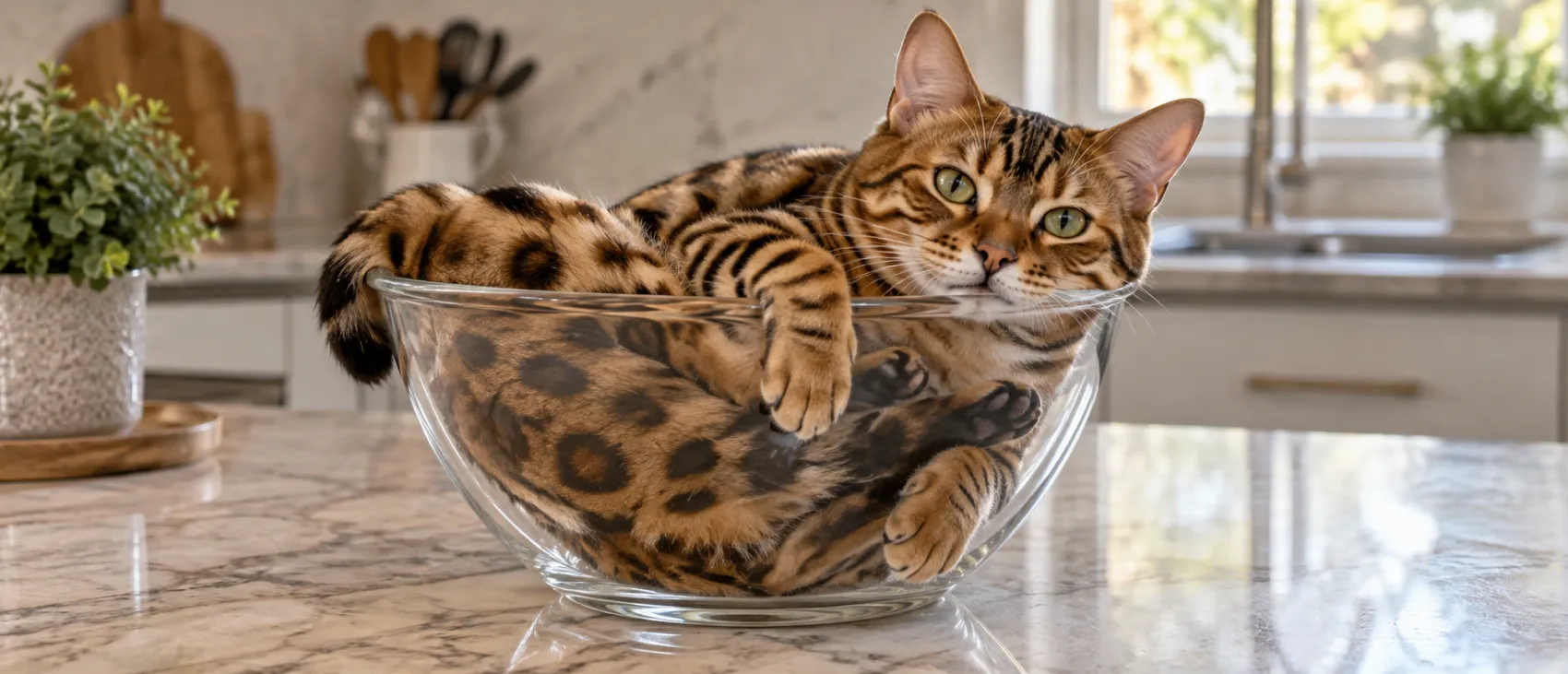
It’s a hilarious statement, but one that also points to something real and useful about cats. It basically means that cats are flexible and incredibly good at squeezing, settling, and reshaping their bodies to fit spaces that feel safe and comfortable.
In this blog, we’ll break down what cat is liquid actually means, plus the simple science that made the idea famous. We’re going to tackle the common reasons for this and the ways you can help.
Why Do People Say Cats Are Liquid?
Liquid is a state of matter with volume but without a definite shape. This means that liquid flows and takes the shape of its container, which is where the idea for cats came in.
Just like how water or any type of liquid easily takes the shape of its container, cats can also do a similar feat. It can look like their bodies have melted to match the space, especially tight ones. While they’re obviously not liquid, this is an interesting trait cats possess.
Cats may often look liquid when they:
Tuck their legs tightly under the body
Rotate the shoulders and hips into odd angles
Relax their muscles and spread
Choose positions that maximize comfort
How Do Cats Look Liquid?

The reason behind this amazing feature is their anatomy. Cats have a special body build for flexibility and adjustments, making them easily fit into these tight spaces.
Flexible Body
Cats can fit in many spaces because their bodies are designed for bending, compressing, and rotating in ways that can surprise us. It begins with the spine. A cat’s spine is highly flexible due to having more vertebrae and elastic cushioning discs.
This is what helps them curl into a tight donut, twist to groom hard-to-reach spots, and change direction mid-jump.
Another reason is their collarbones. Cats have free-floating collarbones that are not attached to bones, but to muscles. This makes their shoulder blades have more freedom, allowing more room to squeeze and pivot. It’s how a cat can get into a tight spot using the front half and follow with the other.
Plus, a cat’s muscles are well-coordinated, able to work together with their flexible skeleton, allowing more agile movements.
Whiskers
Cats are completely aware of their bodies and the spaces they get into. They can determine if they can fit comfortably through the use of their whiskers. These powerful tools are just like sensitive touch sensors that help them feel edges, measure gaps, and navigate places.
It’s like a compass and a measuring tape in one, helping cats know what to expect. Through whiskers, cats can adjust their bodies and fit into the space.
Adjustments
The moment when a cat is liquid is when they settle into it. You’ll often see a cat start with an awkward perch and do a series of adjustments to get comfortable. Each small move is them searching for a comfortable position. It’s like a way to relax.
Once they have found it, cats can easily sink into the object.







Subscribe to Our Newsletter
Worried about your pet?
We’re here for urgent care, wellness checks, or anything in between.