Can Dogs See in the Dark? Do Dogs Have Night Vision?


Dogs have a bit of a reputation for being experts at seeing at night, especially when they’re on high alert. It can look that way when they’re calmly navigating around the house with the lights off or even finding some food left unattended. So, can dogs see in the dark?

The simple answer is not black-and-white at all. Dogs can see in the dark, but not in complete darkness. Their eyes are built to make the most of whatever light is available, so nighttime isn't a big deal for them.
But when there’s absolutely zero light, then vision stops being useful, so they lean on their other powerful senses: smelling and hearing.
In this guide, we’ll talk about how dogs can see in the dark and why their eyes work differently from ours. Plus, we’ll also share with you the best ways to take care of your dog’s eyes.
What Makes Dogs See in the Dark?
The special thing about a dog’s vision is their eye structure. Dogs see better than we do in low light because their eyes are built to squeeze more information out of whatever light is available.
Rods and Cones
Inside the back of the eye is the retina, which has both rods and cones.
Rods. These are great for low-light vision and detecting motion.
Cones. These are for detecting color and fine detail.
Dogs generally have retinas that are more geared toward rod-based vision, which helps them pick up movement and shapes in dim conditions. They do have a lower number of cones compared to humans, which means dogs see less color than we do.
Tapetum Lucidum
A dog’s eyes also have a structure known as the tapetum lucidum, a reflective layer behind the retina. This works just like a reflector that gives the retina a second chance of capturing light. In simple terms, when the eyes get light, any unused light gets reflected back into the retina again.
This helps dogs make use of limited light and boosts their ability to see in dim conditions. The tapetum lucidum is also the reason why your dog’s eyes may glow or shine when taking a photo in the dark.
Pupils
Another helpful structure that helps dogs see in the dark is their pupils. Their pupils can widen to let more light into the eye and reach the retina. By doing so, the retina has more light to work with, and the tapetum lucidum can also have the chance to reflect more light back.
Can Dogs See Better in the Dark Than Humans?
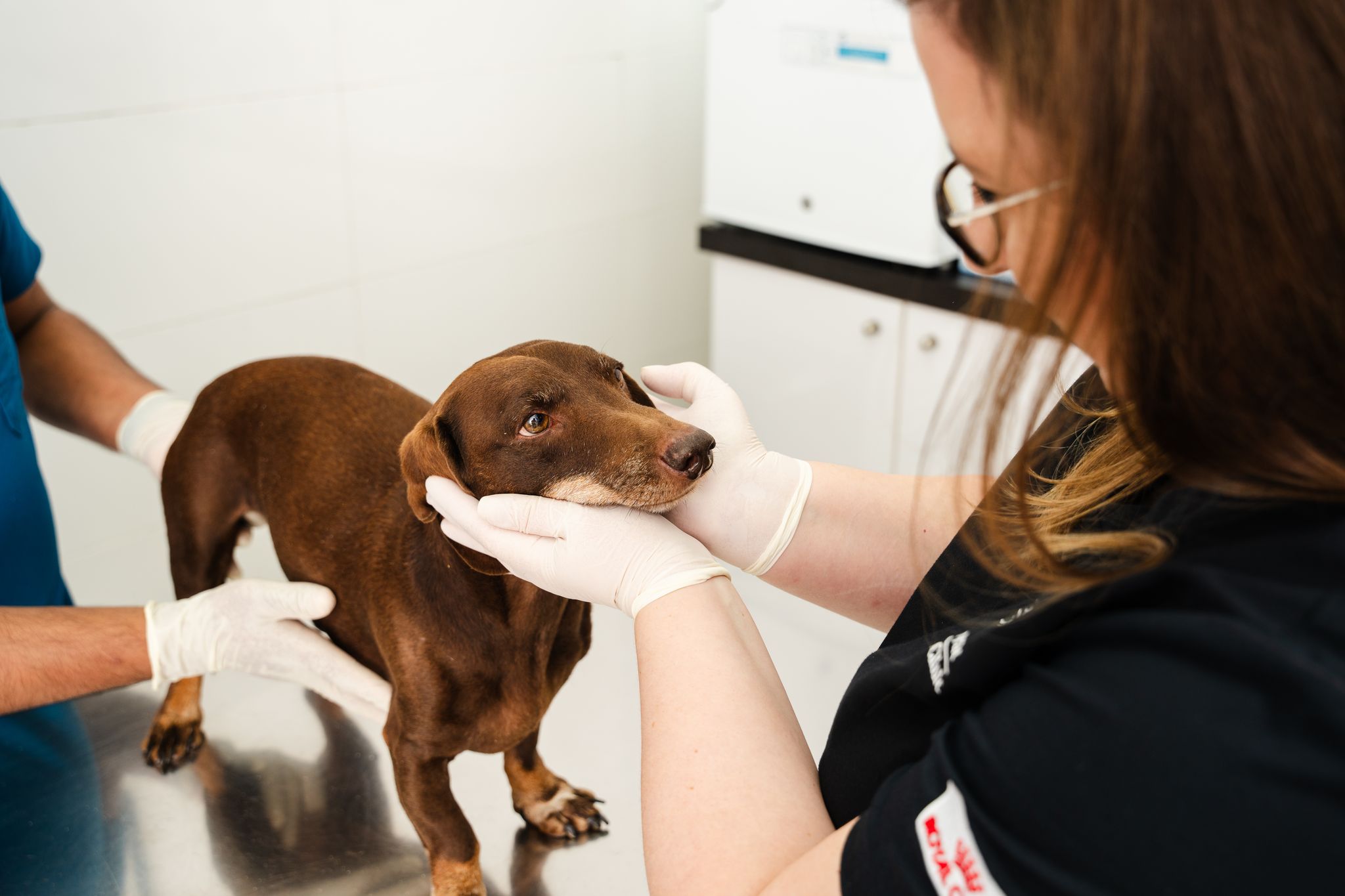
Yes, dogs can see better in the dark compared to humans. If you and your dog walk into a dim room, your eyes may take a longer time to adjust, and you’ll lose the details of the area quickly. Your dog, on the other hand, can usually make out enough shapes and movement to navigate.
Plus, dogs can use their incredible sense of smell and hearing to help them.
Can Dogs See in the Dark Better Than Cats?
Generally, no. While dogs do have impressive vision in dim conditions, cats are far better at seeing in the dark. Cats have more rod cells and a denser tapetum lucidum.







Subscribe to Our Newsletter
Worried about your pet?
We’re here for urgent care, wellness checks, or anything in between.