Cats need their eyes to see, explore, and play. That’s why protecting them is a top priority. But even with our best efforts, our cats may still encounter eye problems. One of these is eye infections.
Eye infections in cats are extremely uncomfortable, and many lead to more severe issues in the long run. That’s why we’re here to help you know everything there is to know about it, from what causes them to how we can prevent them.
What Are the Symptoms of Cat Eye Infections?
The usual signs of an eye infection in cats generally indicate eye irritation and pain. This includes:
Watery Eyes. Excessive tearing can be one of the first signs of an eye infection. While some cats, especially certain breeds, may naturally have slightly watery eyes, a noticeable increase in tearing could indicate an infection.
Discharge. You may notice a discharge from your cat’s eye, which can vary in color and consistency. Clear discharge might be less serious and linked to mild irritation, but thick yellow or green discharge is often a sign of infection and should be checked.
Redness and Swelling. If the white areas of your cat’s eyes or the surrounding tissues appear red, swollen, or irritated, this could indicate inflammation caused by an infection. Swelling can also appear along the eyelids.
Squinting or Excessive Blinking. Cats with eye infections often squint or blink more than usual as a response to discomfort. If you notice your cat keeping one eye closed or blinking frequently, it may be a sign of irritation.
Pawing at the Eye. Cats will often paw or rub their face when something is irritating their eyes. While an occasional paw swipe isn’t unusual, excessive and repetitive scratching could worsen the eye infection and lead to more injuries.
Sensitivity to Light. A cat’s eyes can be sensitive to light when it has an eye infection. You’ll start to notice this when you see your cat shying away from sources of bright light and avoiding the sun during the daytime.
Is a Cat Eye Infection an Emergency?
Generally, if your cat has an eye infection, the sooner you seek treatment, the better. Cat eye infections are considered an emergency if the symptoms appear suddenly and severely, which can include significant redness, swelling, bulging, pain, and discharge.
What Causes Eye Infections in Cats?
Cat eye infections are generally caused by pathogens, injuries, allergies, and other health issues.
Bacteria
Eye issues in cats, particularly infections, are commonly caused by bacteria like Chlamydia felis and Mycoplasma spp. A common result of this is conjunctivitis, otherwise known as pink eye in cats. Cats with bacterial eye infections can also develop severe symptoms, such as corneal ulcers.
Bacterial infections are also highly contagious, which can easily spread to other cats through direct contact, especially when eye discharge is involved. This means that areas where cats are close together are risky places, including unhygienic shelters and boarding facilities.
Viruses
Viruses are deemed to be the most common cause of eye infections in cats. Common culprits include feline herpesvirus and feline calicivirus.
These pathogens generally target the upper respiratory tract of cats and spread to ocular tissues. They attack the cells on the eye surface, which then causes the disease. Viral cat eye infections are often chronic, meaning they can persist for a long time.
Fungi
Fungal eye infections are also a possibility for cats. While they’re less common compared to bacteria and viruses, they still pose a major threat. They spread when cats are exposed to spores that are inhaled or enter through wounds.
Common culprits include Aspergillus and Candida. While not all fungal infections of the eye are contagious, some can easily spread through direct contact with an infected cat or contaminated surfaces.
Another virus that may indirectly be a cause is the feline immunodeficiency virus. By weakening the cat’s immune system, the cat becomes vulnerable to a lot of diseases, including eye infections.
Scratches and Injuries
Physical injuries can also be a trigger for cat eye infections. This can happen when they explore outside, fall, or get into accidents. Scratches from their paws or other cats can also be a contributing factor, as these injuries make the eye more susceptible to infection.
Once there's an open wound, it becomes easy for bacteria or other pathogens to get in and cause an infection.
Allergic Reactions
Feline allergies do not directly cause the eye infection, but they can set the stage for one. Common allergens like pollen, dust, and mold can irritate a cat’s eyes, leading to irritation and inflammation.
As a result, cats tend to scratch or paw at their own eyes, leading to scratches and tiny injuries. This can potentially start eye infections, as bacteria and other pathogens can easily get in.
Structural Issues
Some cats have unique eye structures and conditions that may make them susceptible to eye infections. This includes conditions such as entropion, chronic dry eye, and blocked tear ducts.
Are Cat Eye Infections Contagious?
Yes, some cases of feline eye infections can be contagious, and, on very rare occasions, they can even spread to humans. The disease can be transmitted through specific means, depending on the pathogen involved. This is generally through direct contact and contaminated objects.
How Are Eye Infections in Cats Diagnosed?
Our pet ophthalmologists focus on an eye exam and several tests to diagnose your cat’s eye infection.
Ocular Examination
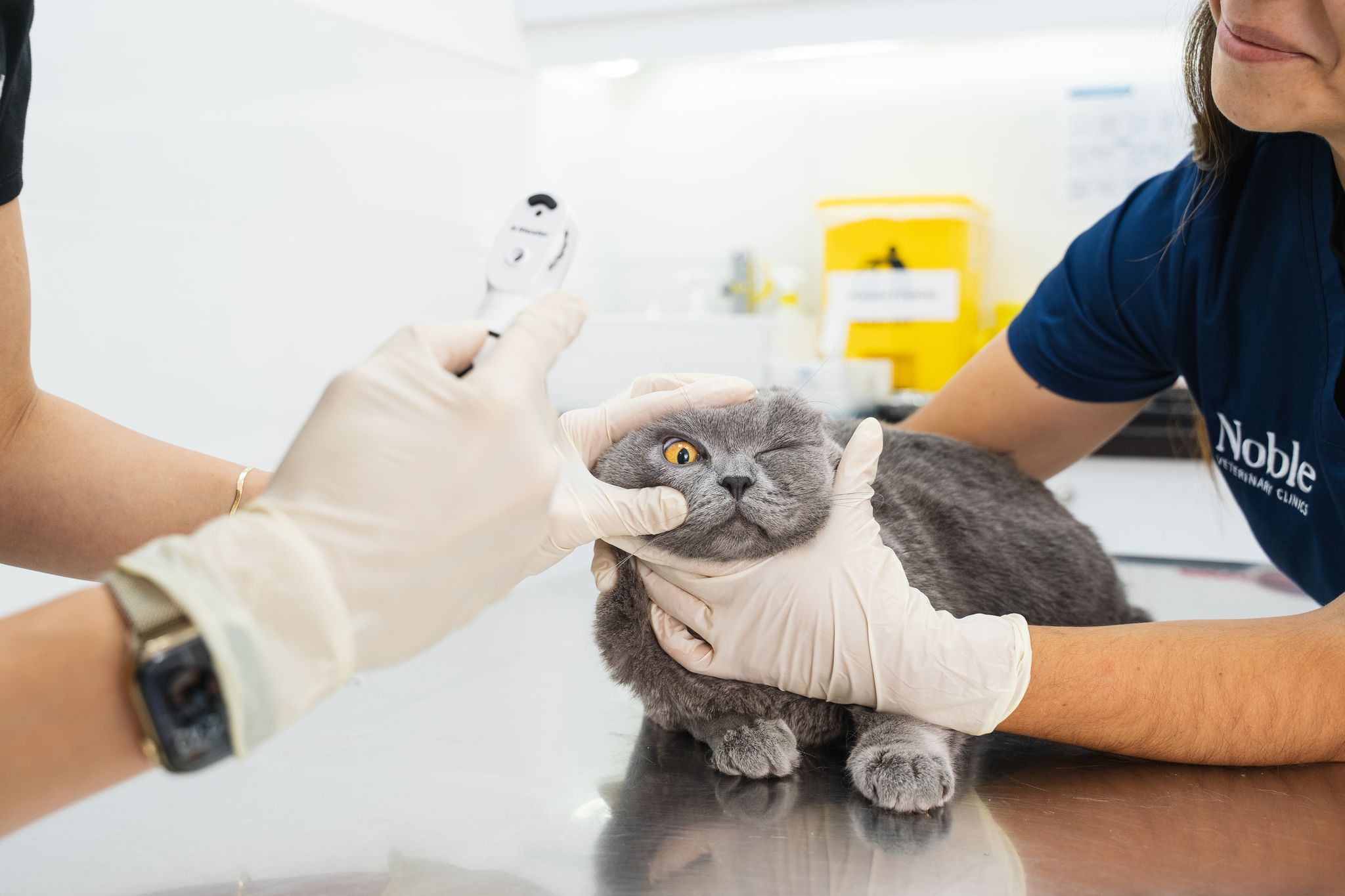
The first step we take is to physically examine your cat’s eyes. During the checkup, we’ll assess your cat’s condition and both eyes. Our eye specialists will look for the common symptoms, which include redness, irritation, and discharge. From here, we’ll proceed to other tests.
Fluorescein Dye Test
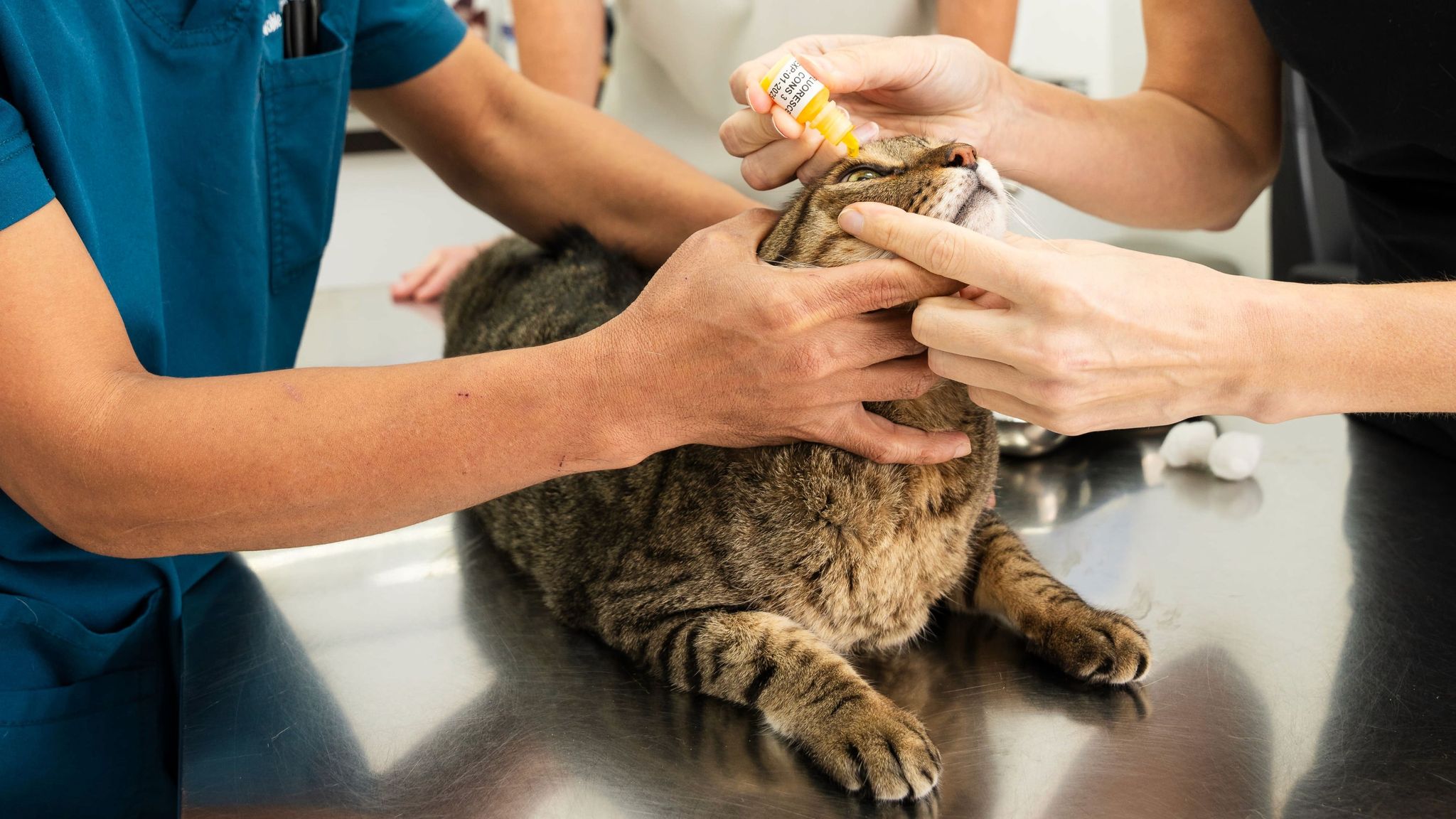
One of the tests we commonly use is the fluorescein dye test. We apply this dye on the surface of the eye and use a special light to highlight any damage to the cornea. Any scratches and ulcers will absorb the dye and appear green.
Cytology
Using a sterile swab, our vets collect a sample of discharge or cells from your cat’s eye surface. This sample will be examined under a microscope to identify the exact pathogen, the type of inflammation, and any other microorganisms.
Culture and Sensitivity Test
If the initial treatment process is not working or if your cat’s condition is chronic and severe, we may do additional testing with a culture and sensitivity test. It works by obtaining a sample of the discharge and creating a culture out of it.
This process allows us to accurately identify the main pathogen involved and test out several medications that work best. All these will be done at our in-house laboratory.
Allergy Testing
While allergy testing can’t directly diagnose feline infections, it is essential when dealing with allergic conditions. Here, we’ll identify the specific allergen through blood testing or intradermal skin testing.

How Do Vets Treat Cat Eye Infections?
Once we’ve identified the cause, we’ll focus on medication and supportive care.
Topical Treatments
Ointments or eye drops for cat eye infections are often the most used option for these cases. They are effective at addressing the infection, and they can be easily used at home. Common ones include Terramycin and Vetropolycin for bacterial infections.
For viral infections, we may prescribe famciclovir. Other supportive medications, such as anti-inflammatories, may be used to alleviate pain and inflammation.
Oral Medications
Oral medications can also help address the root cause of the issue, especially when it has become too severe. These work by eliminating the main pathogen systematically, helping your cat recover.
Supportive Treatments
If allergies are suspected to be the main antagonist of your cat’s eye infection, we’ll help your cat recover from these allergies through supportive treatments. These can include:
Adjusting your cat’s diet
Using air purifiers
Minimizing outdoor time
Changing your cat’s environment
Using E-collars
How Can Cat Eye Infections Be Prevented?
Protecting your cat from eye infections is the best way to keep their eyes healthy. Follow these few tips:
Schedule Vet Checkups
Routine checkups are among the best ways to monitor your cat’s overall health, including their eyes. During these visits, our ophthalmologists can identify potential issues early and provide quick treatments.
Maintain a Clean Home
Keeping a clean living area helps remove the dust, bacteria, mold, and other factors that could threaten your cats' eyes with eye infections. Use air purifiers, wash their bedding, and regularly change their litter boxes.
Groom Your Cat
Regular cat grooming helps ward off eye infections. Brushing, bathing, and gently cleaning around the eyes can help remove dirt, allergens, and bacteria before they cause problems. Plus, always check your cat’s eyes for any discharge or debris.
Keep Your Cat Indoors
Keeping your cat indoors reduces its risk of exposure to bacteria, viruses, allergens, and injuries. This will significantly reduce the risk of your cat developing an eye infection.
Boost Your Cat’s Nutrition
Feeding your cat healthy and nutritious food can help protect them from infections, especially those involving their eyes. Make sure your cats eat a well-balanced diet with healthy supplements.
“Healthy eyes help cats see the world and avoid the trouble they love to find. A little bit of care helps them keep this gift.”
- Dr. Lidija Krvavac
Final Thoughts
Cats need their eyes to explore the world around them and create lasting memories with their owners. That’s why it falls upon us to make sure they stay safe from feline eye infections and maintain a healthy and happy life.
Frequently Asked Questions
How can I treat my cat's eye infection at home?
You can help your cat with its eye infection at home by following our vet’s treatment plan and checking its eyes constantly. If you notice any discharge or debris, then be sure to wipe them away with a soft, damp cloth.
Will this disease heal on its own?
Some mild cases involving environmental allergens can resolve on their own, but it’s not a sure thing. Eye infections in cats can progress and worsen when left untreated, so it’s better to seek expert care instead of leaving them alone.
When to take a cat to the vet for an eye infection?
If you notice the signs and they last for a day or two, or if there's significant pain involved, then we recommend taking your cat to the vet.
Can this disease affect humans?
It is quite rare for feline eye infections to affect humans, especially since the primary pathogens involved are species-specific. However, there is a very slim chance, such as when the person is immunocompromised.
Can an eye infection in a cat cause blindness?
Yes, it is possible for a cat with an eye infection to become blind, especially in severe cases left untreated. This happens when the infection causes corneal damage and inflammation, leading to loss of vision.
Share
Latest Blogs
Subscribe to Our Newsletter
Worried about your pet?
We’re here for urgent care, wellness checks, or anything in between.