
Cat Diarrhea: What It Means, What Causes It, and How to Help

Cleaning your cat’s litter box every day is one of your responsibilities as a cat owner. This allows you to clean your cat’s safe spaces and keep them comfortable. However, it can also be a way to check for any health problems.
Key Takeaways
Your cat’s stool color can indicate serious conditions. Brown is healthy, while black, yellow, green, white, and red should be given attention.
Cat diarrhea is often caused by dietary issues, infections, parasites, toxins, stress and anxiety, and chronic diseases.
Treatment will consist of specific methods tailored to the underlying issue, which may include dietary changes, medical management, and lifestyle adjustments.
What Is Diarrhea in Cats?
Feline diarrhea is the frequent passage of loose and watery stool, which is different from normal stool. It can happen suddenly or for a long period of time. Acute cases last about two weeks while chronic cases take longer.
Diarrhea is a symptom of many different health issues, which means that it’s often accompanied by other related symptoms.
How to Tell if Your Cat Has Diarrhea?
If your cat has diarrhea, then there will be signs. Here are the common indicators:
Change in Stool Appearance
The first sign of cat diarrhea is a change in stool appearance. A healthy cat will have a firm, brown stool. It should be firm enough to hold shape but not too hard or dry.
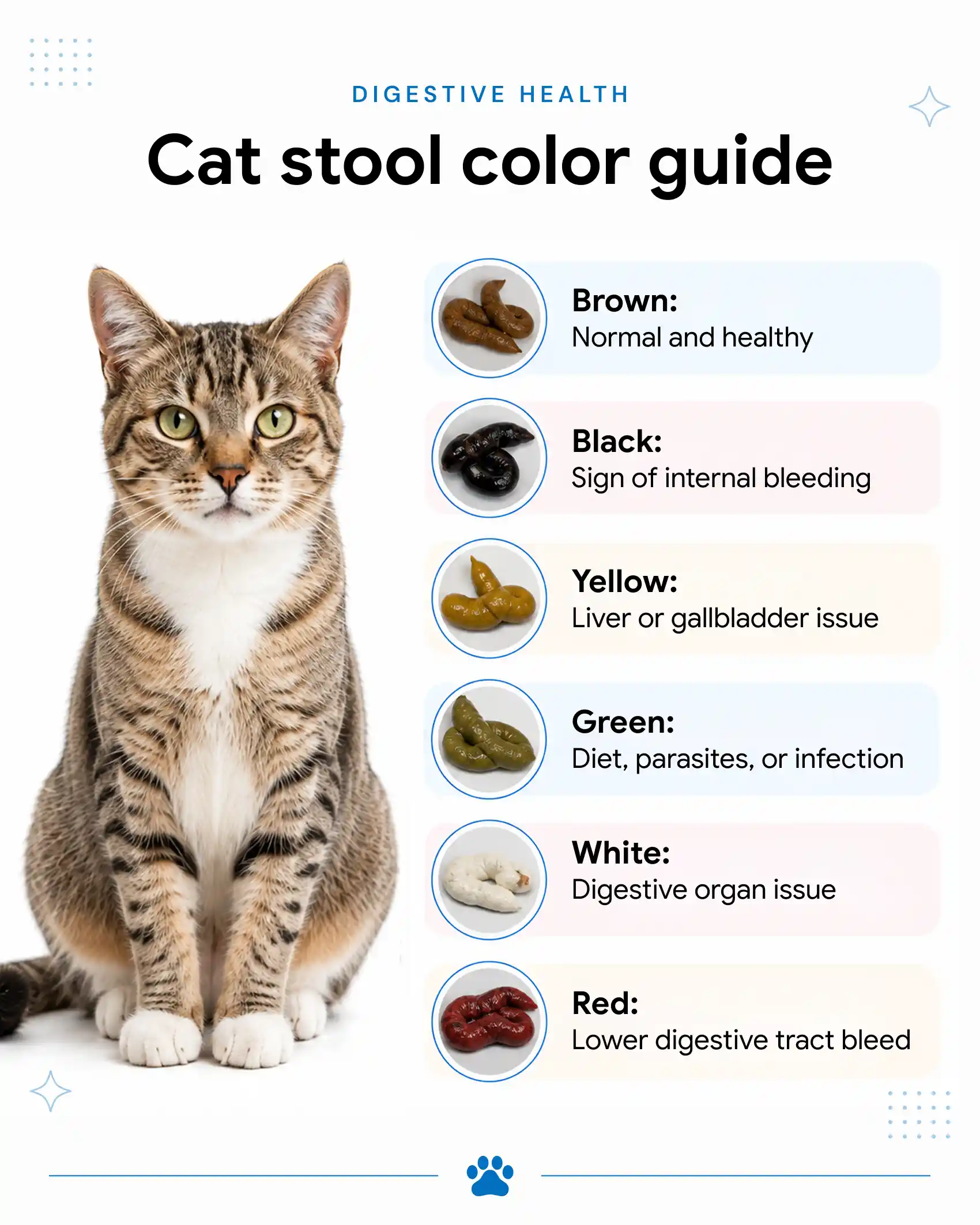
When your cat’s stool becomes watery or loose, it’s a sign of diarrhea. The color of your cat’s stool also says a lot. Here’s a closer look.
Brown. This is a healthy and normal color for cat stool.
Black. It can be a sign of bleeding in the digestive tract.
Yellow. Yellow diarrhea in cats often indicates a problem with the liver, gallbladder, or a specific infection.
Green. Similarly, green diarrhea can indicate liver or gallbladder issues, infections, parasites, and dietary changes. It can also happen when cats eat grass.
White. This is an unnatural stool color and could indicate bile duct obstruction and liver dysfunction.
Red. Red diarrhea is caused by internal bleeding, usually within the digestive tract.
Increased Bowel Movements
If you notice your cat taking too many trips to the litter box, it could be another sign of diarrhea. A healthy cat will defecate once or twice a day. When it becomes more than that, it could be a sign of dietary issues or a concerning health issue.
Accidents Outside the Litter Box
Even well-trained cats can fall victim to diarrhea, and accidents outside of a litter box can happen while they’re dealing with this issue. So, if you notice wet stool around the house, even in the litter box, your cat might have gastrointestinal distress.
Other Symptoms to Watch For
In addition to changes in stool appearance and defecation behavior, you must keep an eye out for other signs.
Vomiting and abdominal pain. Along with diarrhea, vomiting is a common companion that usually stems from gastrointestinal stress.
Weakness or lethargy. Cats will appear tired and lethargic, opting to rest and lie down for most of the day.
Change in appetite. Loss of appetite is also possible due to the significant stress and discomfort.
Straining to defecate. Some cats with diarrhea will strain because their intestines are irritated or inflamed.
Sudden weight loss. Due to poor nutrient absorption and loss of appetite, affected cats may lose significant weight.
What Are the Common Causes of Cat Diarrhea?
Your cat’s diarrhea can stem from a couple of different reasons, from something as simple as their diet to severe health issues. Here are the common ones:
Dietary Problems
The most common reason for cat diarrhea is diet. Cats have sensitive stomachs, so anything they eat can affect their digestive systems.
Food Intolerances and Allergies. Cats with food allergies, intolerances, and sensitivities may also experience diarrhea when eating specific foods. Common examples include milk, chicken, eggs, and beef.
Toxic Foods. Foods toxic to cats, such as chocolate, grapes, raisins, onions, and garlic, can cause diarrhea. These foods should generally be avoided, as they can do more damage to the cat’s body.
Abrupt Changes in Food. Some cats may also experience diarrhea when their food is changed abruptly. This is why transition is important when switching food, even if it’s just the brand.
Table Scraps or Spoiled Food. These are always bad for cats, as they can easily trigger digestive upset, causing diarrhea and vomiting in the process.
Infections
Bacteria and viruses that cause infections can also be the reason for diarrhea. Some bacterial infections, particularly those from Salmonella and E. coli, can result in this symptom. Among viruses, feline parvovirus is the most notorious cause of feline diarrhea.
Parasites
Internal and intestinal parasites are one of the most common causes of diarrhea in cats. Parasites such as hookworms, roundworms, tapeworms, and Giardia are among them. These parasites irritate and damage the lining of the gastrointestinal tract.
This results in infection, inflammation, and disrupted nutrient absorption.
Toxins and Poison
Cats may also experience diarrhea when they ingest toxins, poisons, human medication, and household cleaners. Plus, they can cause more than just diarrhea, which is why keeping these chemicals out of your cat's reach is crucial.
Aside from chemicals, there are also different types of plants toxic to cats. We recommend checking our list first, so you’ll know which kinds to buy and which to avoid.
Stress and Anxiety
Stress and anxiety in cats can also cause feline diarrhea. Cats have a direct link between their nervous system and digestive tract, where emotional distress can manifest as a physical symptom, namely gastrointestinal distress.
Chronic Diseases
Usually, feline diarrhea is caused by various chronic health issues. These include:
Pancreatitis. Feline pancreatitis is inflammation of the pancreas, leading to nutrient malabsorption and loose stools due to a lack of digestive enzymes.
Inflammatory Bowel Disease. IBD is a chronic condition in which the immune system attacks the intestinal lining, causing inflammation and impaired nutrient absorption.
Liver Disease. Liver dysfunction will affect bile production. As a result, cats can develop diarrhea and other digestive issues.
Hyperthyroidism. Excessive thyroid hormone production will increase metabolism, resulting in frequent stools.
Cancer. Tumors or growths along the gastrointestinal tract can cause obstructions, interfering with the normal structure and function.
Your cat’s stool tells you so much about their current health. Normally, stool is solid, neither too hard nor too soft. If this appears different for a long time, then it raises a concern we must look into.
One concern is diarrhea, a symptom that is often overlooked but can signal a much deeper issue.
Frequently Asked Questions



MORE THAN A VET VISIT