Cat and Kitten Vaccination Guide 2026: Benefits and Schedule


This article has been reviewed by Dr. Soheyl Simaei on 15 May 2026.
Key Takeaways
Cat vaccinations are essential to safeguard your cat and reduce the spread of disease. They are also required by law for pet ownership and travel.
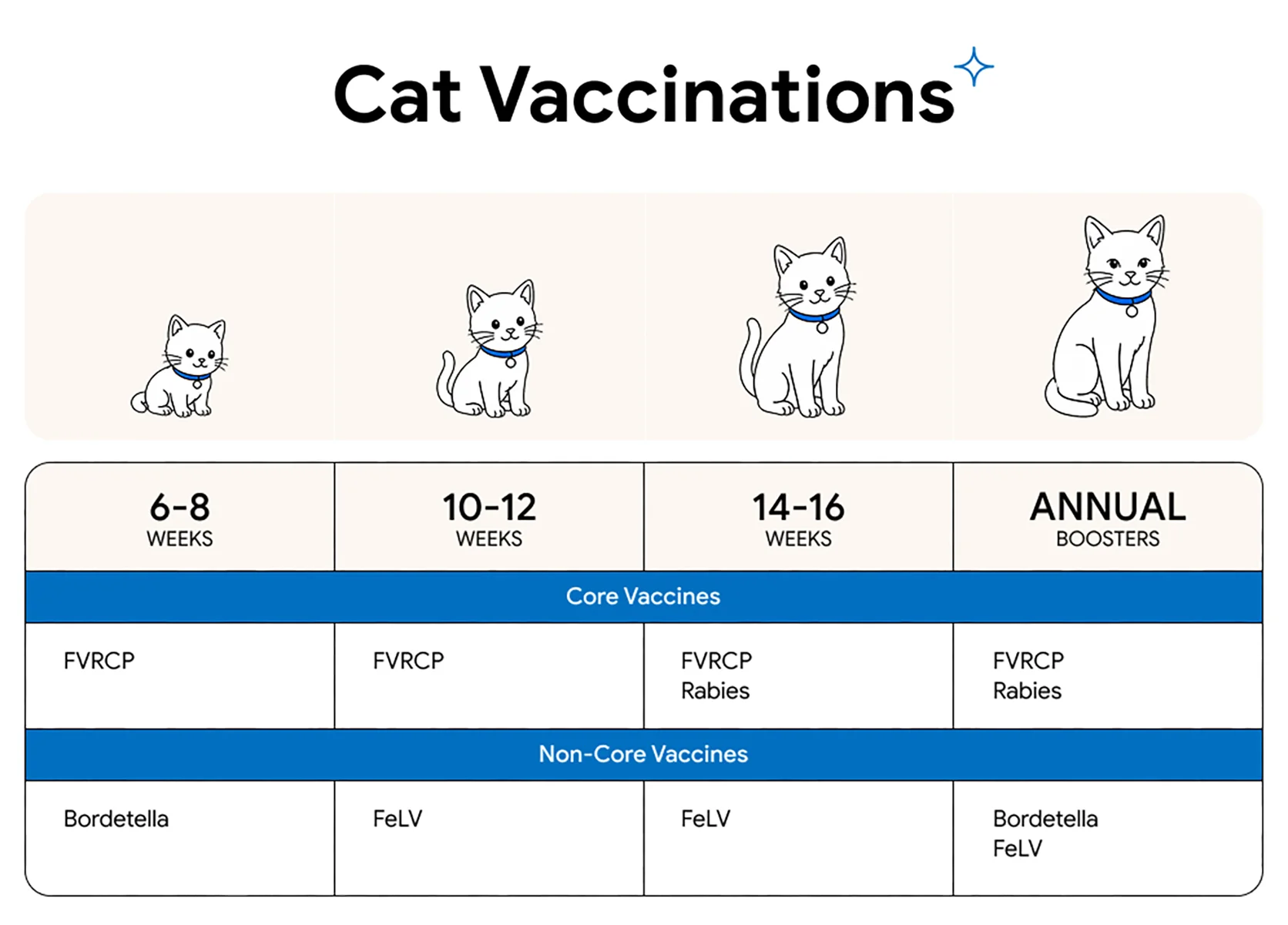
Core vaccines include rabies and FVRCP. The first dose for FVRCP must be given at 6-8 weeks of age.
Potential side effects include fever, lethargy, soreness at the injection site, and a reduced appetite.
What Are the Benefits of Vaccines for Cats?
One of the main reasons why it’s important to vaccinate your cat is the protection it offers. Vaccinated cats are significantly less likely to develop severe disease. These preventive treatments also prevent the spread of disease and are fully customizable according to your cat’s needs.
This ultimately means lower medical and unexpected emergency costs. Additionally, cat vaccinations are required for pet ownership, a vet health certificate, access to local pet services, and international travel.
What Vaccines Do Cats Need?
Cats require two core vaccinations: rabies and FVRCP. Non-core variations can be recommended and provided as needed.
Core Cat Vaccinations
These are essential for all cats in order to protect their health and the community.
Anti-Rabies Vaccine
This helps protect cats against rabies, a deadly viral disease. The virus can easily spread to other animals when infected saliva reaches bite wounds and mucous membranes. It’s also zoonotic, meaning humans can be affected.
Once infected, the cat may experience rapid neurological deterioration, leading to behavioral changes, extreme aggression, and irritability. At the final stage, cats will experience paralysis, foaming at the mouth, and even death.
Prevention is the only effective solution against this disease. Common rabies vaccine options for cats include Purevax and Rabisin.
FVRCP
A combination vaccine that protects cats against three highly contagious diseases: feline viral rhinotracheitis, feline calicivirus, and feline panleukopenia. The standard brands for FVRCP are Nobivac, Purevax, and Felocell.
Feline Viral Rhinotracheitis: A severe upper respiratory infection caused by FHV-1. It’s a major cause of cat flu and results in sneezing, nasal discharge, and conjunctivitis. FVR affects over 90% of cats exposed to the virus. It’s generally transmitted through direct contact with infected saliva, eye discharge, or nasal secretions.
Feline Calicivirus: A viral disease that causes upper respiratory infections, oral ulcers, and even joint pain. FCV is transmitted through direct contact with infected saliva, eye or nasal discharge, and respiratory droplets. While cats may recover within 7-10 days, most become carriers for months.
Feline Panleukopenia: A highly contagious disease caused by feline parvovirus, which targets rapidly dividing cells and severely reduces the cat’s white blood cell count. It also attacks the intestines and bone marrow.
Non-Core Cat Vaccinations
Lifestyle options are recommended based on the cat’s location, risk of disease, lifestyle, and overall health. Some will require these, while others will not.
Feline Leukemia Virus Vaccine
This protects against FeLV, a virus that can significantly compromise a cat’s immune system and increase their risk of infections, anemia, and even certain cancers. It’s highly recommended for cats that love to go outdoors or live with other infected cats.
Bordetella Vaccine
Another option recommended for cats who frequently stay in shared spaces, such as multi-pet households, boarding facilities, and grooming salons. These are often places where respiratory infections spread easily.
Cat vaccines work by using a deactivated form of the virus or bacteria, helping the immune system recognize the pathogen and develop antibodies in response. When the real threat comes, the cat’s immune system is ready to defend.

Frequently Asked Questions







Subscribe to Our Newsletter
Worried about your pet?
We’re here for urgent care, wellness checks, or anything in between.