Dog Sadness: 10 Signs of a Sad Dog and How to Help

Dogs are very social and emotionally intelligent. They can easily bond with their owners and get close to their families. It is because of this very intelligence that they can quickly understand routines, commands, and their owners' feelings.

This is why dogs are beloved across the world. They understand their owners’ emotions and will take the steps to comfort them when they get sad. But what happens when a dog’s feelings are affected? Do dogs get sad, too?
In this blog, we’ll talk about dog sadness, starting from the causes, the signs, and how to help them.
Do Dogs Feel Sadness?
Yes, dogs do get sad. Some can even experience depression.
Dog sadness is similar to how we humans perceive sadness. It’s an emotional state that can happen due to several reasons, from routine changes to emotional distress. The main difference is that while we can talk about our sadness, our dogs can’t directly share their feelings with us.
What Makes Dogs Sad?
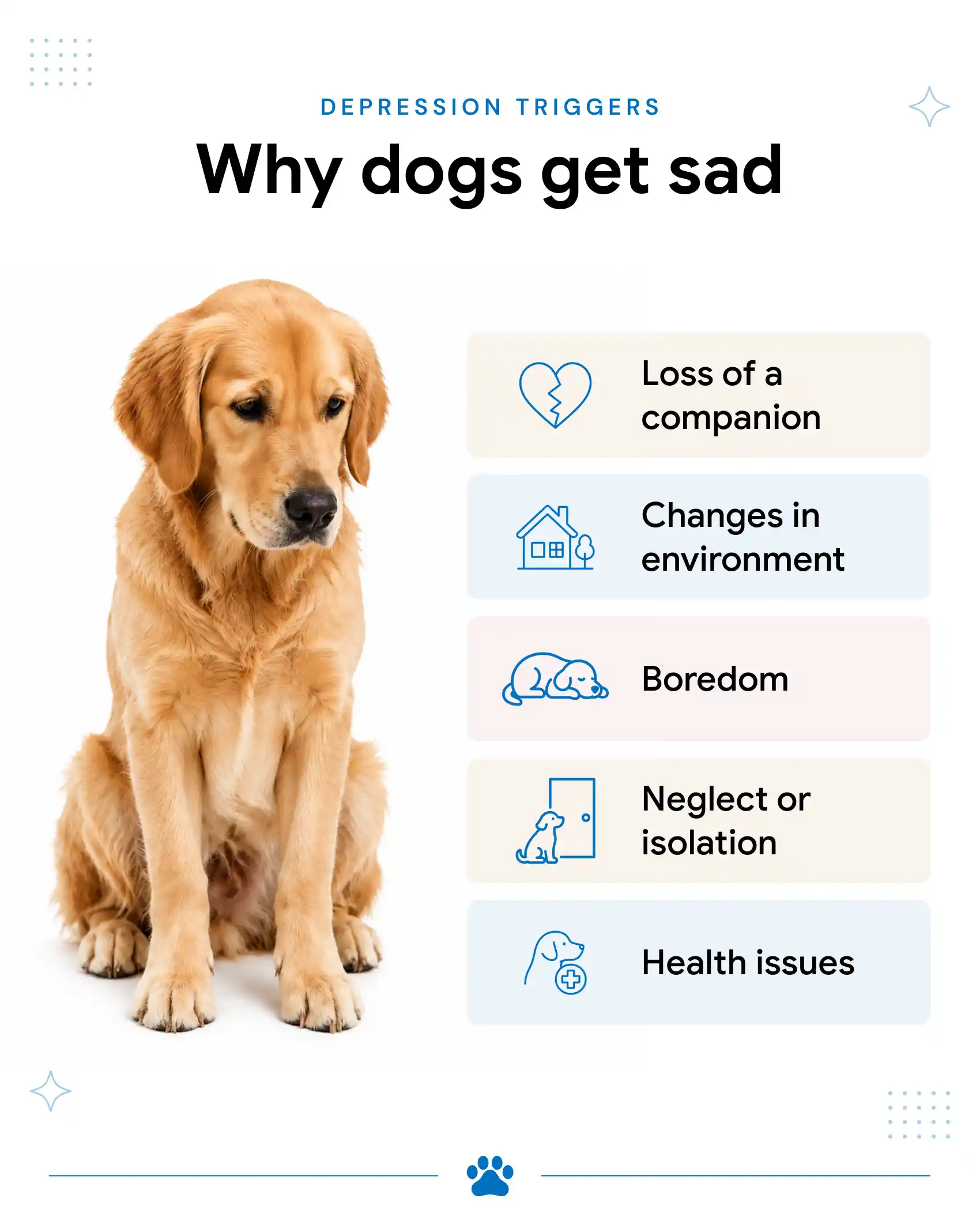
Dogs can get sad for lots of reasons. Some are simple, while others are quite complex. No matter what it is, knowing the exact cause is the start of how we can help your dog get back its happy and glowing smile.
Here are the common causes of dog sadness:
Loss of a Companion
Dogs feel the absence of someone they’ve bonded with deeply, whether it’s a fellow dog or a human companion. If a dog loses a companion, it might search for them around the house or show signs of confusion and withdrawal.
Dogs are highly attuned to the dynamics in their “pack,” which includes you and your family. A new baby, a change in homes, someone moving out, or even tension between family members can affect them emotionally.
They might sense these changes and react with sadness or confusion as they try to adapt. The grief can be real, and it often takes time for them to adjust to this kind of emotional change.
Changes in Environment
Sometimes, a small change can bother a dog and affect their emotional capacity. The sense of unfamiliarity can unsettle them and cause sadness. This includes moving houses, rearranging furniture, or a change in who they live with.
For example, if you recently changed your work schedule, then your dog may feel sad that you’re not home at the times you should be.
Boredom
A dog can also become sad because of boredom. For high-energy or active breeds, they require consistent forms of exercise and stimulation. When they don’t get it, all that unused energy and boredom can leave them feeling sad. In some cases, this can result in destructive behaviors as well.
Feeling Neglected or Isolated
Dog sadness can also come from neglect. When they’re left alone for long periods, this can take an emotional toll on them. These breeds are usually the ones that are very affectionate, which include Golden Retrievers and Dachshunds.
Health Issues
Sometimes, a dog’s sadness comes from physical troubles. Pain or illness can leave a dog lethargic and uninterested in its usual favorites. Common health issues like chronic arthritis, dental problems, or an upset stomach can all cause dog sadness. The uncomfortable feeling can make your dog depressed.
How Do You Know if Your Dog Is Sad?
Dog sadness can manifest in small and subtle signs. The way to know is to look at how they move, what they say, and how they act.
They lose interest. If your dog suddenly seems uninterested in its favorite activities or food, it could be a sign of sadness.
They withdraw and avoid. Sad dogs might retreat to quiet spaces in your home and spend more time alone. Dogs experiencing sadness and depression might prefer to be alone because they are struggling.
They lose their appetite. A sad dog may eat significantly less than usual, turning their nose up at food and even treats. On the flip side, some dogs might overeat when they’re stressed or sad, so watch for unusual changes in eating habits.
They are tired all the time. Sad dogs often appear tired when engaging with the world around them. If your normally energetic pup starts to appear more tired on its usual walks, it might be emotionally drained.
They voice out. When they start to whine, whimper, or howl more than usual, it could be how they say that they’re sad.
They always sleep. Dogs sleep more if they’re sad, almost as if they’re trying to “escape” their feelings. Others might have trouble settling down, appearing restless, or pacing around.
They become more clingy. Some dogs respond to sadness by seeking constant reassurance from their humans. If your dog is suddenly glued to your side or constantly nudging you for attention, they might be looking for comfort and security.
They show physical signs. Sadness can sometimes manifest physically in dogs. You might notice weight loss, licking or chewing, and a dull coat.
They have accidents. If your house-trained dog starts having accidents indoors or engages in behaviors they’ve never shown before, it could be having trouble with depression.
They become angry. In some cases, dogs tend to be irritated and easily annoyed when they get sad. Chewing, aggressive behavior, and irritability are possible signs of dog sadness and depression.
Frequently Asked Questions


Get 150 AED Off Your Pet's First Visit



MORE THAN A VET VISIT