Dog and Puppy Vaccinations: The Complete Guide (2026)



Key Takeaways
Dog vaccinations offer long-term protection, reduce disease spread, are cost-effective, comply with regulations, and allow access to local services.
They target pathogens and diseases such as rabies, distemper, adenovirus-1 & -2, parvovirus, parainfluenza, and leptospirosis.
Core vaccinations are required for all dogs, starting at 6-8 weeks of age. Non-core vaccines will be provided if needed.
Why Should You Vaccinate Your Dog?
Dogs need vaccines to stay safe against severe diseases that lack specific cures. They are valuable in preventing the spread of disease, especially for dogs that frequent boarding facilities and dog parks. This significantly reduces the need for costly emergency treatments.
Vaccinated dogs may also enjoy the aforementioned local services, including grooming and daycares. Additionally, dog vaccination is legally required in many countries, including the UAE. They are needed to complete the vet health certificate for local and international travel.
What Vaccines Do Dogs Need?
Core vaccines are required for preventive care and compliance, while non-core variants will be provided as needed. Our veterinarians will recommend them based on your dog’s location, disease risk, lifestyle, and overall health.
Core Vaccinations
Rabies Vaccine
This protects against the rabies virus and is required for dogs, especially for travel and legal compliance. The rabies vaccine is nearly 100% effective, providing a considerable immune response in over 95% of dogs.
Dogs must be vaccinated against rabies at least 21 days before the departure date, but no more than 12 months prior. Standard brands include Rabisin and Imrab, which are both licensed for local use and international travel. Administration must be performed by a licensed veterinarian.
DHPPi/L
A combination vaccine that offers protection against several viruses, including CDV, CAV-1 and -2, CPV, CPIV, and leptospirosis. This is also called DHLPP and DA2PP-L. Full immunity is achieved about 2 weeks after the final round of boosters.
DHPPi/L is highly effective, nearing 100%. Common brands utilized in the UAE include Nobivac and Canigen. These are approved within the region and are offered by licensed veterinarians.
Non-Core Vaccinations
Bordetella
This preventive treatment protects against Bordetella bronchiseptica, the primary cause of kennel cough. The Bordetella vaccine is highly effective at reducing the severity of the symptoms and risk of disease. Administration can be via an intranasal spray, an oral liquid, or an injection.
Canine Influenza
A vaccine recommended for dogs at risk of infectious dog flu strains (H3N8 and H3N2). It’s offered as a lifestyle vaccine for dogs who frequent public spaces and participate in grooming sessions, park activities, and group training.
Lyme
The Lyme vaccine is advised for dogs at risk of Borrelia burgdorferi, bacteria transmitted by deer ticks. This includes dogs in high-risk areas such as sandy or bushy areas, outdoor parks, and hiking adventures.
It works by targeting the outer surface proteins on the bacteria, eliminating them while they’re still in the tick’s midgut.
When Should Dogs Get Vaccinated?
The dog vaccination schedule starts with puppies at 6-8 weeks of age, with a DHPPi/L dose. Additional shots will be provided every 3-4 weeks until they reach 14-16 weeks of age. Additionally, the first dose of the rabies vaccine may be administered at 14-16 weeks of age.
The next dose for the core vaccines will be provided one year after. To strengthen the level of immunity, annual rabies booster shots are required. For DHPPi/L, this can be provided every 1-3 years, but annual vaccination is recommended by our veterinarians.
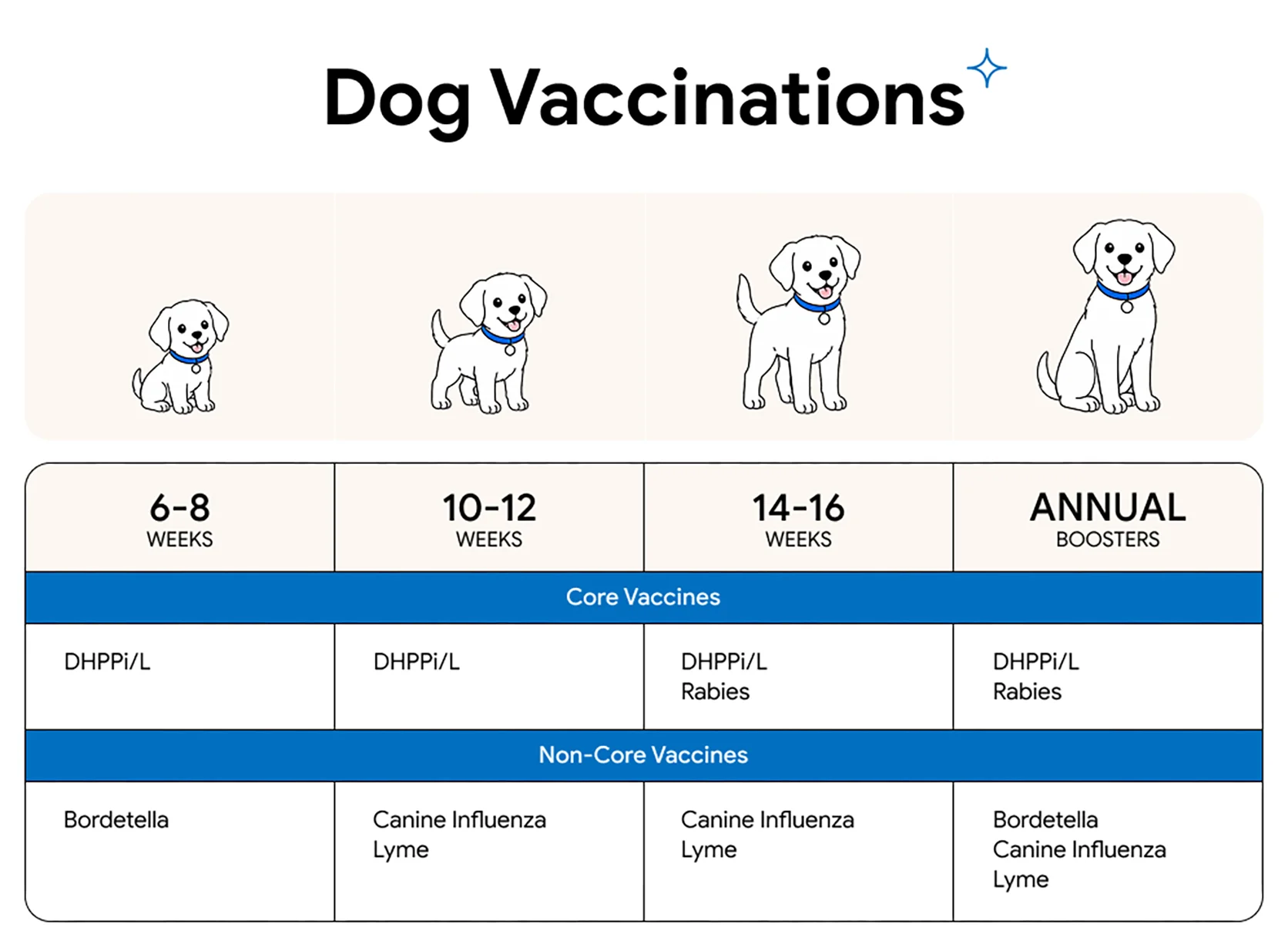
Puppy Vaccination Schedule
Our veterinarians will assist you with your dog’s vaccination schedule, so don’t worry. We'll help you prepare your puppy's records and send you reminders for their next appointments.
Age | 6-8 weeks | 10-12 weeks | 14-16 weeks |
|---|---|---|---|
Core Vaccines | DHPPi/L | DHPPi/L | DHPPi/L |
Non-Core Vaccines | Bordetella | Canine Influenza | Canine Influenza |
Adult Dog Vaccination Schedule
Adults will require annual boosters to strengthen their immune system over time. Here’s what you can expect:
Frequency | Annually |
|---|---|
Core Vaccines | DHPPi/L |
Non-Core Vaccines | Bordetella |
How Much Do Vaccines for Dogs Cost?
Our initial DHPPi/L vaccination costs AED 360, while booster shots and additional vaccines (DHPPi/L, Rabies, and Dubai Municipality tag and registration) cost AED 510. Both prices come with a complete vet exam.
Frequently Asked Questions






Subscribe to Our Newsletter
Worried about your pet?
We’re here for urgent care, wellness checks, or anything in between.