Why Are Cats Scared of Cucumbers?


If you’ve spent some time on the internet, chances are you’ve seen some viral videos of cats getting hilariously frightened by something as simple as cucumbers. Some owners even go to greater lengths and prank their cats by intentionally placing or throwing cucumbers at them.
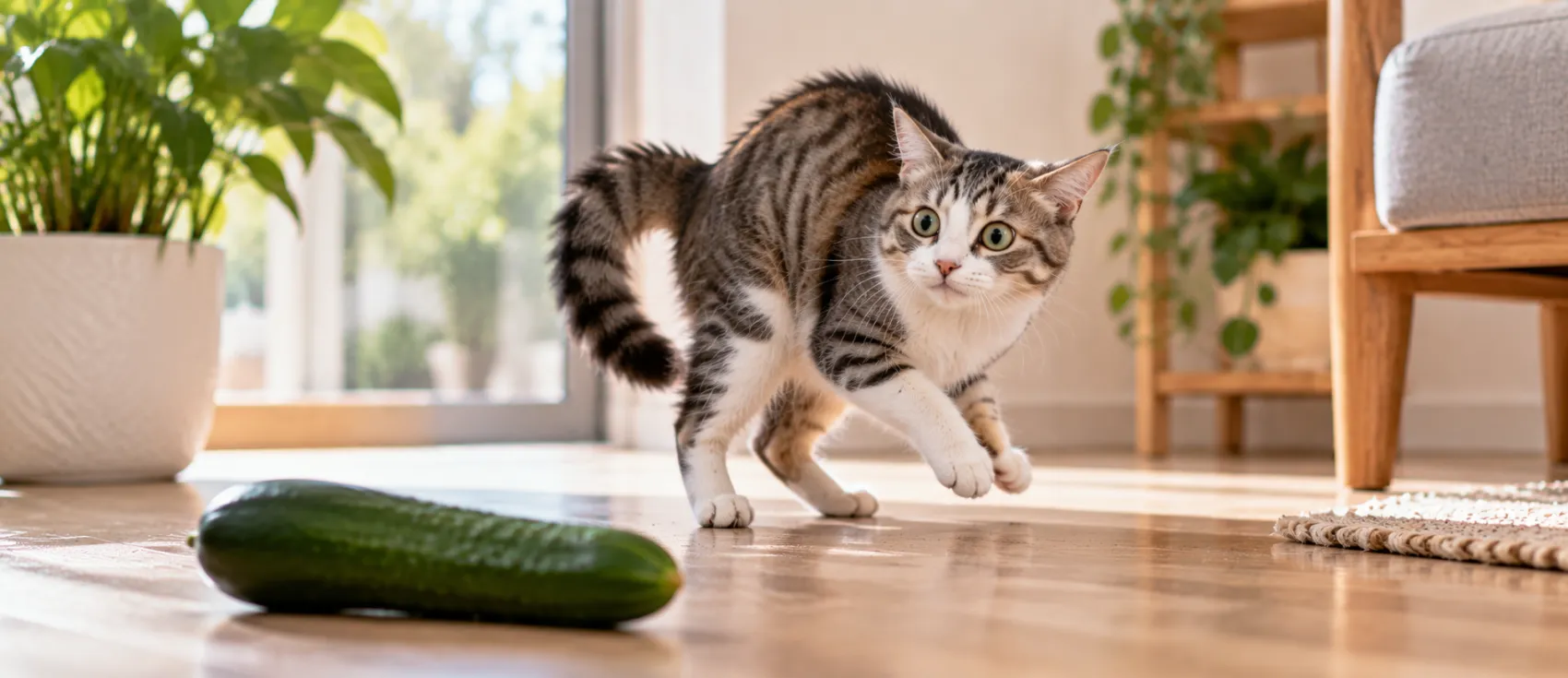
The cats react intensely, with some even jumping to insane heights because of the pure shock. The clips are shared just for laughs, but they do make a lot of pet owners and general audiences wonder why cats are scared of cucumbers. So why are they?
In this blog, we’ll break down the common associated reasons for this behavior and explain why cats react so dramatically. Next, we’ll discuss what you can do to help your cat if they do get scared in this way.
A Cat’s Reflexes
Because cats are agile hunters, they are able to react quickly to unknown sights, sounds, and movements. They have an active nervous system that instantly sends signals to the body to move, allowing the powerful muscles and flexible spine to act out the reaction.
This is why they can jump great heights and jerk immediately upon seeing something scary, which is really incredible.
Why Do Cats Get Scared?
Cats are not easily frightened for no reason, but they are extremely sensitive to sudden changes and events around them. It can be traced back to their roots.
Survival Instincts
Even though domestic cats live comfortable lives, they still have strong survival instincts. In the wild, cats are both predators and prey. That means they are wired to hunt and stay alert for potential threats. When something unusual appears, their brains react immediately.
Lack of Socialization
Cats that weren’t gently exposed to different people, sounds, and environments when they were young often get scared when they encounter these in the future. New experiences can feel overwhelming and strange, especially since they don’t know anything about them.
Trauma
A bad experience, such as an attack, rough handling, or even a terrifying event, can teach a cat that certain places, objects, or people aren’t safe. Cats can form strong associations, so even a similar sound or setting can trigger fear later. In many cases, the fear can linger for a long time.
Loud Noises or Sudden Movements
Cats have very sensitive hearing and senses designed to react quickly to potential danger. Sudden thunder, fireworks, loud cars, and fast movements can startle them and trigger a reflexive response.
Changes in Lifestyle
Cats are routine-driven and often feel secure when their environment stays predictable. Changes like moving furniture, new pets, visitors, or schedule shifts can make them feel uneasy and afraid.
Health Issues or Stress
A cat that’s anxious, in pain, or unwell can be more reactive than usual. If they’re experiencing something that could heighten their discomfort, they could be more sensitive to other things that they were fine with before.
Why Cats Are Scared of Cucumbers

Now that we know why they get scared, we can get a better idea of why cats are scared of cucumbers. Here’s a quick guide:
They Resemble Snakes
The most popular theory why cats are scared of cucumbers is that they resemble snakes. Its long and curved shape can almost look like a snake, which could alarm certain cats. Generally, it would be natural for cats to react fearfully to something that closely resembles them.
They Appear Suddenly
On most occasions, the cucumbers appear suddenly behind the cat as placed by the owners taking the videos. This triggers a natural response that makes cats react to it first, then assess it later. The jump is basically a reaction that helps them reposition and keep safe.
Additionally, cats are usually busy eating or drinking, which means they aren’t aware of their surroundings during this time. When their attention is locked on these activities, they can get easily scared and shocked to find the cucumber nearby. This makes the surprise hit harder.
They Are Unfamiliar Objects
Cats are cautious creatures, and if they find anything unusual, they will react fearfully. This is a normal response for cats that don’t have much experience with certain objects, events, and people.








Subscribe to Our Newsletter
Worried about your pet?
We’re here for urgent care, wellness checks, or anything in between.