Why Does My Dog Have Red Eyes?


Dogs rely heavily on their eyesight to explore the world around them. Unfortunately, their eyes can experience a lot of problems, with some appearing out of nowhere. These issues can cause severe pain, discomfort, and irritation, leading to red eyes in dogs.

Eye issues in dogs can pop up unexpectedly, and red eyes are a common sight. It’s not only alarming on your end, but it’s also very uncomfortable for theirs. As their caretakers, it’s our responsibility to keep their eyes healthy.
In this blog, we’re going to talk about the many possible reasons why your dog has red eyes. We’ll also discuss diagnostic methods, treatment options, and preventive measures.
Common Reasons Why Your Dog Has Red Eyes
When your dog’s eyes turn red, it can be caused by a range of factors. Some of these eye issues in dogs are relatively harmless and can be easily managed, while others require immediate veterinary attention. Let’s take a closer look at the most common causes.
Allergies
Allergies are a frequent cause of red eyes in dogs. Just like humans, dogs can suffer from allergies triggered by pollen, dust, mold, or perfumes. Allergic reactions often lead to itchy, watery eyes, which can result in redness.
If your dog has seasonal allergies, you might notice that their eyes become red and irritated during certain times of the year. Other symptoms, such as sneezing or scratching, may accompany the redness.
Eye Infections
Another reason your dog has red eyes is due to an eye infection. Bacterial, fungal, and viral agents can affect your dog’s eyes, causing them to turn red from the inflammation. This will often lead to other symptoms, including eye discharge.
Some may also exhibit excessive squinting and frequent scratching, which may worsen the dogs’ red eyes.
Injuries or Trauma
A dog’s red eyes may also come from physical trauma or injuries to the eyes. Your dog’s eyes might get injured whenever it explores the outdoors, mainly due to its enthusiasm. Even a small scratch or foreign object, like a piece of dirt or grass, can irritate the eye, causing redness.
Even physical contact with short tree branches and shrubs can lead to red eyes in dogs. Fights with other dogs, cats, and outdoor animals can also be the cause, as the eyes might get hit.
Dry Eye Syndrome
Dry eye syndrome occurs when your dog’s eyes don’t produce enough tears to keep them moist. Without adequate lubrication, the eyes can become dry, irritated, and red. This can be caused by genetics or an autoimmune issue, in which the immune system attacks the dog’s tear glands.
Glaucoma
Glaucoma is a severe condition in which the eyes experience increased intraocular pressure. This buildup of pressure deals serious damage to the optic nerve. Red eyes are among the earliest symptoms of glaucoma, which can lead to more serious problems, including blindness.
Because of its severity, glaucoma required immediate veterinary intervention to manage the pressure.
Conjunctivitis
Pink eye is the inflammation affecting the white part of the eye. In addition to redness, the inner eyelids can become irritated and inflamed. This eye issue can be triggered by infections, irritants, or allergies.
Dogs with this condition often have red, swollen eyes, along with discharge, and may frequently rub their eyes due to discomfort.
Eyelid Problems
There are some eyelid issues that can be the cause of your dog’s red eyes. Entropion and ectropion are both possible causes, wherein the eyelids roll inward and outward, respectively. These conditions cause irritation to the eyes, which may be the cause of your dog’s red eyes.
Corneal Ulcers
Corneal ulcers cause red eyes in dogs mainly because they trigger pain and inflammation on the surface of the eye. This can happen when the cornea is scratched, injured, or infected, increasing blood flow to the affected area.
Uveitis
Uveitis can cause a dog’s eyes to turn red because of the inflammation inside the eye. The uvea includes the iris and other internal structures, and when it becomes inflamed, blood vessels inside the eye dilate and leak inflammatory cells.
How Vets Diagnose the Cause of Your Dog’s Red Eyes
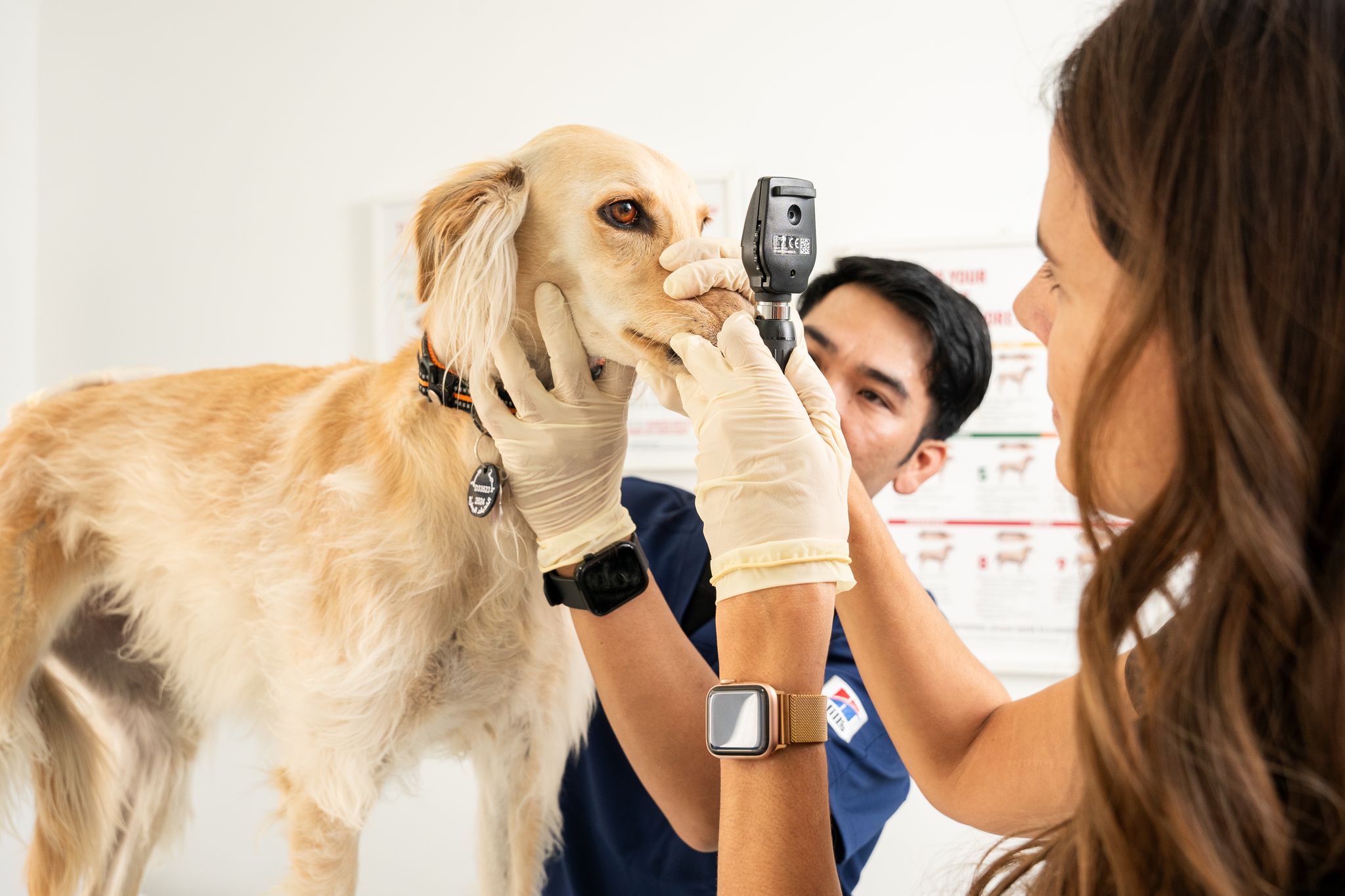
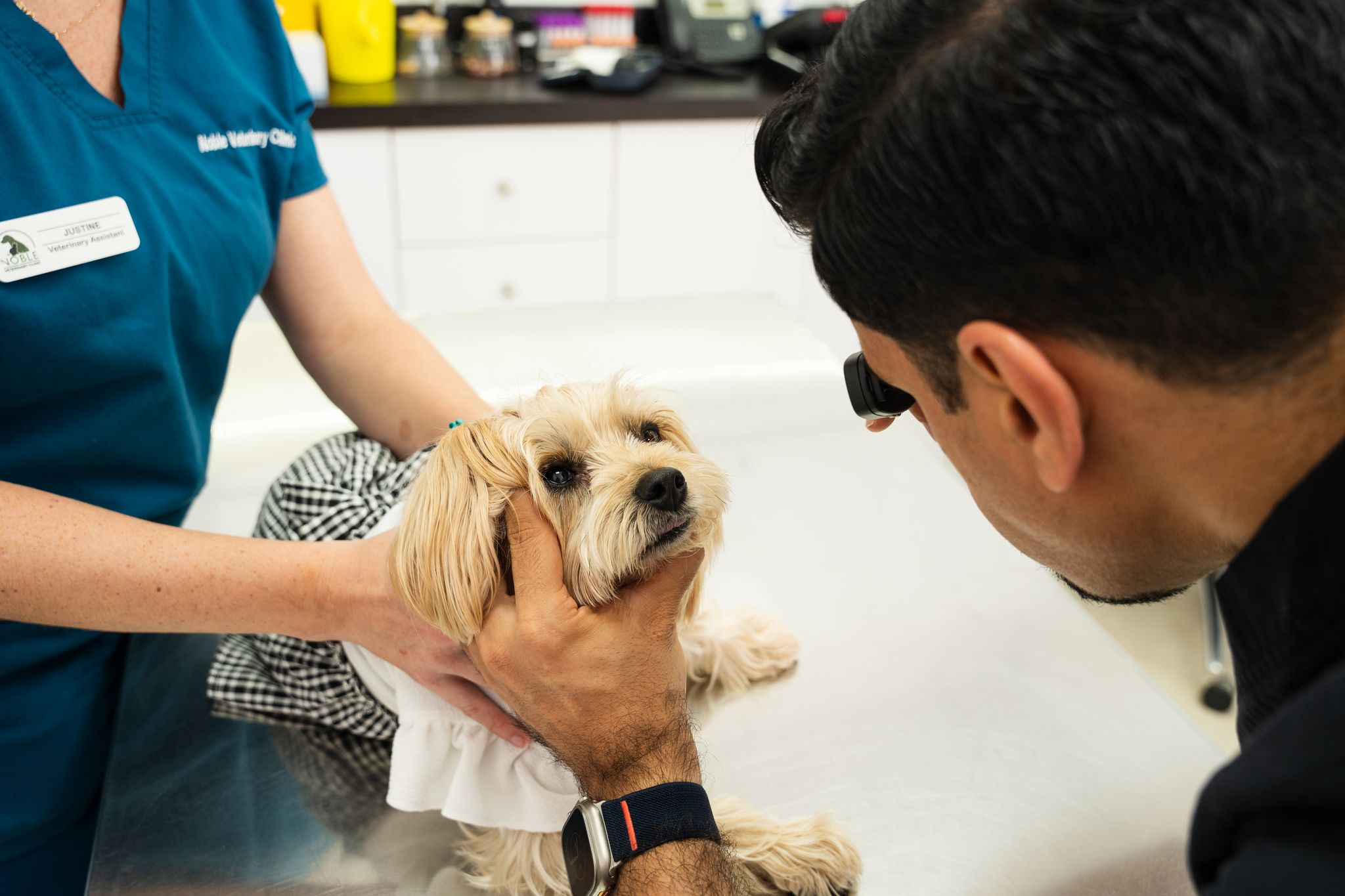
To fully determine why your dog’s eyes turn red, our vets will use several diagnostic tests and tools. These tests and exams will help us know the cause so we can get urgent treatment. Here are the laboratory tests we do:
Tear Staining
This test is simple but incredibly effective. We will apply a special fluorescent dye to the surface of your dog’s eye to highlight any damage to the cornea. Examples of damage could be scratches and ulcers.
If the cornea is injured, the dye sticks to those areas, making it easier for our vets to see the issue under a blue light. It’s particularly useful if your dog has been rubbing their face or if there’s concern about trauma.
Schirmer Tear Test
This is the go-to test for diagnosing dry eye syndrome in dogs. We do this by placing a small strip of paper inside your dog’s lower eyelid for about a minute. The paper absorbs tears, allowing our vets to measure how much moisture the eye produces.
If the tear production is too low, it indicates dry eye, which can lead to irritation and redness.
Tonometry
Glaucoma is a serious condition that can lead to blindness, so early detection is crucial. We use a tonometer to measure the pressure inside your dog’s eye to see if there’s any abnormal increase, which is a key indicator of glaucoma.
Our vets will gently touch your dog’s eye with a tonometer, which can sound a little intimidating, but the procedure is quick and usually doesn’t cause discomfort. If high pressure is detected, treatment options can be discussed immediately to prevent further damage to your dog’s vision.
Cytology and Culture
In a cytology, our vets will collect a sample of your dog’s discharge and examine it under a microscope. From here, we can check the type of inflammation, pathogen, or clues of irritation.
When we need more info, we can use a sample to grow a culture. This will help us identify the type of pathogen involved, which can also aid in determining the most suitable treatment options.
Frequently Asked Questions


Get 150 AED Off Your Pet's First Visit




MORE THAN A VET VISIT