
RELIEF FOR SENSITIVE SKIN
Pet Dermatology and Allergy Care in Dubai
Scratching, hair loss and ear infections are often the first sign of an allergy or a deeper problem. Allergies are managed, not cured, and we build a plan that keeps your pet comfortable for the long run.
or call us on

skin cases are triggered by environmental allergens.
7 out of 10
In the UAE,
Key Insight
RELIEF FOR SENSITIVE SKIN
Pet Dermatology and Allergy Care in Dubai
Scratching, hair loss and ear infections are often the first sign of an allergy or a deeper problem. Allergies are managed, not cured, and we build a plan that keeps your pet comfortable for the long run.
or call us on
skin cases are triggered by environmental allergens.
7 out of 10
In the UAE,
Key Insight
RELIEF FOR SENSITIVE SKIN
Pet Dermatology and Allergy Care in Dubai

skin cases are triggered by environmental allergens.
7 out of 10
In the UAE,
Key Insight
LOCAL TRIGGERS
Sand, dust, humidity
Dr. Soheyl
Year-round, indoors and out
TESTING
Skin, blood & allergy
All available in-house
CHECK-UP
Every 3-6 months
For ongoing conditions
CONSULTATION
290 AED
Skin, coat, & ear check
HOW WE HELP
What skin conditions do we treat?
01
Allergies
Food, environmental, or flea-related, all causing itching and inflammation
02
Infections
Bacterial, fungal, or yeast, often showing up as hair loss or odour
03
Ringworm
A fungal infection we confirm with a specific culture test
04
Parasites
Fleas, ticks, and mites, all treatable and preventable
05
Hot spots
Fast-developing, painful patches from excessive licking or scratching
06
Ear infections
Closely linked to skin allergies, one of the most common downstream effects
07
Hormonal imbalances
Conditions like hypothyroidism or Cushing's, showing up on the skin
08
Autoimmune disease
Conditions like pemphigus, the immune system attacks the skin directly
Why is my pet always itching?

Why is my pet always itching? | Noble's Dr. Mafalda Explains
Noble Veterinary Clinics
Why is my pet always itching?
Why is my pet always itching? | Noble's Dr. Mafalda Explains
Noble Veterinary Clinics
Why is my pet always itching?
Why is my pet always itching? | Noble's Dr. Mafalda Explains
Noble Veterinary Clinics
A CLOSER LOOK
Signs to watch for, and what they often point to
The same symptom can mean different things; here's what different patterns usually suggest.
Any of these on their own is worth a look. Together, or if they're not improving, it usually means the actual cause hasn't been identified yet.
Itching on the paws, belly, or ears
Often points to an allergy
Sudden, fast-spreading redness
Often a hot spot
Persistent odour or greasy skin
Usually means infection
Hair loss with visible specks
Often points to parasites
Chronic ear infections
Frequently linked to skin symptoms
Itching on the paws, belly, or ears
Often points to an allergy
Sudden, fast-spreading redness
Often a hot spot
Persistent odour or greasy skin
Usually means infection
Hair loss with visible specks
Often points to parasites
Chronic ear infections
Frequently linked to skin symptoms
WHY NOBLE
How we treat pet skin & allergy issues
Five steps take you from a first visit to a plan that actually fits, here's what each one involves.

Initial consultation
A full exam of the skin, coat, and ears, with skin scrapings or impressions where needed.

Testing
Cytology, cultures, and parasite checks to rule out infection or fleas, ticks, and mites specifically.

Allergy identification
Food trials or allergy testing to pinpoint the actual trigger, not just treat symptoms.

A plan built around your pet
Medicated shampoos, creams, oral medication, immunotherapy, or dietary changes, whatever the diagnosis calls for.

Follow-up
Regular check-ins to track progress and adjust the plan.
Dr. Soheyl
Dr. Paulina
OUR DERMATOLOGY SPECIALIST
Dr. Soheyl Simaei
The vet behind every skin and allergy case we see, from the straightforward to the genuinely complex.
Certified in dermatology and internal medicine, Dr. Soheyl brings over 18 years of experience to some of the harder, more complex skin and allergy cases we see.
Founder & Medical Director, Noble Veterinary Clinics
Certified in dermatology, internal medicine, endocrinology, and small animal dentistry
Certified FNAR radiation officer
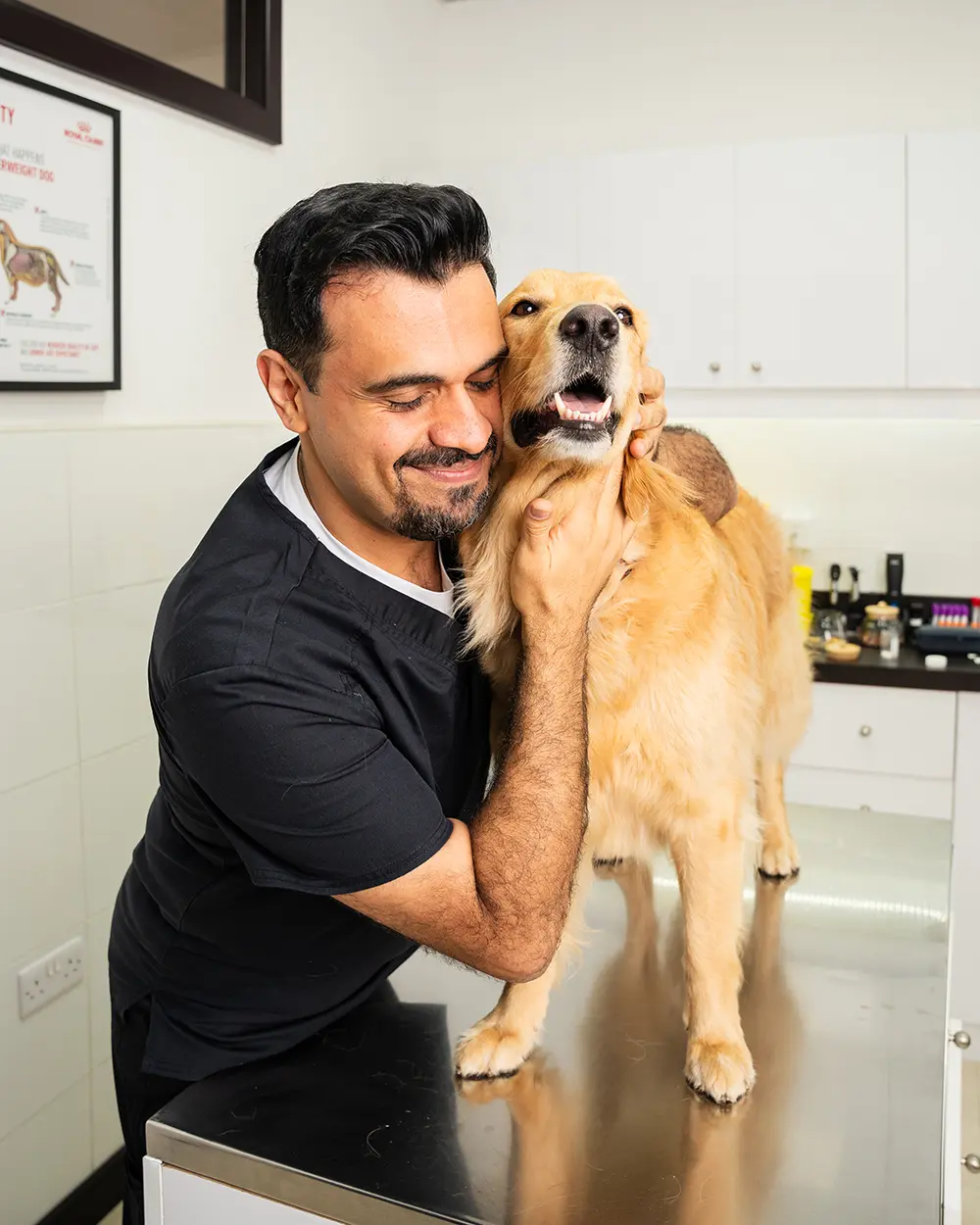
Dr. Soheyl
Dr. Paulina
OUR DERMATOLOGY SPECIALIST
Dr. Soheyl Simaei
The vet behind every skin and allergy case we see, from the straightforward to the genuinely complex.
Certified in dermatology and internal medicine, Dr. Soheyl brings over 18 years of experience to some of the harder, more complex skin and allergy cases we see.
Founder & Medical Director, Noble Veterinary Clinics
Certified in dermatology, internal medicine, endocrinology, and small animal dentistry
Certified FNAR radiation officer
Not sure why your pet keeps itching?
Let’s find out what’s causing it and how we can help.
Not sure why your pet keeps itching?
Let’s find out what’s causing it and how we can help.
Not sure why your pet keeps itching?
Let’s find out what’s causing it and how we can help.
Everything You Need to Know
Frequently Asked Questions
How long until my pet improves?
It depends on the cause. Infections and parasites often improve within days to a few weeks of treatment. Allergies take longer, because we first find the triggers and then fine-tune the plan. Many pets feel real relief in the first weeks, and steady control builds over a few months.
Can skin problems be a sign of something happening elsewhere in the body?
Sometimes, yes. Persistent skin issues can be the first visible sign of an internal problem, not just a surface-level irritation, which is part of why we look at the whole picture rather than treating the skin in isolation.
Why does a food trial take 8 to 12 weeks?
Your pet's skin needs time to heal and their immune system needs time to settle once the old food is out of their system. A shorter trial can give a false answer. During the trial, your pet eats only the trial diet, with no other treats or flavoured medication, so the result is reliable.
What can dermatology testing actually find that a general check-up might not?
A routine visit is built for a quick look; dermatology testing goes deeper, distinguishing between conditions that can look nearly identical on the surface but need completely different treatment. That precision is really the whole point of a dedicated consult.
Can pet allergies start later in life?
Yes. Allergies can appear at any age, even in pets that have never reacted before.
Can skin problems signal something elsewhere in the body?
Sometimes. Persistent skin issues can reflect an internal problem, so we look at the whole picture.
Can allergies be cured?
Not at present. Allergies are lifelong, so the goal is control: less itching, fewer flare-ups and less medication over time. For some pets, immunotherapy helps lower the reaction.

About
Services


© 2006-2026 Noble Veterinary Clinics
A Member of ARENA Veterinary Group
About
Services
© 2006-2026 Noble Veterinary Clinics
A Member of ARENA Veterinary Group
About
Services
© 2006-2026 Noble Veterinary Clinics