HEART CARE

Veterinary Cardiology in Dubai

Heart problems in pets often show up quietly at first: a persistent cough, a bit less energy on walks. Caught early, most conditions can be managed well for years. Left unchecked, they tend to progress fast.

Dr. Day performing a cardiology inspection on a cat.

LED BY

Dr. Day

A specialist cardiologist

DIAGNOSTICS

ECG, Echo, & X-ray

Results read in-house

CHECK-UP

Annual

More often if at risk

CONSULTATION

Full review

History, exam, clear answers

OUR SERVICES

What a cardiology visit involves

A visit starts with your pet's history and any changes you have noticed at home. A gentle check of heart rhythm, rate and breathing follows.


The right test follows: an ECG for abnormal rhythms, an echocardiogram to scan the heart, or chest X-rays for an enlarged heart or fluid.


Findings are explained in plain terms, with a clear plan for what happens next.


Emergency and routine veterinary cardiology services are both covered. Pets in cardiac distress are stabilised first, and chronic heart disease is managed with long-term care.

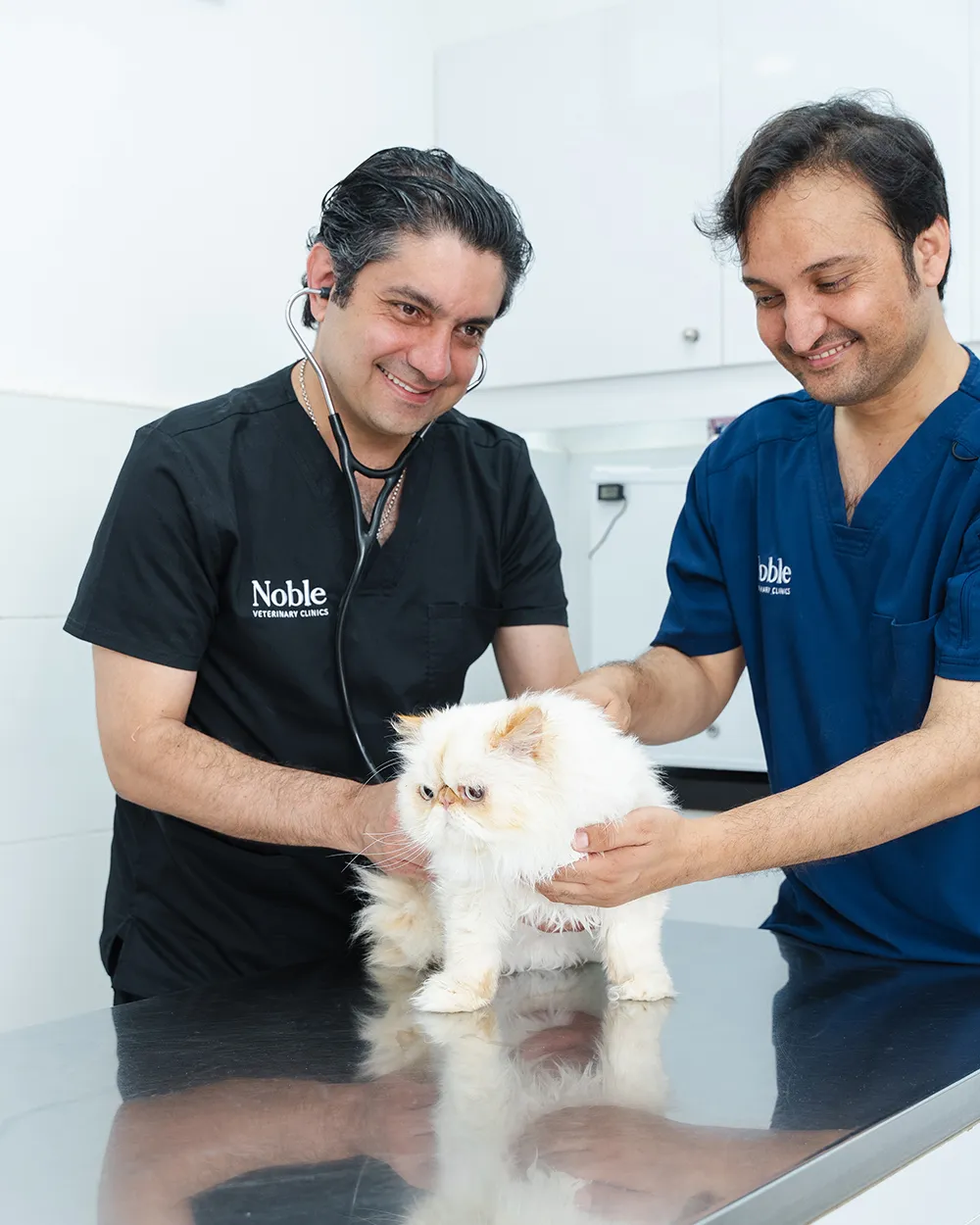
Vet in a black scrub top and a woman in a striped dress examining a fluffy white Persian cat on the exam table.
Vet in glasses gently reaching toward a fluffy grey cat sitting calmly on a table during a daily check.

WHAT TO WATCH

Heart disease often builds in stages

It affects roughly 1 in 10 dogs and up to 15% of cats over their lifetime.


Stage one: no visible signs yet Sometimes picked up as a murmur during a routine exam.


Stage two: early signs Less energy on walks, and occasional coughing, particularly at night.


Stage three: serious signs Laboured breathing, a swollen abdomen, fainting or collapse, and pale or bluish gums need a same-day visit.

INHERITED RISK

Breeds more prone to heart disease

Genetics raise the risk in some breeds, so regular check-ups from a young age help catch changes early.


Dogs: Cavalier King Charles Spaniel (mitral valve disease), Doberman Pinscher and Great Dane (dilated cardiomyopathy), Boxer (arrhythmias)


Cats: Maine Coon, Ragdoll, and British Shorthair (hypertrophic cardiomyopathy)

Dr. Flora Awwad in Noble scrubs listening to a grey British shorthair’s chest with a stethoscope on the exam table.

COMMON DIAGNOSES

Conditions we treat

From an occasional murmur to something present since birth.

Heart murmurs

An unusual sound during a heartbeat

Dilated cardiomyopathy

The heart muscle weakens and stretches out

Valve disease (mitral and tricuspid)

Valves that no longer close properly

Pulmonary hypertension

High blood pressure in the lungs' vessels

Secondary heart disease

Heart problems caused by another condition

Patent ductus arteriosus (PDA)

A blood vessel that should have closed after birth

Hypertrophic cardiomyopathy

The most common heart condition in cats

Pericardial effusion

Fluid building up around the heart

Cardiac arrhythmias

An irregular heartbeat

Congenital heart defects

Structural problems a pet is born with

Heart murmurs

An unusual sound during a heartbeat

Patent ductus arteriosus (PDA)

A blood vessel that should have closed after birth

Dilated cardiomyopathy

The heart muscle weakens and stretches out

Hypertrophic cardiomyopathy

The most common heart condition in cats

Valve disease (mitral and tricuspid)

Valves that no longer close properly

Pericardial effusion

Fluid building up around the heart

Pulmonary hypertension

High blood pressure in the lungs' vessels

Cardiac arrhythmias

An irregular heartbeat

Secondary heart disease

Heart problems caused by another condition

Congenital heart defects

Structural problems a pet is born with

OUR SPECIALIST

Dr. Mahday Ghanaat Pisheh

Board-certified in diagnostic imaging, Dr. Day has spent 14 years reading heart scans alongside radiography, ultrasound, CT and MRI.


His echocardiography work covers dogs and cats, backed by 17 years of clinical practice and internal medicine.

Board-certified in diagnostic imaging (2015)

17 years in internal medicine, managing over 18,000 cases

Over 10,000 imaging studies read: radiography, ultrasound, CT, and MRI

Based at our main DIP branch

Dr. Day with a white dog in the cardiology lab.
The Esaote ultrasound system used for cardiac echocardiograms at Noble Veterinary Clinics

A CLOSER LOOK

What our echo scans show

An echocardiogram shows the heart working in real time. The Esaote MyLab X7 displays the chambers, valves and blood flow, so diagnosis rests on what is seen, not only what a stethoscope can hear.

Automatic ejection fraction measurement

Heart strain imaging

High-sensitivity blood flow detection

Referrals

Refer a case

More than 40 veterinary practices work with us. Any vet can refer a cat or dog for a cardiac assessment, with echocardiography read in-house.

How referral works

Send the case notes, a list of medicines, the medical history, and a detailed diary of symptoms.

A written report returns to you after every visit.

Your client stays your client, and everything outside cardiology stays with you.

Worried about your pet's heart?

Speak with our cardiology team today.

Worried about your pet's heart?

Speak with our cardiology team today.

Worried about your pet's heart?

Speak with our cardiology team today.

Everything You Need to Know

Frequently Asked Questions

How can a diet plan help my pet's heart?

A well-planned diet helps manage weight and reduces added strain on the heart. We'll build one around your pet's specific condition.

What lifestyle changes support heart health beyond diet?

Regular, appropriate exercise and a calm, low-stress home environment both help. We'll advise on what's realistic for your pet's specific condition, since too much activity can be just as unhelpful as too little.

Can heart disease in pets be cured, or only managed?

It depends on the condition. Some, like certain congenital defects, can be corrected. Most others are managed long-term rather than cured, but well-managed pets often live full, comfortable lives for years.

How is a heart condition actually diagnosed, beyond listening to the heart?

A stethoscope catches a lot, but not everything. An ECG checks the heart's electrical rhythm, an echocardiogram shows its structure and how well it's actually pumping, and X-rays reveal size and any fluid buildup. We use whichever combination fits what we're checking for.

Will my pet need medication for life?

Often, yes, for chronic conditions. We'll always explain exactly what a medication does and reassess the plan at follow-ups rather than leaving it unchanged indefinitely.

Noble Vet Clinics logo