Cat neutering is a popular routine procedure our veterinarians recommend to pet owners. It’s performed by surgically removing the cat’s reproductive organs.
Key Takeaways
Neutered and spayed cats are safe from testicular, ovarian, and uterine cancers. They also prevent pyometra and reduce the risk of mammary cancer.
Cats can be neutered at 5-6 months of age.
Recovery is crucial for preventing complications post-surgery.
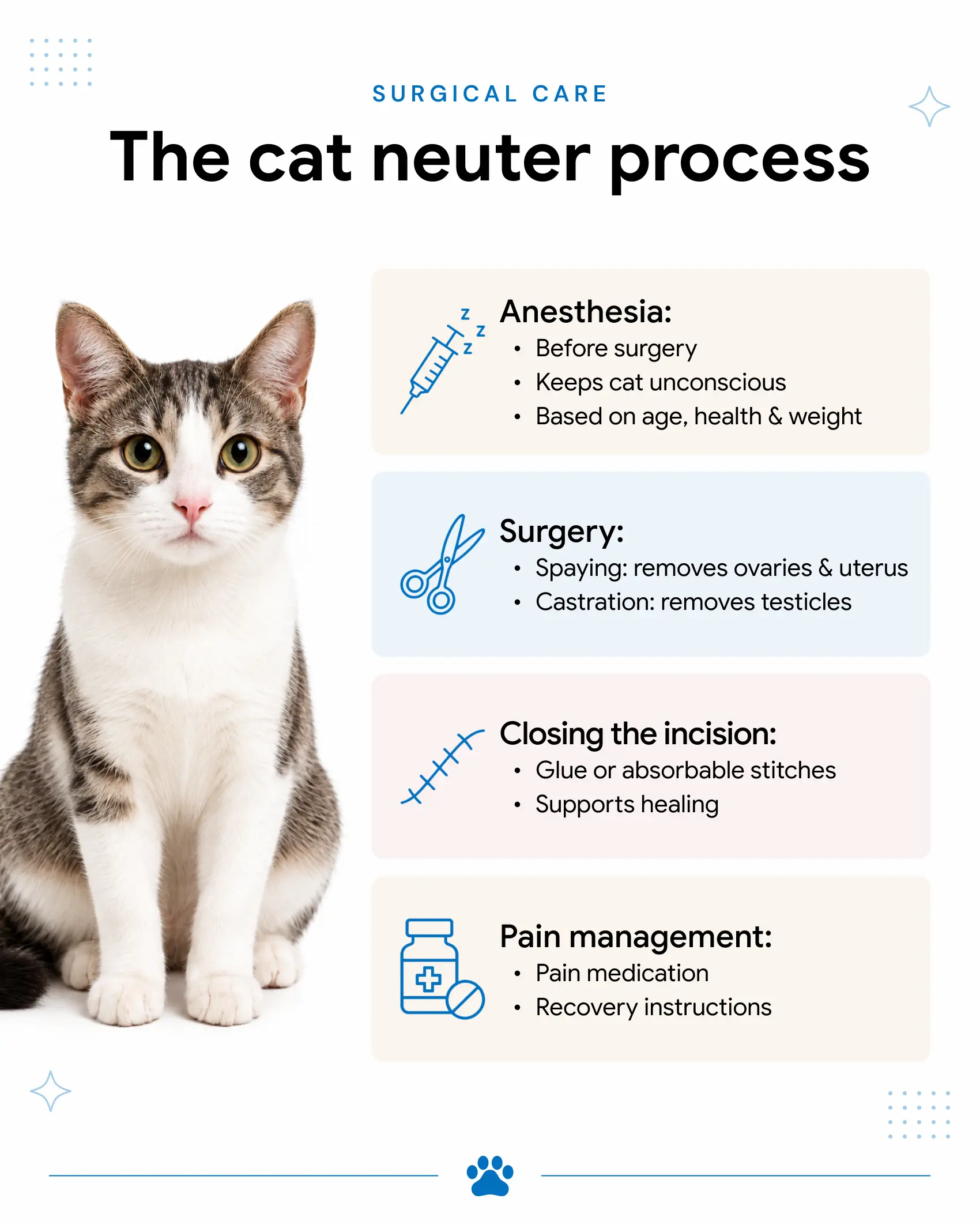
For males, the testicles are removed, and it’s called castration. For females, the ovaries and uterus are removed, a process known as spaying. Both fall under the general term called neutering.
At What Age Should Cats Be Neutered or Spayed?
Dr. Soheyl recommends having your cat neutered when they’re 5-6 months old, before their first heat cycle. By this age, your cat will be strong enough to handle the anesthesia safely.
How Much Does It Cost to Neuter My Cat?
Our spaying and neutering services start at AED 1,500 for male cats and AED 1,155 for females. This includes the initial exam, anesthesia, sterile surgical space, operation, and post-op care.

What Are the Benefits of Neutered Cats?
Spayed and neutered cats acquire health, mental, behavioral, and community benefits. These include:
Prevents life-threatening diseases such as mammary tumors, ovarian and uterine cancer, and pyometra.
Avoids unwanted pregnancy in females and prevents male cats from making unspayed female cats pregnant.
Reduces the likelihood of cats roaming outside, which can lead to falls, fights, and accidents.
Keeps cats calmer and reduces aggression, anxiety, and stress.
Reduces undesirable spraying and marking behavior.
Helps reduce the stray cat population.
Supports the efforts of pet shelters and rescue organizations.
Vet Tips: How to Prepare for the Cat Neutering Surgery
When you decide to spay your cat, our vets will guide you in preparing your best friend.
Withhold food for 4-6 hours before surgery for kittens and 10-12 hours for adults.
Prepare a recovery space at home in advance.
Bring a secure carrier, your cat’s favorite toys, a few treats, and their health documents.
The Process of Spaying and Neutering a Cat
Here’s the flow of the procedure according to our veterinarians.
Administering the Anesthesia
We’ll keep your cat sedated throughout the process, with the dose determined by their health, age, and weight.
Incising and Removing
Our team makes a small incision, depending on the cat's sex. For males, we’ll make a small incision over the scrotum to remove the testicles. For females, we’ll create an incision in the abdomen to remove both the ovaries and uterus.
Closing the Incision
For males, we’ll use surgical glue instead of stitches because the incision is small. For females, we’ll close the area with internal and external layers of stitches.
Managing Pain
Your cat will be monitored after the surgery, and we’ll provide pet medications to manage their discomfort. When they’re ready to go, we’ll provide an E-collar, prescribed medicines, and aftercare instructions for home recovery.

Post-Op Care for Spayed and Neutered Cats
Recovery is extremely important for neutered cats after the surgery. Here are some essential tips from our veterinarians:
Keep your cat indoors
Limit physical activity
Check the incision site regularly
Clean your cat’s resting space
Follow medication guidelines
Maintain a clean environment
Offer light meals
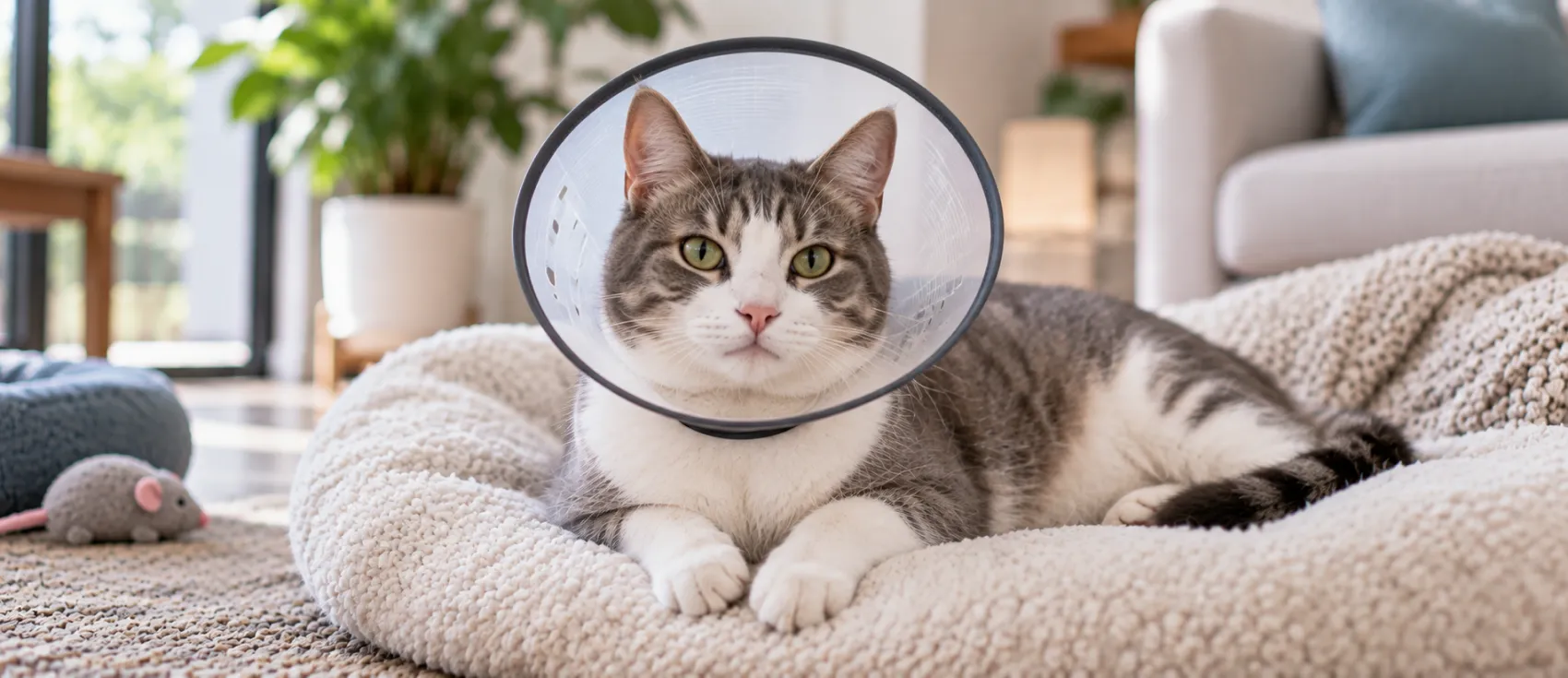
Use an E-collar at all times
Don’t bathe your cat
Take note of your observations
How Long Do Spayed and Neutered Cats Take to Recover?
Cats take about 10 to 14 days to recover after the procedure. During the first 24-48 hours, they may be a bit drowsy and uncomfortable, so expect a reduced appetite and lethargy.
During days 3 to 7, you’ll see the signs of recovery. They will start to regain their appetite and energy levels, but you should still restrict physical activity.
By day 10 to 14, your cat will most likely have recovered significantly. You’ll see that the incision site is almost fully healed.

Does Cat Neutering Have Risks or Complications?
Spaying is a safe procedure, but it does come with potential risks and rare complications. Some cats may have adverse reactions to anesthesia, experience severe lethargy, or have infections on the incision site.
If you notice any of these, contact us right away for urgent care.
Can a Newly Neutered Cat Impregnate?
Yes, newly neutered male cats can still impregnate a female for up to 6 weeks following the surgical procedure. This is because residual sperm remain in the reproductive tract, meaning the cat is still fertile during this window.
Plus, there will be residual hormones that can cause a newly neutered cat to exhibit mating behaviors. Because of this, a neutered male cat must be kept separate from females to avoid accidental litters.
"Spaying and neutering your cat is a promise for continued health and happiness."
- Dr. Lidija Krvavac
Neutering or spaying your cat is a responsible decision you can make as a pet owner. It can enhance your cat’s health and behavior, giving them a better quality of life. If you need help getting started, give us a call. We’ll be happy to assist you and your cat in this huge chapter of your lives.
Frequently Asked Questions
Subscribe to Our Newsletter
Worried about your pet?
We’re here for urgent care, wellness checks, or anything in between.