
TREATS
Flat-faced dogs
French Bulldogs, Pugs, Bulldogs, Shih Tzus & more
PROCEDURES
Personalised plan
Tailored to your dog's specific needs
BEST TIMING
Young, fully grown
Before complications set in
RECOVERY
A few weeks
Rest, medication, follow-up checks
THE ANATOMY BEHIND IT
Understanding breathing difficulties in flat-faced dogs
If your French Bulldog, Pug, Bulldog, or Shih Tzu struggles to breathe, snores heavily, or tires quickly, these aren't just quirky breed traits, they're signs the airway may be obstructed. This can also happen in dogs with a hypoplastic trachea, which narrows the airway further.
This condition, Brachycephalic Obstructive Airway Syndrome (BOAS), comes down to anatomy: narrow nostrils, an elongated soft palate, and everted laryngeal saccules all combine to restrict airflow. French Bulldogs, Pugs, Boston Terriers, and Shih Tzus are the breeds most commonly affected.
Left untreated, BOAS can lead to:

Heat intolerance and quick exhaustion
Difficulty exercising, even on short walks
Fainting or collapse in hot weather
Increased strain on the heart and lungs
Serious complications like aspiration pneumonia or laryngeal collapse
THE ROAD TO BETTER BREATHING
What BOAS treatments are available?
Our team offers procedures tailored to your dog's specific anatomy.
The procedures

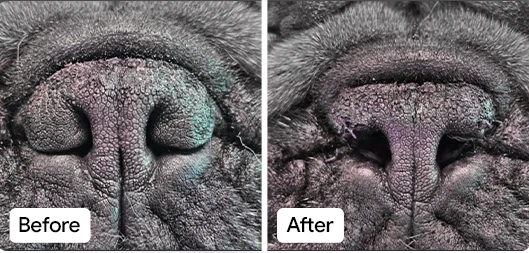
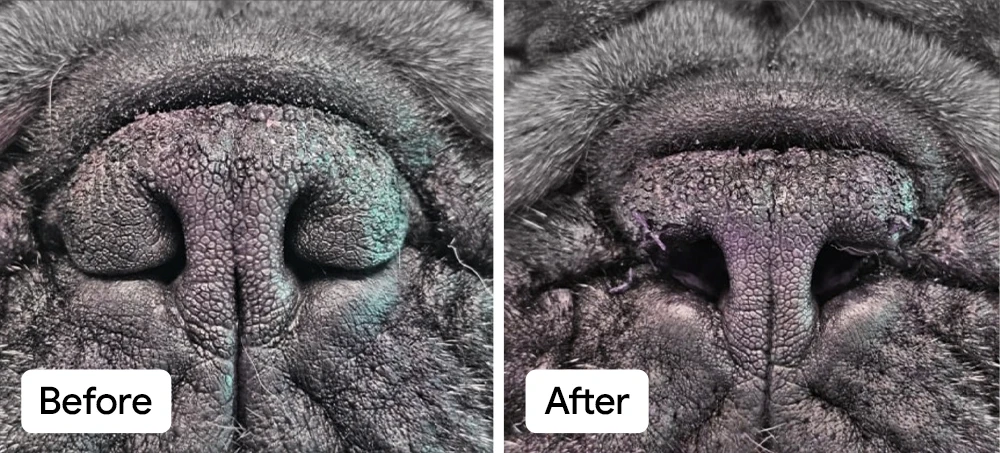
Carefully widens narrow nostrils to significantly improve airflow and make breathing easier.

Excess soft palate tissue is trimmed precisely to reduce obstruction and let air pass freely through the throat.

Swollen tissue inside the airway is removed to support more comfortable, unrestricted breathing.
The benefits
Easier breathing and reduced snoring
Improved exercise tolerance and stamina
Better heat resistance in Dubai's climate
Reduced risk of airway collapse or an emergency tracheostomy
A longer, more comfortable life
THE PROCESS
How do we diagnose BOAS before surgery?
Some mild cases can be managed with lifestyle adjustments, weight control, stress reduction, and switching from a collar to a harness. For moderate to severe symptoms, surgery is usually the most effective treatment.
Physical examination
We listen carefully for breathing noises, assess airflow, and check for visible signs of obstruction.
Airway imaging
X-rays, CT scans, or endoscopy pinpoint exactly where the airway is narrowed or obstructed.
Lifestyle review
We discuss your dog's exercise tolerance, heat sensitivity, and sleep to understand how the condition affects their life.
BEFORE YOU DECIDE
Are there risks with the surgery?
Surgical procedures carry some level of risk, and BOAS surgery is no exception. Flat-faced dogs need special care with anaesthesia, and post-operative swelling can temporarily affect breathing. Rarely, they may need temporary airway support.
In the hands of an experienced surgical team, BOAS surgery is generally safe and highly effective, especially when performed early, before complications set in.